This is the third consecutive year we have witnessed an escalation of racist violence, intimidation and hatred. We’ve seen racialised people being attacked on the street, homes burned to the ground, children forced to flee in the middle of the night, mosques, synagogues and other places of worship vandalised, violent gatherings outside of residences believed to house people seeking asylum and much more. Levels of racist violence and intimidation that were once considered extreme are now becoming weekly occurrences across the UK – and the response of successive UK governments has been woefully inadequate.
The racist intimidation and hostility seen this weekend all over the UK – primarily targeting those seeking asylum – is where the UK government must draw a line. It is clear that those organising and spearheading these attacks, riots and gatherings are deliberately seeking to create a threatening and intimidating atmosphere for racialised and minoritised communities. We are now at a point where people are fearful to take public transport, send their children to school, pray or just generally go about their daily lives. It should never have been allowed to get to this point.
These events – as with those we’ve seen previously – are not isolated incidents. As the Runnymede Trust highlighted in their recent open letter to the Prime Minister, they reflect the consequences of years of growing inequality, underinvestment in communities and public services, and political and media narratives that have normalised racism, anti-migrant sentiment and Islamophobia, including the weaponisation of violence against women and girls to stigmatise entire communities rather than address the root causes of gender-based violence. Too many people now feel less safe and less confident in our shared future.
It is time for the UK government to listen to the concerns of racialised and minoritised communities. It is time for the UK government and national authorities to do more to hold individuals and companies who play a role in spreading misinformation, inciting hatred and promoting violence to account.
We call on the UK government to act with the urgency that is required and take concrete steps to put a stop to escalating racist violence and intimidation. The UK government must tackle the dangerous cycle of political narratives that are repeated through megaphones by those emboldened to enact violence on our streets. Our political leaders must work with impacted people and communities to ensure their rights are protected and no one is forced to live in fear due to their religion, ethnicity, immigration status or skin colour.
It is time for the UK government to draw a line and take action.
Signed by organisations including:
ActionAid UK
Aegis the Union
African Rainbow Family
Alliance for Police Accountability
Amos Trust
Artists’ Union England
ASAP
Ashaadibi Centre
ASLEF Waterloo Nine Elms Branch
Association of Filipino Domestic Workers
Aziziye Mosque
Bakers Food and Allied Workers Union
BARAC UK
Bengali East End Heritage Society
Better Story
Beyond Skin
Black Equity Organisation
Body & Soul
Bridging Change
Bridport Refugee Support Campaign
Business Declares
Campaign against Climate Change
Campaign for Nuclear Disarmament
CARAS
Care4Calais
Caribbean Solidarity
CCIE
Centre for Media Monitoring
Cheadle Masjid
Choose Love
Chorley TUC
City of Sanctuary UK
Connections Network Eastbourne
Day-Mer
Debt Justice
Doctors of the World UK
Dorset Red Choir
Eastbourne Solidarity
Education 4 All
Engels in Eastbourne
Equality Trust
European Network on Religion and Belief
Everyday Racism
Find a Protest
Finsbury Park Mosque
Fire Brigades Union
Forth Valley Welcome
Forum of Muslim Organisations (Greater Manchester)
Friends of the Earth
General Federation of Trade Unions
George Lansbury Memorial Trust
Global Justice Now
Glossop Labour Club
Glossopdale Together Alliance
Greener Jobs Alliance
Haringey Welcome
Hay, Brecon and Talgarth Sanctuary for Refugees
Health Poverty Action (HPA)
Helen Bamber Foundation group
Herts for Refugees
Hindus for Human Rights UK (HfHR UK)
Hoylake4All
Humans for Rights Network
Imkaan
Independent Workers’ Union of Great Britain (IWGB)
Indivisible London
Islamic Society of Britain
Jewish Socialists’ Group
Joint Council for the Welfare of Immigrants (JCWI)
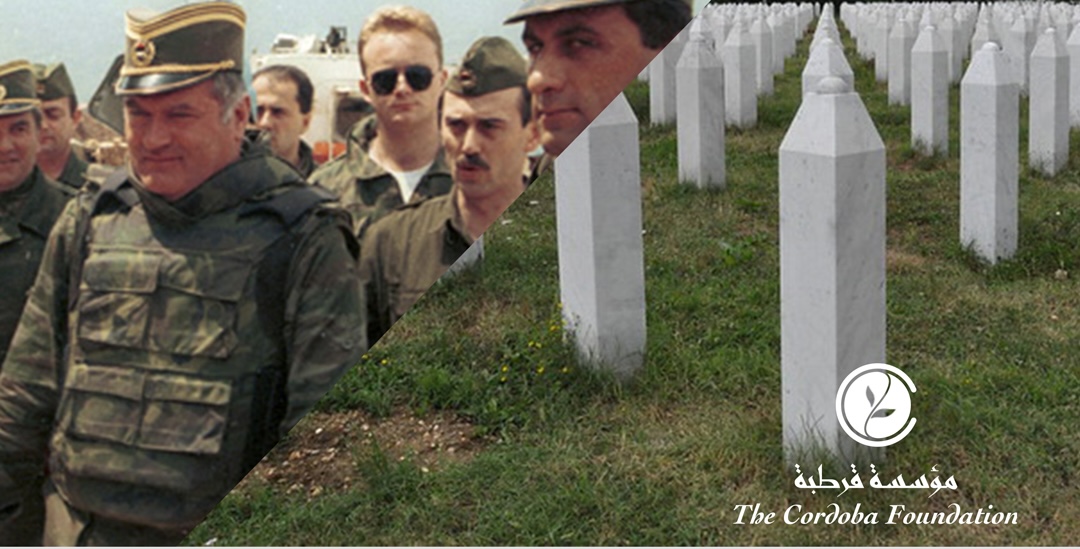
The Cordoba Foundation has issued a stark reminder that the legacy of convicted war criminal Ratko Mladić must be defined solely by his atrocities, following recent news of his death.
The Foundation firmly rejects any attempts to glorify or politically rehabilitate the chief military architect of the Balkan ethnic-cleansing campaign. True reconciliation and lasting peace can only be built upon an unwavering commitment to historical truth and justice.
“Elevating a convicted genocidaire to the status of a hero is an affront to human dignity and a direct assault on historical truth,” stated a representative of The Cordoba Foundation. “The death of Ratko Mladić must not obscure the horrific scale of the atrocities he orchestrated against Bosnian Muslims.”
Mladić was justly convicted of genocide, crimes against humanity, and severe war crimes. His brutal legacy includes:
The 1995 Srebrenica genocide, killing over 8,000 Bosniak men and boys
The merciless 43-month-long siege of Sarajevo
Widespread, wanton destruction across Bosnia and Herzegovina
In July, The Cordoba Foundation hosted Sabina Berberović, daughter of the founding president of Bosnia and Herzegovina, Alija Izetbegović. Speaking in London on the eve of the Srebrenica Genocide anniversary, she stated: “Thirty-one years on, we remember the victims of the genocide, and we stand with their families: thousands of women and children who lost their fathers, their brothers, their husbands. It takes immense courage to continue living after such a terrible experience,” she said.
At this pivotal moment, global focus must remain on the victims, survivors, and families whose lives were permanently shattered. The historical and judicial facts of Mladić’s atrocities remain immutable.
The Cordoba Foundation calls upon civil society, governments, and the international community to forcefully challenge genocide denial, reject revisionist narratives, and stand in solidarity with the survivors.
[End]
Image Source: Wikipedia – I, Evstafiev, CC BY-SA 3.0
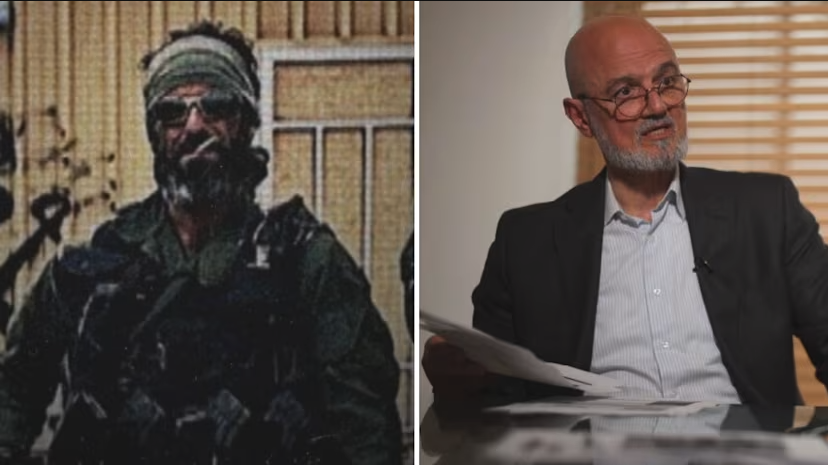
The Cordoba Foundation has seen last night’s ITV News investigation into a covert operation, funded by the United Arab Emirates, against our Chief Executive, Anas Altikriti.
We are issuing this statement because what the investigation describes does not concern Mr Altikriti alone; it concerns the safety of our staff, the integrity of our work, and the ability of a British civil society organisation to operate on British soil without interference from a foreign state.
Mr Altikriti is one of Britain’s most experienced hostage negotiators, having helped secure the release of 21 hostages held in conflict zones between 2005 and 2019, work that, on more than one occasion, required him to put his own life at risk. That record includes repeated journeys into Iraq in late 2005 and early 2006 in efforts to secure the release of Norman Kember, a British member of the Christian Peacemaker Teams taken hostage alongside American and Canadian colleagues, before their eventual release in March 2006.
We raise this not to catalogue Mr Altikriti’s record for its own sake, but because it matters: this is a man who has spent two decades risking his own safety to save the lives of others, Muslims and non-Muslims alike, and who now learns that a foreign state allegedly funded an operation aimed at ending his.
According to the investigation, in December 2016 the UAE funded a mercenary, Abraham Golan, and his organisation, Spear Operations Group, to run a surveillance operation against Mr Altikriti in London. Golan is reported to have previously carried out assassination operations for the UAE in Yemen. The operation is said to have included detailed reconnaissance of Mr Altikriti’s home and this Foundation’s offices, mapping of his daily movements, and an attempt to lure him to a meeting under false pretences. A participant in the operation has told ITV that a throat-cutting gesture was made in connection with it, and that he understood its purpose to be the physical elimination of Mr Altikriti. Mr Altikriti was subsequently issued an Osman Notice by the Metropolitan Police, warning him that his life was at risk, without further explanation being provided at the time.
This is not the first hostile act by the UAE against this organisation that has come to light. In 2014, the UAE placed The Cordoba Foundation on a list of organisations it designated as supporting terrorism, a designation with no basis in law, evidence, or fact, and never adopted by the UK government, our regulator, or any credible international body.
We have long treated that as a political attack on an organisation that promotes dialogue and the full participation of Muslim communities in British life. We now know, if this reporting is accurate, that the same period saw a foreign state allegedly fund an operation against our Chief Executive that a witness has directly linked to a plan to kill him.
The Cordoba Foundation exists to build bridges between Muslim communities and wider society. That mission does not sit comfortably with every government, and we have never claimed it would. But there is a fundamental difference between disagreement or diplomatic pressure and the alleged funding of a covert operation against a British citizen on British streets. If proven, this is not a difference of opinion, it is transnational repression, carried out by a state that maintains close diplomatic, commercial, and security relationships with the United Kingdom.
We are calling on the UK government to launch a full and independent investigation into the matters this report raises, including what UK authorities knew, when they knew it, and what was done to protect Mr Altikriti and this organisation at the time.
We are calling on the Metropolitan Police to clarify the basis of the 2016 Osman Notice issued to Mr Altikriti in light of this new reporting. And we are calling on the government to explain how it squares its stated ambitions to deepen ties with the UAE with credible allegations that the UAE has targeted a British citizen for elimination on British soil.
The Cordoba Foundation and Mr Altikriti are now taking legal advice on all available options arising from this investigation, including possible legal action against those responsible for planning and funding this operation, and will pursue every lawful route open to us to secure accountability.
The Cordoba Foundation will continue its work without interruption. Our staff, trustees, and Chief Executive remain committed to the mission this organisation was founded to pursue.
We will not be deterred by intimidation, whoever is behind it, and we expect the British government to show the same resolve in defending those living and working lawfully within its borders.
[End]
Notes to editors:
1. For media enquiries, please email: media@thecordobafoundation.com
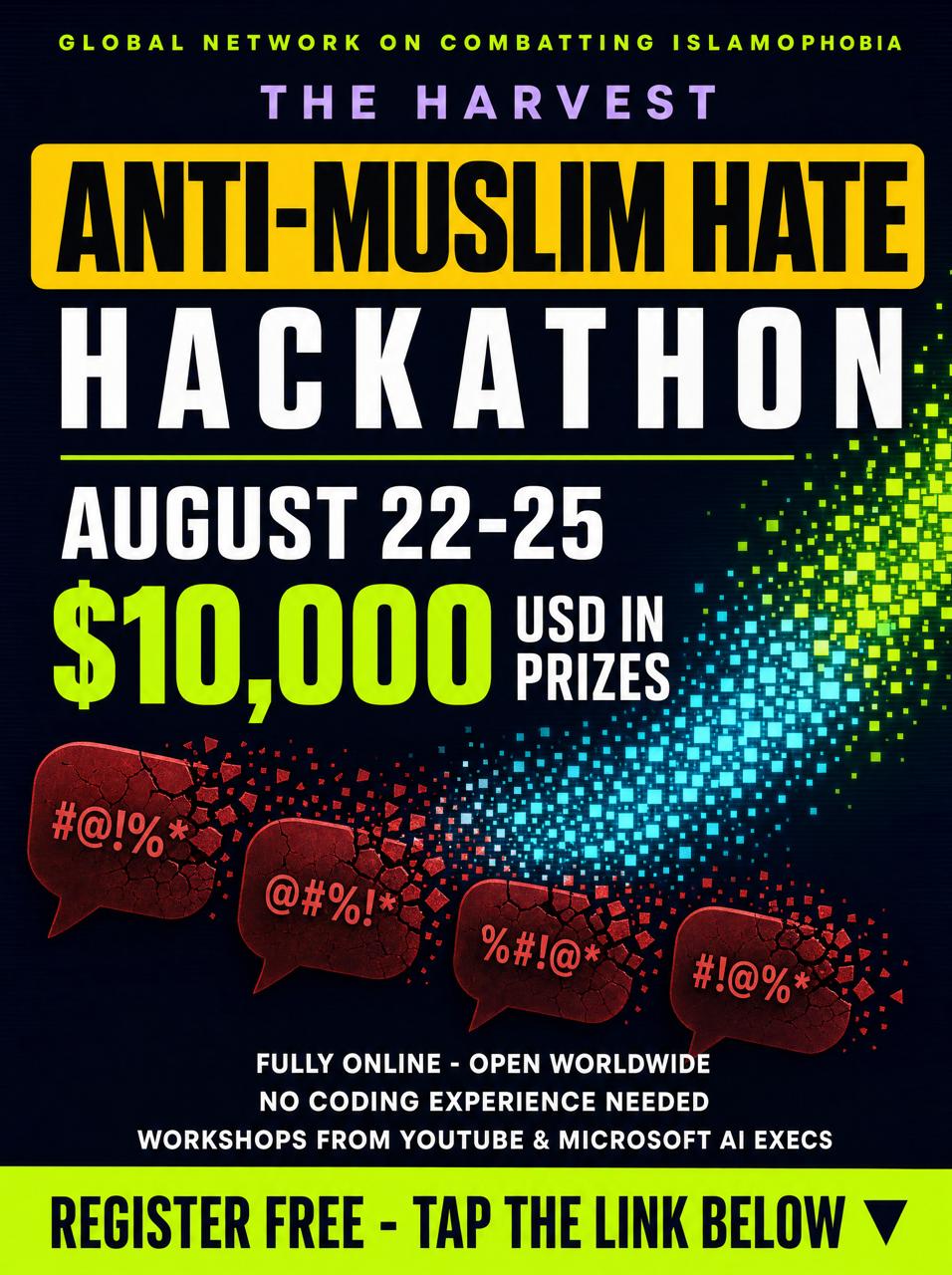
Current and former executives from YouTube and Microsoft AI are running live workshops at a free hackathon against online anti-Muslim hate — and you can be in the room.
The Harvest Anti-Muslim Hate Hackathon Aug 22–25 · fully online · open worldwide · $10,000 USD in prizes
You’ve seen it. The meme that isn’t really a joke. The comment section that turns the second a Muslim name shows up. The dog-whistle you clocked but couldn’t explain to anyone else.
Almost none of it ever gets flagged, countered or recorded — not because people don’t care, but because nobody’s organised to do it. The hate follows a playbook and crosses borders in hours. The response is one deleted comment and a screenshot that goes nowhere.
Four days to change that.
What happens
Sat 22 Aug, 9am–12pm PT — three hours of live workshops from current and former YouTube and Microsoft AI executives, plus online-safety experts. These are the people who built and ran the enforcement systems this hate travels through, telling you how it actually works from the inside. That access alone is worth the weekend. All sessions recorded.
Sat to Mon — you build. An app, a browser extension, a detection model, a dataset, a reporting tool, a campaign, a curriculum. Projects due Monday 24 Aug at 12pm PT.
Tue 25 Aug — the top ten pitch live to judges from the platforms their work is aimed at. $10,000 USD to the top three: $5,000 / $3,000 / $2,000.
You don’t need to code. With today’s AI tools, if you can describe the idea clearly you can build a working prototype. Plenty of the strongest entries won’t be software at all — research, curriculum, campaigns all
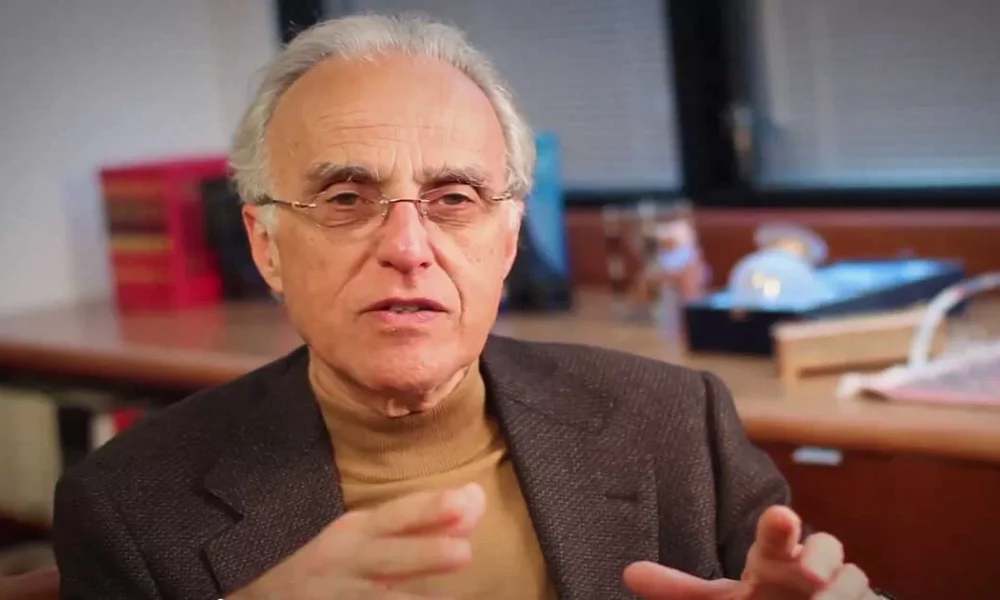
The Cordoba Foundation mourns the passing of Professor John L. Esposito, who died on July 15, 2026, at the age of 86, following complications from heart surgery. With his passing, the world has lost one of the most consequential scholars of Islam of the past century, and we have lost a cherished friend.
John Esposito’s relationship with The Cordoba Foundation went back to our earliest days. From day one, he was not only a friend and a supporter but an intellectual giant who had the humility and grace to seldom, if ever, turn down an invitation to contribute in any way asked of him. Whether it was a lecture, a foreword, a quiet word of encouragement, or simply lending his name and his considerable moral authority to a cause he believed in, John gave generously of his time and his standing. That he did so without pretension, and often without needing to be asked twice, said as much about his character as his scholarship did about his mind.
Born in Brooklyn in 1940 and originally on a path toward the Catholic priesthood, Esposito instead built a career that would see him become university Professor of Religion, International Affairs, and Islamic Studies at Georgetown University, where in 1993 he founded the Prince Alwaleed bin Talal Center for Muslim-Christian Understanding.
Over more than five decades, he authored, co-authored, or edited upwards of fifty-five books, many published by Oxford University Press and translated into dozens of languages, becoming standard references on Islam in universities around the world.
He served as president of both the Middle East Studies Association of North America and the American Academy of Religion, and was honored with the Academy’s Martin E. Marty Award for the Public Understanding of Religion as well as Pakistan’s Quaid-e-Azam Award for Outstanding Contributions to Islamic Studies.
But numbers and titles only tell part of the story. What set John apart was the moment in which he chose to do his most vital work. At a time when Muslims around the world, but particularly in the West, were under immense pressure in the aftermath of the September 11 attacks, John debunked the accusations, falsehoods, myths, and lies in language that few could better. He argued calmly and often humourously, but always with irrefutable evidence, with decades of scholarship, and with a clarity that cut through the noise of fear and suspicion that had come to define so much of the public conversation about Islam. He understood that the battle against Islamophobia would not be won with slogans, and so he built institutions instead: the Center for Muslim-Christian Understanding, and later the Bridge Initiative, a research project dedicated to tracking and challenging Islamophobia with the same rigour he brought to everything else.
This was, in many ways, the defining feature of John’s life’s work: he refused to let Islam be turned into an enemy, even and especially when it was politically convenient to do so. He built bridges between Muslims and the societies around them at a time when so many were intent on building walls. He did this as a non-Muslim scholar whose credibility rested precisely on the fact that his conclusions were rooted in serious study rather than advocacy, which is what made his voice so difficult to dismiss and so essential to have on our side.
Those of us who worked alongside him remember not just the eminent professor but the man: warm, approachable, endlessly patient with young researchers and community organisers alike, and possessed of a generosity of spirit that never seemed to run out. He treated an invitation from a small foundation with the same seriousness he brought to an audience with heads of state. That, perhaps, is the rarest kind of greatness.
John is survived by his wife, Jean, and by a legacy carried forward in the shelves of scholarship he leaves behind, in the students he trained, and in the countless people, Muslim and non-Muslim alike, whose understanding of one another he helped shape for the better.
The Cordoba Foundation extends its deepest condolences to his family, his colleagues at Georgetown, and the many communities around the world who considered him a friend. We were fortunate to count ourselves among them.
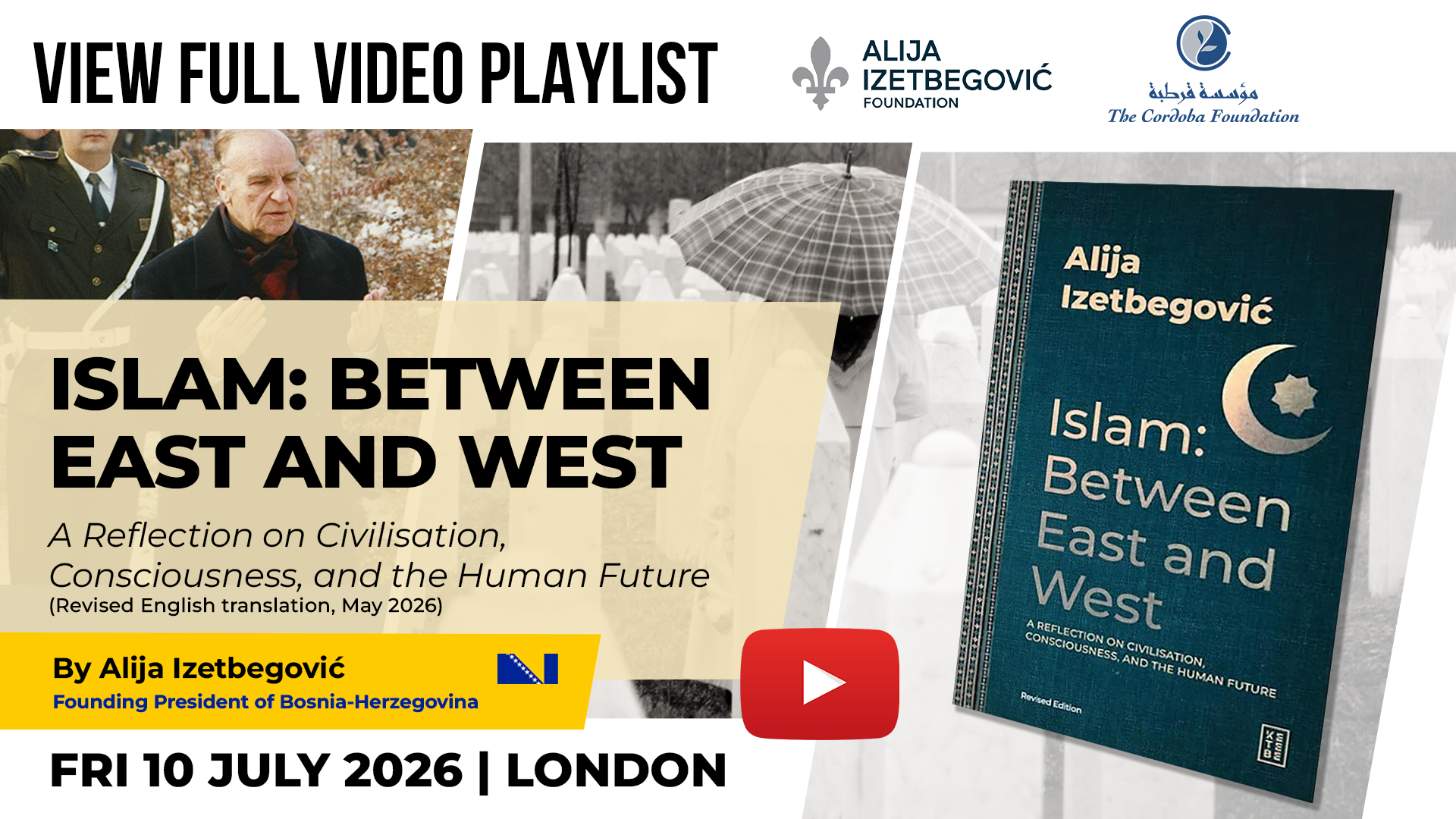
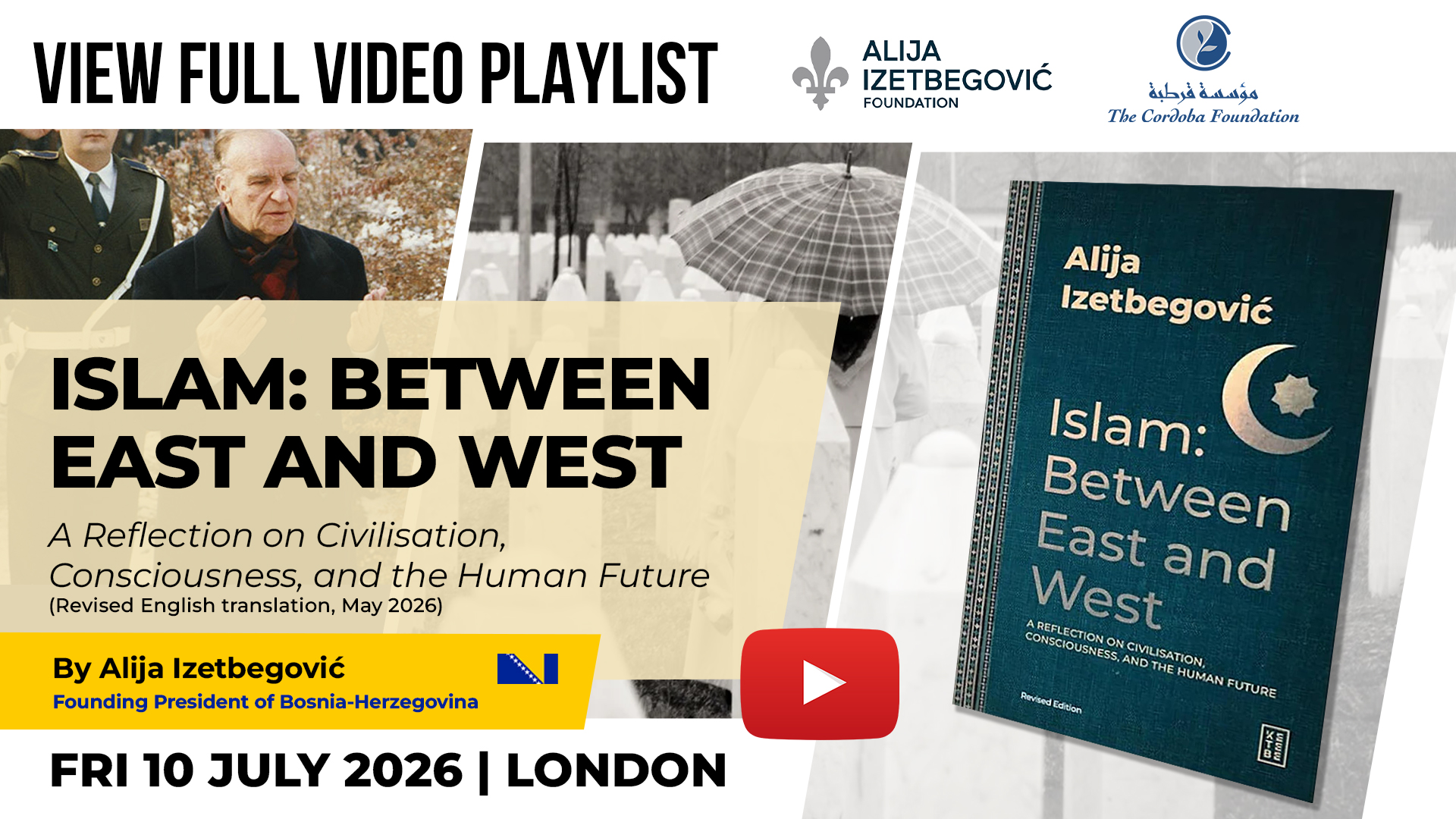
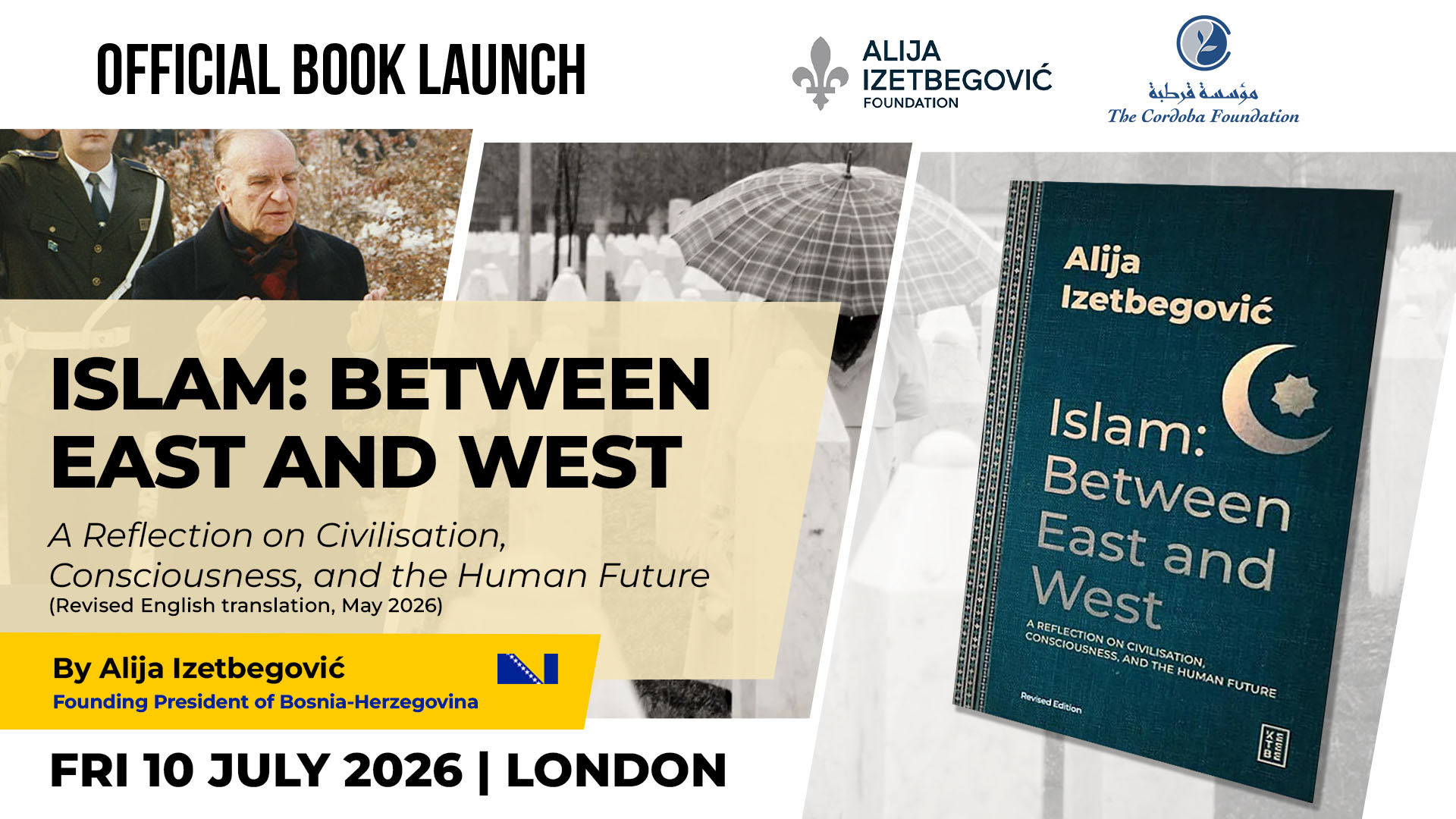
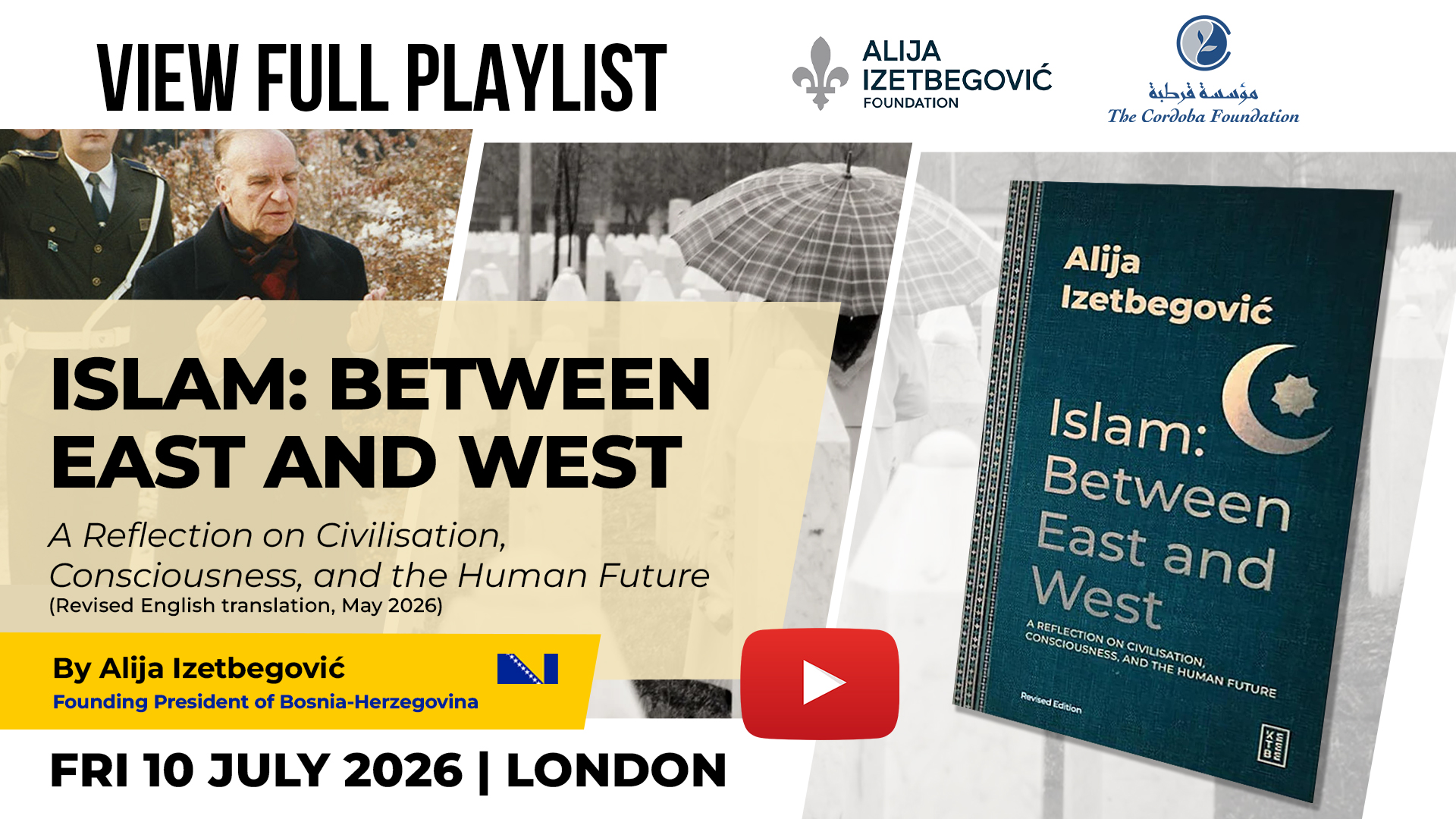
Hundreds mark 31 years since Srebrenica at London launch of Alija Izetbegović’s Islam: Between East and West
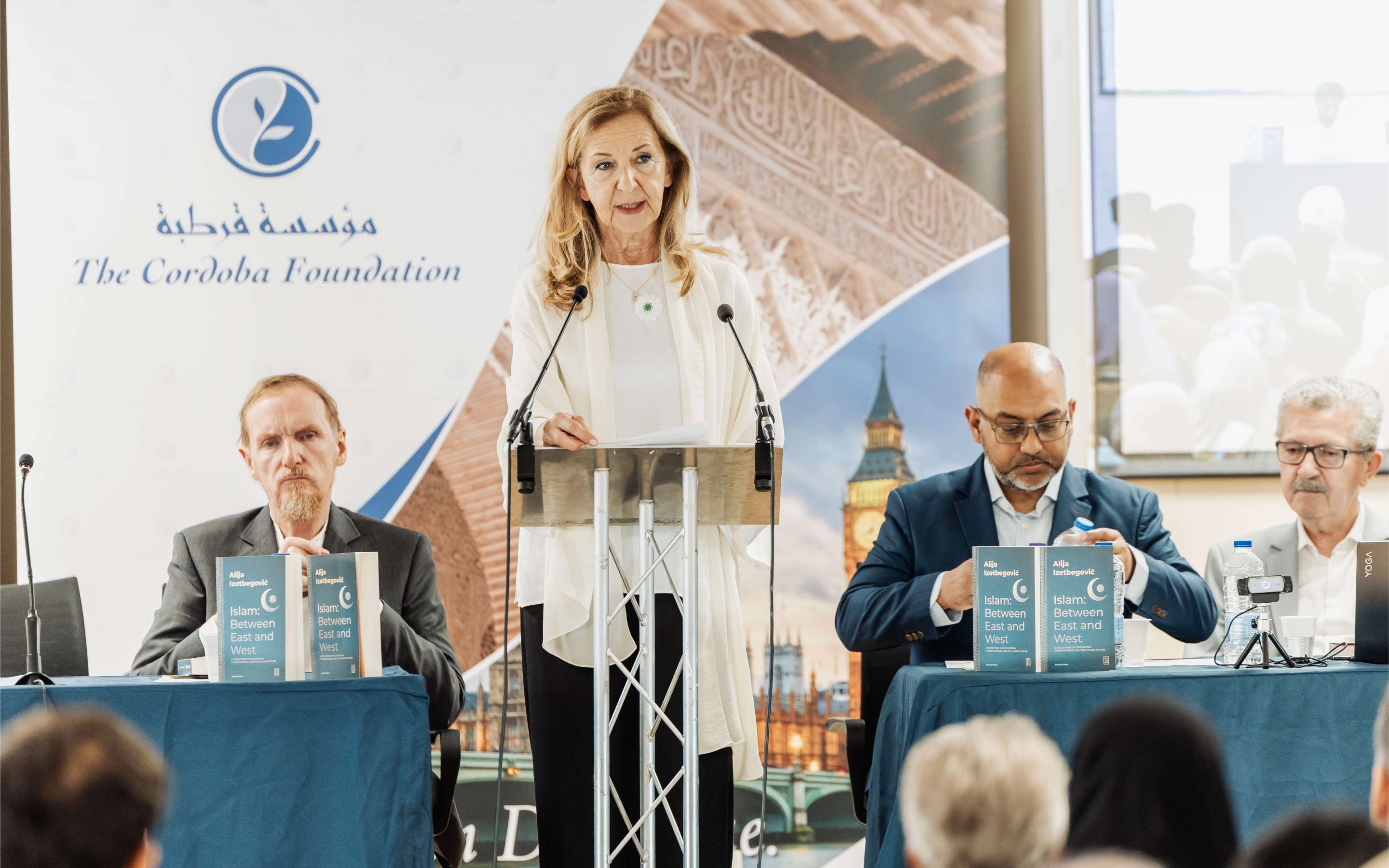
The newly revised English translation of Islam: Between East and West — the philosophical work of Alija Izetbegović, the philosopher, statesman, and Founding President of Bosnia-Herzegovina — was launched on Friday, 10 July 2026, at the London Muslim Centre, during an evening that also commemorated the 31st anniversary of the Srebrenica Genocide.
Hosted by The Cordoba Foundation and the Alija Izetbegović Foundation, alongside several supporting organisations (including the book’s publisher, Ketebe), the launch drew over 400 guests from across the country. Attendees included many youth as well as a Turkish delegation. Streamed live on The Cordoba Foundation’s YouTube and Facebook channels, the event proved highly successful, with nearly 300 copies of the book sold at the beginning of the evening.
Moderated by Dr Abdullah Faliq, Managing Director at The Cordoba Foundation —who brings 25 years of advocacy for the victims of Srebrenica — the event commenced as he welcomed the panel of speakers and guests. He described Izetbegović’s magnum opus as “a major contribution to understanding the human condition, consciousness, and the metaphysical foundations of ethics.”
Elaborating further, he said: “Many of us grew up reading this text, which positions Islam not just as a religion, but as an integrative worldview capable of harmonising humanity’s spiritual and material needs. The book has striking relevance for us today as we try to navigate conflicts, tensions, and the rise of right-wing populism across the globe.”
Imam Sedin Sahman, Chief Imam of the Islamic Bosnian community in Britain and a survivor of the Bosnian War, recited verses from the Qur’an. This was followed by opening remarks from H.E. Osman Topčagić, Bosnian Ambassador to the UK, who recalled working alongside President Izetbegović throughout the war years and the Dayton peace negotiations. “In all those situations, I had in front of me a statesman, but also a man who cared deeply for human beings: care for the people, care for others, and not just for one ethnic or religious group, trying to find a formula to enable life together,” he said. “Bosnia and Herzegovina remembers the work and life of Mr Izetbegović. What we have today is very much because of his actions and his deeds.”
The highlight of the evening was a keynote address by Sabina Berberović, daughter of President Izetbegović and a founding member of the Alija Izetbegović Foundation. Speaking on the eve of the Srebrenica Genocide anniversary, she stated: “Thirty-one years on, we remember the victims of the genocide, and we stand with their families: thousands of women and children who lost their fathers, their brothers, their husbands. It takes immense courage to continue living after such a terrible experience,” she said. “They are enduring the unendurable and accepting the unacceptable. The women of Srebrenica rose from being victims to become our heroes, and they raised their children with pride and dignity.”
She shared the story behind her father’s book, which Izetbegović began writing as a high school student during the Second World War. The manuscript was hidden by his sister under a flower chest in the family kitchen when police searched their home in 1946, and it was completed three decades later. By the time State Security agents targeted him again in the 1980s, the finished manuscript was safely in the possession of a friend in Canada. “As they were leaving, I asked my father what we were to do, and he just replied: ‘Have the book published,’” she recalled.
The book was published in 1984 while Izetbegović served a prison sentence. Sabina’s brother and husband later drove the first copies from Belgrade to Sarajevo in the boot of a car, taking rural backroads to avoid being stopped and searched. “I hope that the book Islam: Between East and West will only bring good wherever and whenever it is read,” she said.
Ömer Faruk Yeni, an arts and cultural heritage consultant and the London and Istanbul-based director of Ketebe publishing, provided an overview of the book. “This is not a book about East or West, nor is it a defence of one civilisation against another. It is a profound reflection on what it means to be human. More than forty years have passed since the book first appeared, yet its questions have only become more relevant. Increasingly, Izetbegović is recognised not only as the founding President of Bosnia and Herzegovina, but as one of the most original Muslim thinkers of the twentieth century.”
In a recorded address, Dr Admir Mulaosmanović, CEO of the Aurora Foundation in Sarajevo and a wounded veteran of the Bosnian War, framed the book within the context of the present day. “The question Izetbegović posed rings even more powerfully today than when it was first written down,” he said. “This is not a theological text. It is an attempt to translate Islam into a language spoken and understood by today’s generation, and a call for both individual intellectual sharpening and collective social action.” (Note: Mulaosmanović’s full written speech is available here)
Shaykh Prof Abdal Hakim Murad, Dean of the Cambridge Muslim College, recounted travelling to Sarajevo in the 1980s to write a report for Amnesty International on the trial of Izetbegović and his co-defendants. Europe’s response to Bosnia, he argued, exposed a lasting blind spot. “The Bosnian struggle was not just a military struggle. It was against a European determination to defend a cultural truth rather than a factual truth,” he said. “We see this today in Gaza: so many hand-wringing politicians who have read the reports and know what is going on, but it is not their cultural truth, and so they are paralysed.”
Murad warned that “Muslim communities across Europe are witnessing the storm clouds gathering on the horizon”, adding that Bosnia holds a vital lesson: “Bosnians can teach us what that is like, and how to avert it. We need to challenge cultural truths with factual truths. We need to go to Bosnia, we need to read this great literature, and we need to make that history part of our history.”
Shaykh Dr Yasir Qadhi, a prominent American theologian who sent a video message while travelling, described first reading the book as a teenager in 1990. “This book is one of the few genuinely unique philosophical contributions of the Muslim Ummah in this century, in a similar vein to Iqbal’s Reconstruction of Religious Thought. What makes it especially important is not just the message, but that it comes from somebody who paid a personal price for what he wrote. Izetbegović was not a mere armchair critic. He lived the life of a bona fide leader who had to navigate his nation through a war,” he said.
“This book should be mandatory reading for all who want to traverse the path of intellectual scholarship, especially in the Western world, because it answers the question: what vision of the human person makes Islam intelligible?”
Sarah Joseph OBE, a writer, broadcaster, and founding editor of Emel magazine, focused on the book’s chapter on progress. “Izetbegović asks whether life will be five times fuller, happier, or more humane, and his answer is decidedly negative. Another forty years on, have we quintupled in our happiness? Again, the answer is decidedly no,” she said.
Addressing the rise of the far-right in Europe, she rejected fear: “This book is calling us towards civilisation. It is calling us to say: we are not victims. We are people inspired by ideas, and we have a vision for the future. The Prophet Muhammad did not come for the Muslims; he came as a mercy to mankind. That is a civilisational message, and that is what this book tells us.”
Dr Mohammed Wajid Akhter, Secretary-General of the Muslim Council of Britain, remembered discovering the book as a child in Saudi Arabia during the genocide, noting it was one of only two English titles in his mosque. “The imam came to me one day and said: ‘This is why the Bosnians will win. You can kill a people, but you cannot kill an idea,’” he shared. Izetbegović, Akhter argued, possessed the rare vision, courage, and pragmatism that eventually guided his nation to survival and left a timeless intellectual blueprint for future generations.
Izetbegović, Akhter argued, possessed the vision, courage, and pragmatism every leader needs, alongside something far rarer. “He did something very few Muslim leaders do: he voluntarily stepped down,” Akhter noted. “Throughout 1,400 years of Muslim history, leaders have traditionally left office only for the graveyard. Izetbegović chose to leave before then, showing the true measure of the man.”
Former BBC war reporter Martin Bell, who was wounded during the siege of Sarajevo, sent his apologies as ill health prevented his attendance.
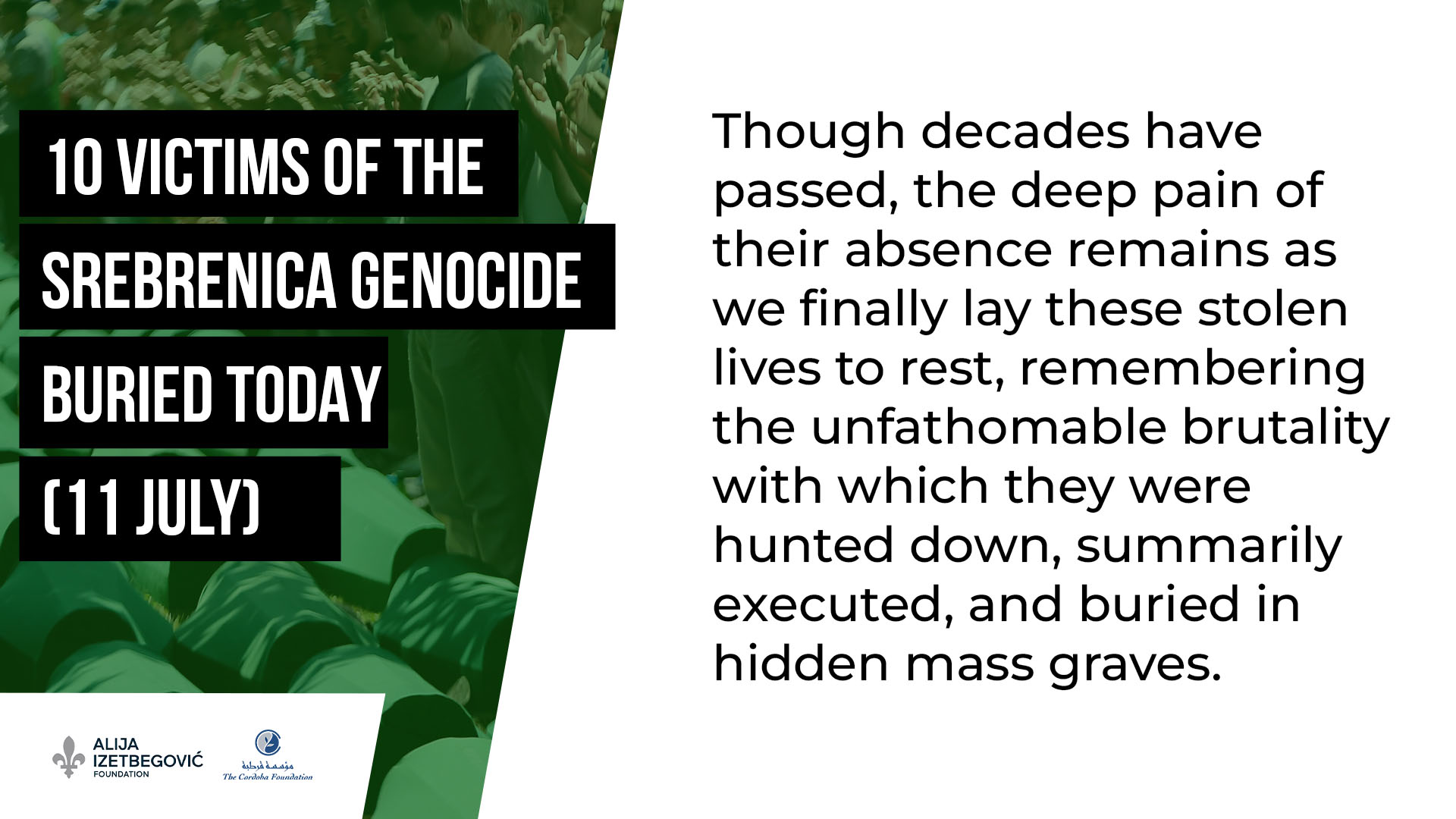
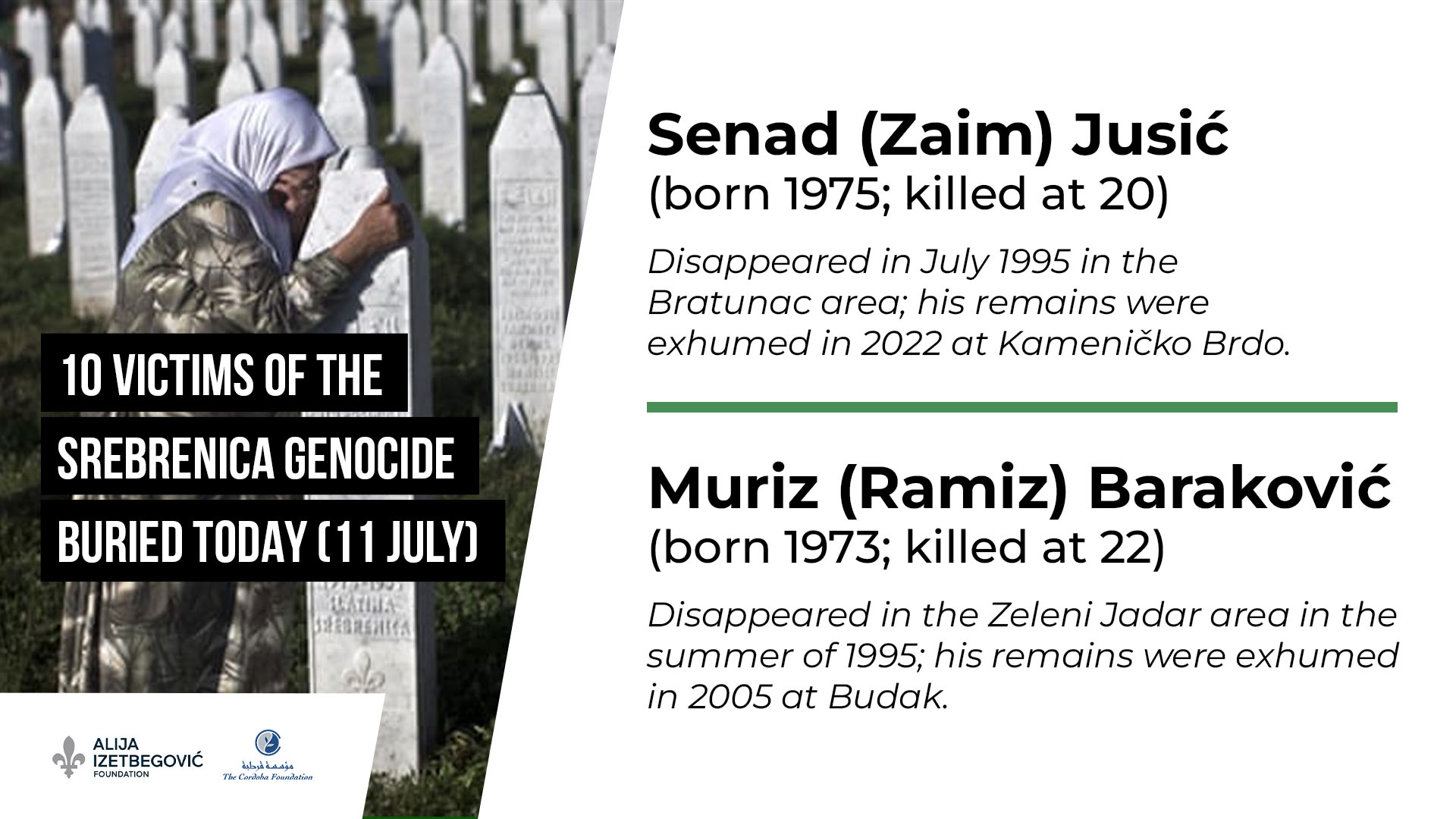
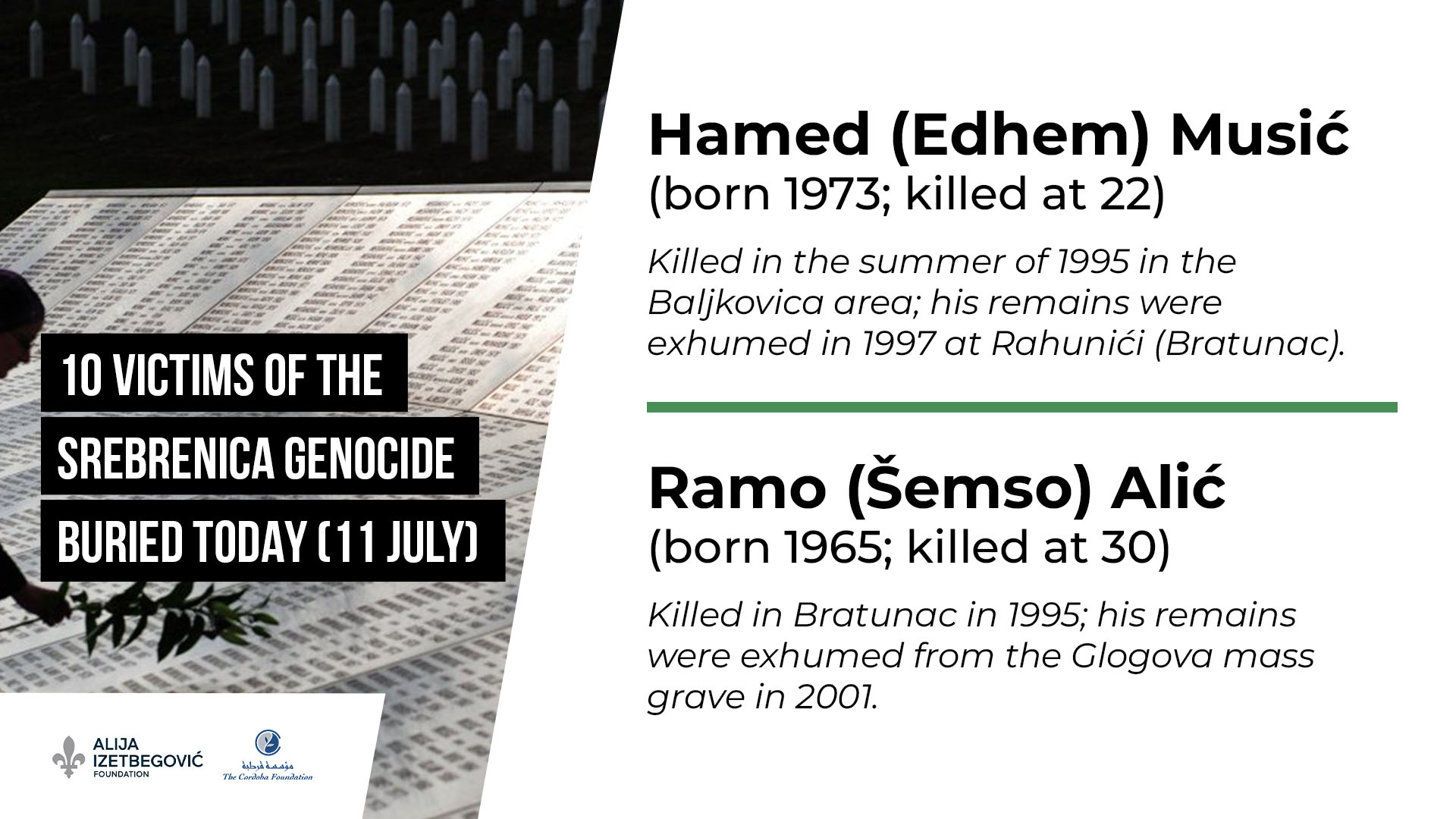
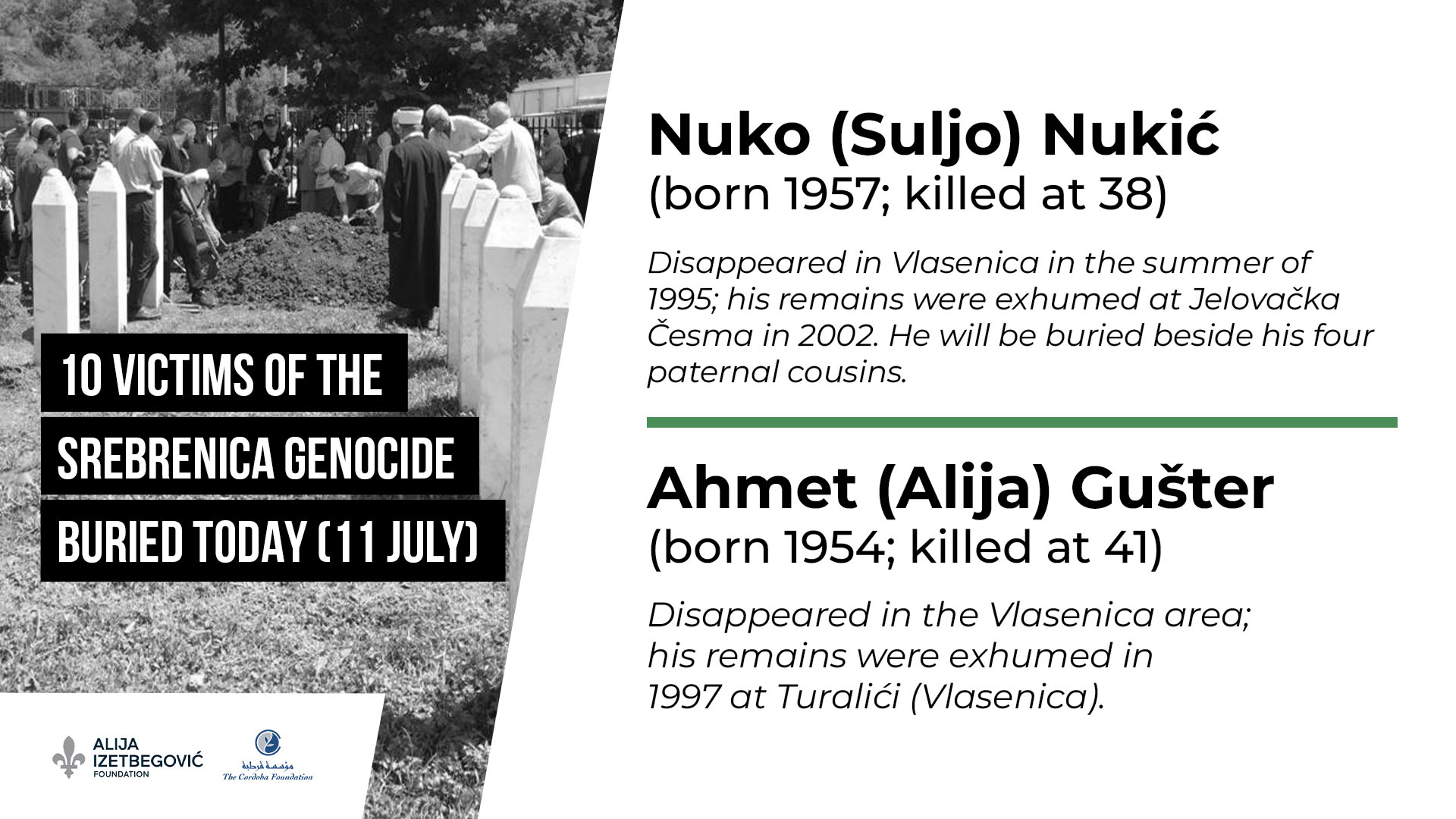
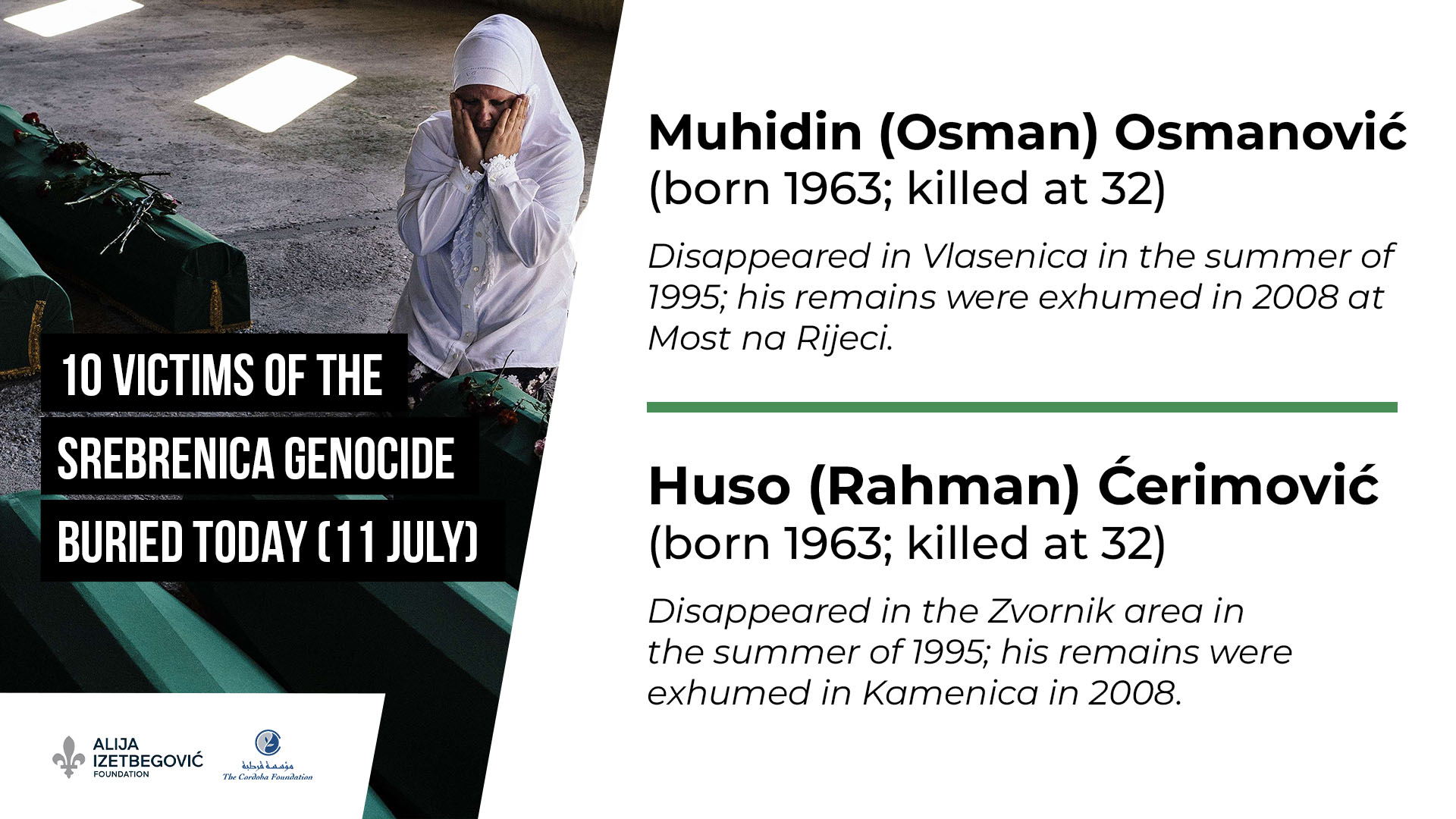
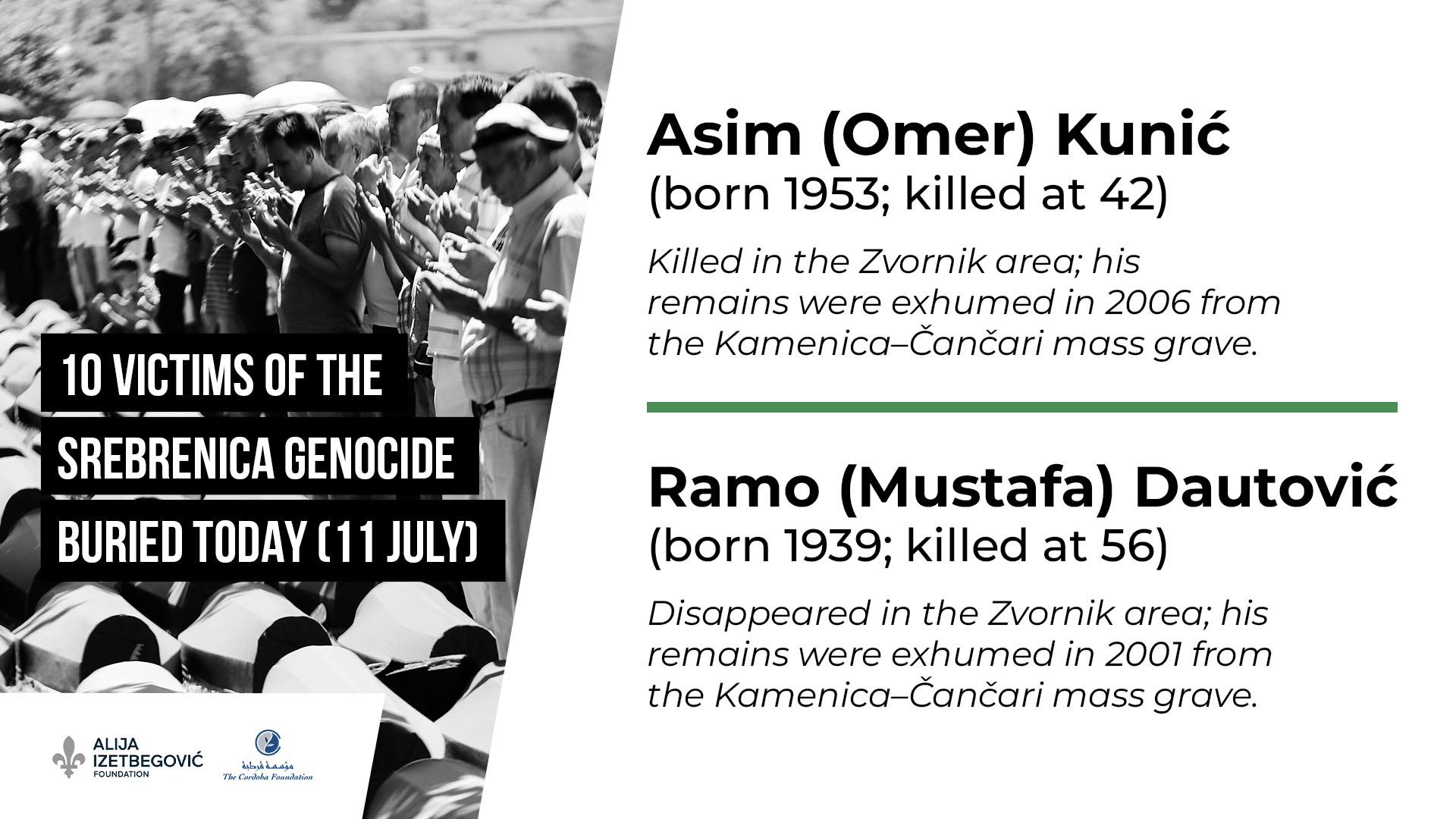
Dr Abdullah Faliq asked for prayers and reflection for ten genocide victims whose remains were identified this year, ahead of their burial at Srebrenica on 11 July. He also highlighted the Bosnian Grand Mufti’s Friday Sermon delivered earlier that day in Sarajevo, noting its timely messages of steadfastness and enduring faith.
Faliq urged the youth to study the history of Srebrenica, recommending a special publication, Srebrenica Genocide: 30 Years Later: Understanding, Remembering, Acting by Dr Emir Hadžikadunić. The publication features insights from Bosnia’s Grand Mufti, the Bosnian Ambassador, and ICMP Director Kathryne Bomberger.
Sarah Joseph urged the audience to visit the country: “Go, support the economy, support the people, and know that their stories will never die.”
Closing the evening, Faliq reflected on the ongoing pain of families still recovering the remains of loved ones 31 years later. “Let us not do this once a year only,” he pleaded. “We must keep the flame of Srebrenica alive and tell these stories all year round.”
[Ends]
Notes to editors:
Event Recording: Streaming on The Cordoba Foundation’s YouTube and Facebook channels.
The Book:Islam: Between East and West (Revised English translation, May 2026) is published by Ketebe and available online.
The Alija Izetbegović Foundation: A Sarajevo-based non-profit established in 2020 to preserve the legacy of the first President of Bosnia and Herzegovina. www.alijaizetbegovic.org
Though decades have passed, the deep pain of their absence remains as we finally lay these stolen lives to rest, remembering the unfathomable brutality with which they were hunted down, summarily executed, and buried in hidden mass graves.