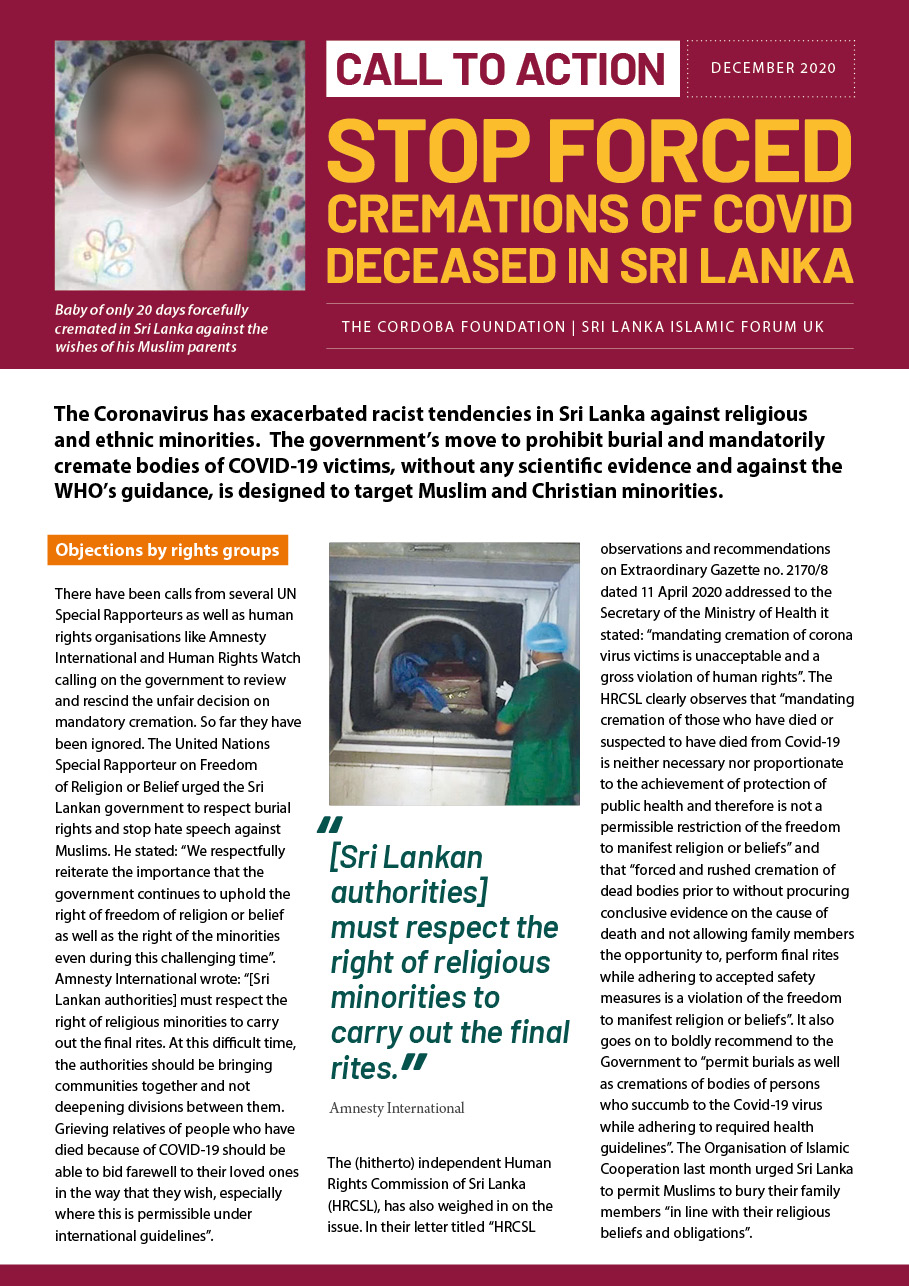
Call to Action: Stop Forced Cremations of Covid Deceased in Sri Lanka
Sri Lanka CTA FINAL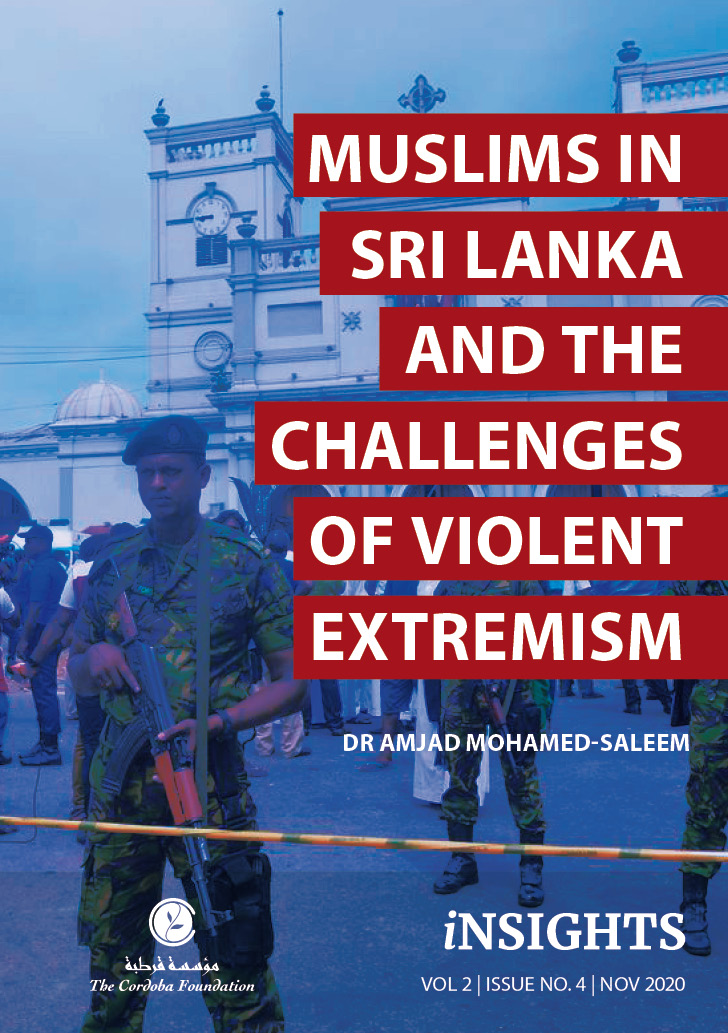
MUSLIMS IN SRI LANKA AND THE CHALLENGES OF VIOLENT EXTREMISM
MUSLIMS IN SRI LANKA AND THE CHALLENGES OF VIOLENT EXTREMISM


Islamophobia Awareness Month Deconstructing and challenging stereotypes about Islam
French President Emmanuel Macron’s speech in October accusing Islam of isolationism and of being ‘in crisis’, could not have provided better evidence of the challenge of Islamophobia facing European societies today.
For decades, Muslims who have long made Europe and Western countries their and their children’s homes, and to which they make immeasurably valuable contributions as citizens, those Muslims have warned that the most serious forms of Islamophobia are those which emanate from unsuspected sources.
While one would expect Islamophobic statements and attacks to come from Far-Right, xenophobic, white supremacist, neo-Nazi clusters, it shouldn’t be expected of a Centrist President of a major country such as France which itself is home to millions of Muslims. Further, it comes at a time when the entire world is debating the question of race, and nations are trawling through their respective legacies to see what gross crimes against other people were committed in order to provide the socio-economic conditions under which they currently live. It would’ve been thought that a politician of such stature should have been more careful.
Yet, such is the challenge of the rising and ever-expanding disease of Islamophobia, that few even in the much more tolerant Britain, even cared to mention it.
 Therefore, the Islamophobia Awareness Month (IAM) this November could not have come at a more apt time, nor under more telling circumstances. An annual fixture now, after the challenges of launching this fantastically important initiative by a group of prominent organisations back in 2012, it is a crucial landmark in the history of British society and its development in relation to matters of race, faith and culture. The month-long campaign seeks to deconstruct and challenge stereotypes about Islam and Muslims. (Image: IAM launch event at the London Muslim Centre, 2nd Nov 2012)
IAM was initiated by, amongst others, The Cordoba Foundation, Enough Coalition Against Islamophobia, London Muslim Centre, Mend/Engage, Federation of Students Islamic Societies and the Muslim Council of Britain.
Even with the immense challenges of having to deal with the Covid-19 outbreak and lockdowns that bear great costs on all sections of society, IAM is a vital reminder of the added difficulties life in modern Britain brings to so many, including countless on the frontlines of maintaining a semblance of normalcy and care.
The Cordoba Foundation is proud to once more welcome the Islamophobia Awareness Month, and pledges to continue to work with others, towards celebrating the values and tenets of this great global faith, followed by a fifth of the world population, and to remove any stigma attached to being a Muslim in Britain.
Dr Anas Altikriti
CEO
The Cordoba Foundation
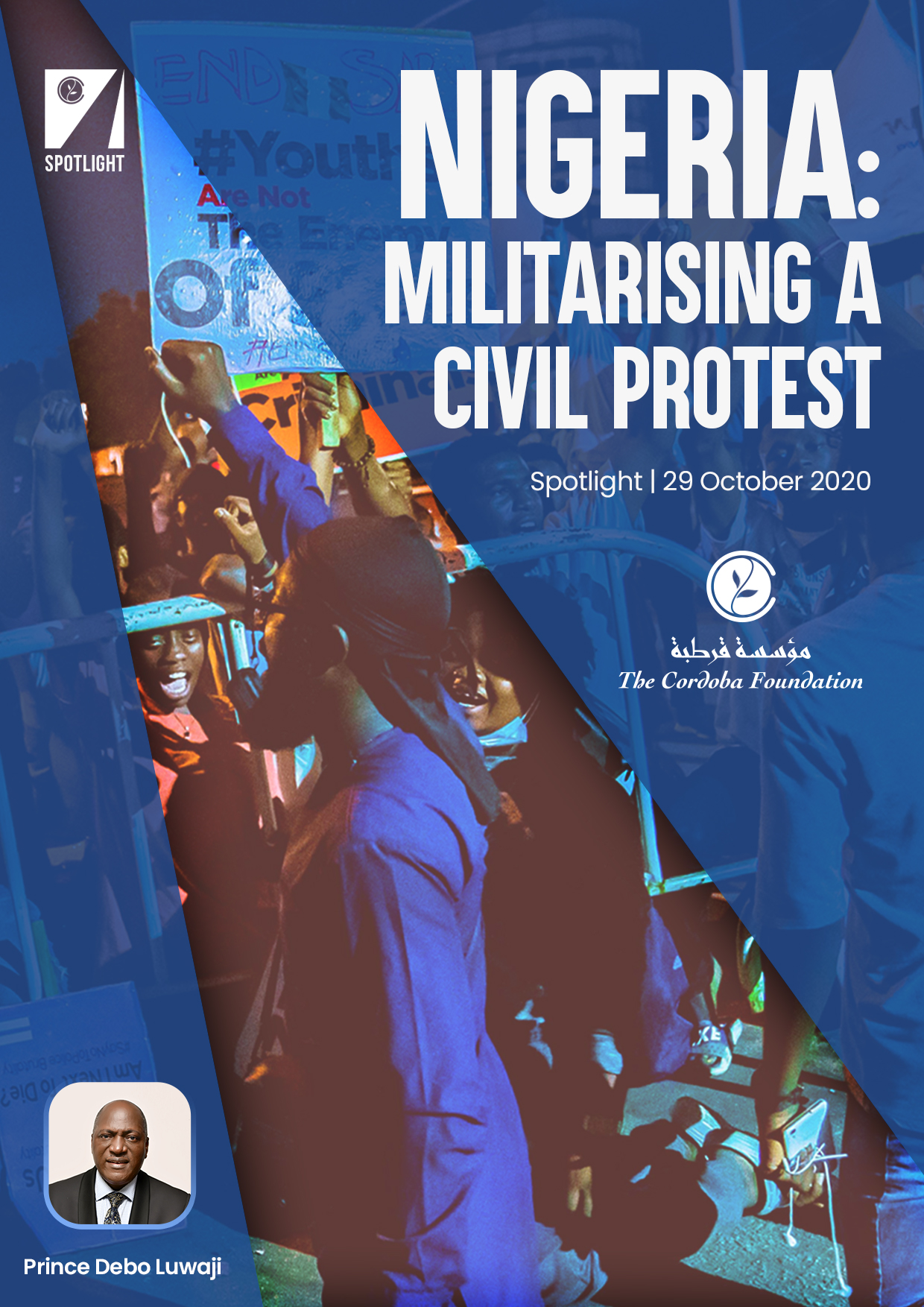
NIGERIA: MILITARISING A CIVIL PROTEST
NIGERIA: MILITARISING A CIVIL PROTEST
by Prince Debo Luwaji
In This Issue
Part 1 – Nigeria: Mishandling of a simple protest
What sparked the mass protests?
Demands of the protesters
The case against SARS
Part 2 – What breaks the peace
Role of the President
Two distinct youth movements behind the protests
The Governor’s reaction
International condemnation of the brutal crackdown
Pervading frustration: how much time do we have?
Part 1 – Nigeria: Mishandling of a simple protest
Militarising civil protest is not only dangerous but history has proven that the consequences of doing so is dire.
The use of the military on Tuesday 20 October, 2020, to supress the largely peaceful protests by youths in Lekki, Lagos and other locations in Nigeria was so plainly wrong-headed that it is difficult to imagine that those who authorised it did not foresee its inevitable outcome. What began as a largely peaceful #EndSARS protest, has in one moment of ill-advised official high-handed reprisals, turned into #LekkiMassacre and #BlackTuesday.
Several protesters have been killed and hoodlums have taken over from the hitherto peaceful gatherings, unleashing mayhem on government property and drawing officers of the law into bloody confrontations with protestors. Some men of the police force count among the casualties and a few police stations have also been torched. There are reports of shopping centre looting as well as the targeting of homes and businesses of families linked to politicians. It is hurtful to recall that these same protests were generally acknowledged, both home and abroad, as peaceful and well-organised everyday the youths were on the streets, until Tuesday’s violence.
Within 24 hours, by the close of Wednesday 21 October, the loss of property in Lagos alone has cost in the region of $450m US dollars. Places set ablaze included the Nigeria Port Authority, Lekki Toll Gate, BRT Bus Terminal, along with no less than 60 Mass Transit vehicles, Television Continental, and the Oriental Hotel Victoria Island. The last of these two properties are believed to belong to a prominent politician. The Federal Road Safety and Vehicle Inspection Offices as well as the Governor’s family house in the city were also damaged. The once revered palace of Oba of Lagos was also not spared in the mindless arson, his symbol of authority seized. Many local government offices in the metropolis were torched or damaged.
Additionally, the mayhem, as reported in the business news, seems to have dampened investors’ sentiment, leading to a decline in the equity market, where “market capitalisation of equities depreciated by N113bn from N14.98tn the previous day to N14.87tn – as market sentiment remained in the negative territory because of the #EndSARS crisis”.
In retrospect, many believed that a ten-minute address by the President and Commander-in-Chief of the Nigerian armed forces Muhammadu Buhari, if broadcast in the wake of the growing protests, would have made all the difference required to calm nerves and encourage the protesting youths to vacate the streets.
Writer and philosopher George Santayana once said, “those who cannot remember the past are condemned to repeat it”. In other words, when we fail or refuse to learn from the mistakes of the past, it becomes inevitable that we make the same avoidable errors.
There are historians who believe that the collapse of Nigeria’s First Republic and the nation’s unfortunate three-year civil war (1967–1970) that claimed millions of lives actually had its roots in Western Nigeria, where street protests against the perceived rigging of the 1965 Western Regional Elections was mishandled. The deployment of maximum force by soldiers and brutal Police squads to quell those protests spiralled into ‘Operation Wetie’ — a wave of sporadic arsons and widespread destruction of property.
Drawing from this, it is imperative that the government and all men of goodwill in Nigeria begin immediately to take measures to douse the flames and avoid further needless bloodshed and a calamitous end result.
Nigerians are a largely peaceful people who often wilfully overlook the excesses of those in government. In a general sense, life is tough, and making a living in the absence of any significant socio-economic support systems imposes on most people a daily hustle that starts from dawn and ends at dusk. Thus, what the average citizen asks for is nothing more than an atmosphere of peace and the freedom to pursue their legitimate undertakings.
Although the majority are enlightened and have a full grasp of all news regarding the corruption and unbridled greed of many politicians and public officials, you will hardly see Nigerians mount-up mass protests against their leaders. The time required for such frivolities is simply too expensive to spare. The majority of people are in such an impoverished state that anything that would shift their focus and time off work (or their business pursuits) will lead to terrible consequences for their dependants. So, most often, they simply take whatever is thrown at them – increased power tariffs, hikes in fuel prices, with equanimity and move on.
Within this context, it made the #EndSARS protests an unprecedented event and a serious embarrassment to the government? So how did it start?
What sparked the mass protests?
A young man, Joshua Ambrose, was reportedly thrown to his death from a fast moving vehicle belonging to the Special Anti-Robbery Squad of the Nigerian Police in Ugbeli, Delta State. This coincided with other reports of abuse at the hands of the police, something that has become commonplace. For the youth, it was one loss of life too many. Their spontaneous reaction resembles the one ignited by the Tunisian vegetable vendor – Mohammed Bouhazizi who set himself ablaze in frustration after his wares were seized by overbearing state officials, sparking off protests in Tunisia. There was also a report of a young man here who committed suicide after the seizure of his phone by SARS prevented him from closing a deal on the stock exchange, plunging him into huge loss.
The Nigerian government swiftly reacted by announcing the dismantling of the much-maligned SARS and replacing it with the Special Weapons and Tactics Team (SWAT), proclaiming this as the beginning of the administration’s elaborate plan towards police reforms, Incidentally, this wasn’t acceptable to the youth who saw it as mere tokenism, much like pouring the same wine in a different bottle with a new label. And so, the protests continued and had stretched beyond the second week by #Black Tuesday.
Demands of the protesters
To be sure, the demands of the youth didn’t seem extra-ordinary. On Sunday, 11 October, the protesters put up five demands to be met by the Federal Government of Nigeria. The demands, which were signed by ‘A Nigerian Youth’ – apparently to prevent any leader or group within them from being identified as the arrowhead of the protests, asked for immediate release of all those arrested during the protests, as well as justice and compensation for all those who died through police brutality in Nigeria.
They wanted notorious officers of the SARS identified for their various atrocities brought to justice. At the root of their concerns is the reform of the police who currently operate in such deplorable conditions that have largely contributed to their inhumane attitude towards the people.
From street to street, the protesters grew in number and were encouraged by the outpouring of support from demonstrations in different cities of the world calling on the government to grant them a hearing. The protests largely mirror the legitimate frustrations of the Nigerian youth, whose lot has gone from bad to worse over the years. Joblessness has reached an all time high, and those who have any job are mostly paid a pittance despite possessing university degrees. Higher education is gradually losing its value to the youth because of the hopelessness that awaits most university graduates. According to Dr. Willie Siyanbola, Director General of the National Centre for Technological Management, a staggering 60% of Nigerian graduates are unemployed.
The youth have taken to heart Martin Luther King Jr’s statements, that “a patriot must always be ready to defend his country against his government”, “protest beyond the law is not a departure from democracy; it is absolutely essential to it”, and “If I were to remain silent, I’d be guilty of complicity”.
The case against SARS
Worst is the accusation of profiling youths, levelled against the SARS. In these days of social media technology, there is indeed proofs gathered through video footage of encounters that lend credence to this accusation. These special departments of the Nigerian Police assumed incredible power of their own, and apparently operate unchecked. Taking advantage of the notoriety of some Nigerians in cyber-crime around the world, harassment and intimidation of the youth became routine. A youth driving an expensive car is damned. The youth on the street with dreadlocks or simply dressing ‘young’ is an easy target. They are stopped indiscriminately, their phones seized and contents checked. Any communication on the phone can be used as incriminating, and the victims are sometimes made to transfer as much funds as the arresting police team can extract. Often, the victim sees his cooperation as a life-saving necessity. These incidents are replicated across the country and have been getting from bad to worse.
Part 2 – What breaks the peace
“Protesting is never a disturbance of the peace. Corruption, injustice, war and intimidation are disturbances of the peace.” ― Bryant McGill
The exact number of lives lost to the reportedly heavy-handed intervention of the Nigerian security forces on Tuesday, 20 October during the youth’s #EndSARS protests in Lekki Lagos and other parts of the country may take a while to be fully ascertained, if ever. Figures being quoted vary from 4 to 40, depending on who you listen to. Some commentators swear the casualties are more, others say the social media orchestration of a ‘massacre’ was a politically motivated exaggeration of what actually happened in Lekki. Without being an eye witness or having independent facts, it pays to be suspicious of everything you gather on social media in these days of creative and manipulative graphics.
What is fairly certain at this juncture, however, is that the reported carnage of Tuesday ignited a conflagration that enveloped the entire city in the subsequent three days. When the dust of the mindless mayhem settled, the damage was incalculable. The financial losses incurred by the state and private citizens, in Lagos especially, was far higher than initially estimated. It could be well over three billion dollars, an unacceptably high figure for a nation in recession and currently reeling in trillions of dollars of external debt. Public assets were not the only targets of the rampaging hoodlums who took advantage of the mayhem that ensued after the organised and peaceful protests had been violently dispersed. Private businesses located in malls and business districts were not spared; a truly sorry situation from which many of the victims may never recover without government assistance.
Role of the President
Considering the overwhelming local and international outcry against the reported carnage of #BlackTuesday, especially the Lekki demonstrators, who were not only peaceful throughout their 12-day protests but were indeed recorded to be waving the Nigerian flag and singing the national anthem, even as the menacing soldiers advanced on them. There was a general expectation that President Buhari’s much awaited address would unavoidably take its cue from that incident. Not a few were disappointed when the president’s eventual speech made no direct reference to it.
In his national broadcast of 22 October, the President admitted this much:
“The choice to demonstrate peacefully is a fundamental right of citizens as enshrined in Section 40 of our Constitution and other enactments; but this right to protest also imposes on the demonstrators the responsibility to respect the rights of other citizens, and the necessity to operate within the law. As a democratic government, we listened to, and carefully evaluated the five-point demands of the protesters. And, having accepted them, we immediately scrapped SARS, and put measures in place to address the other demands of our youth”.
Referring to the extensive carnage witnessed all over the country in the last few days, President Buhari could not see how all these could have been executed in the name of the #EndSARS protests; “I am indeed deeply pained that innocent lives have been lost. These tragedies are uncalled for and unnecessary. Certainly, there is no way whatsoever to connect these bad acts to legitimate expression of grievance of the youth of our country”. The President concludes further that “the spreading of deliberate falsehood and misinformation through the social media in particular, that this government is oblivious to the pains and plight of its citizens, is a ploy to mislead the unwary within and outside Nigeria into unfair judgement and disruptive behaviour”.
In fairness, the government did scrap the SARS – the police unit accused of assault, illegal detentions and extra-judicial killings, on 11 October, 2020, about the fourth day into the protests. This was a commendably prompt response that the President now claims may have been misconstrued by his detractors as weakness. But the demonstrators had called for more extensive police reforms and in other areas of governance.
Two distinct youth movements behind the protests
To put it in context, it is evident that two sets of youths were involved in what can clearly be separated into different incidents over the last 2 weeks or so in Nigeria. Those behind the #EndSARS protests, which by the way was a spontaneous reaction at the start of the protest, were mostly educated youths, including renowned artists who organised themselves in the most peaceful manner possible. They raised funds among themselves and extensively from those who were sympathetic to their cause at home and abroad. They ate, danced and slept at the Lekki Toll Gate and other designated gathering points across the country. For the most part, they resisted any attempts of miscreants to infiltrate them, and thugs caught in their midst were handed over to the police. Given their nobility and their calm conduct, this was the last set of people that you would imagine the authorities would want to disperse violently.
The second set of youths were the miscreants and hoodlums, who were initially either watching from the sidelines or had to alter their participation to the peaceful manner dictated by their more refined protests leaders. All this changed dramatically and predictably after the Tuesday incident. The marauding group took over and these are the criminals, who had grudges with the police and the state for obvious reasons, attacking and burning police stations, prisons to free inmates, and engaging in an audacious looting spree.
I drove around some parts of Lagos on Thursday 22 October, the second day of the curfew. What I witnessed was scary. No policemen to be found anywhere, only weed-smoking hooligans manning illegal check points mounted on the highways and extracting money from the few motorists who dared to be on the road. Considering the sheer numbers of these disgruntled hooligans, and they can be found in almost every community within the state, the weaponised poverty I witnessed gave me an impression of a city playing with fire while sitting on a keg of highly flammable substance. Monuments and state assets which took several years and colossal amounts of money to build can be brought to ashes simultaneously at various locations by a few unchecked mobsters in no time at all.
The Governor’s reaction
One can sympathise with the Governor of the state, Babajide Sanwo Olu who dissociated himself from protesters at the point where the demonstrations turned disastrous. In his televised address on Friday 23 October, after inspecting the horrendous carnage in parts of the state, the Governor appeared visibly overwhelmed. His frustration was mirrored in a leaked interview he had with a foreign envoy, now in the public domain, in which his undeniable voice was heard lamenting whatever caused the misdirected operatives to shoot at the peaceful protesters. Some excerpts are reproduced below:
Governor: Straight to the point, you knew there was a curfew declared at about 10.30 in the morning, that there was meant to be total lockdown and people are to vacate the streets and be in their homes from 4pm. That was the instruction that was passed out. So at 6 o’clock or thereabouts, when we realised that the protesters at the toll plaza were still there, there were several appeals from civil societies and some of the parents that we should extend the curfew time. We graciously communicated thereafter that the curfew would be extended till 9pm (take off time) before we get the security operatives out.
So those were the communications that were out to a whole lot of security operatives, but I think at about 7 o’clock or thereabouts, there was a small unit of the military that now were not there, and we heard that gunshots were fired. Initially, we couldn’t even believe it, because, security operatives were not meant to be there ‘til around 10 o’clock or 11, so why would anybody be there?
Envoy: But the Army said they were not there. Was the army there or not?
Governor: I think the footage showed that they were the military. I wasn’t there on the ground myself but some of the things captured on camera showed that it was the army.
Envoy: Why is the army denying it then?
Governor: They don’t report to me, you know, I wouldn’t know why. The instructions were that they shouldn’t be there until around 10pm. I think there must have been some miscommunication somewhere in their own formation. What we heard is that the unit that went there, their location is less than 10 minutes from where the incident occurred. You know, its straight down the same road, 5 minutes from their barracks they actually could get there. I don’t know who gave those instructions. I don’t know how they missed the information that was passed on.
Envoy: Just to be clear, you are not saying that people should have been opened fire on because they disobeyed the curfew?
Governor: Absolutely not. There were no instructions to that effect. I am not a party to that. I would never instruct people to open fire on protesters.
What kind of security setup do we have in Nigeria which could allow a sitting Governor, the Chief Executive Officer of the state, not be the dominant voice in deployment of forces of intervention in matters whose ugly repercussions are entirely for his state to bear? Notwithstanding his disavowal, however, Governor Sanwo Olu and those who supported the drafting of soldiers to quell the peaceful protests, even if the soldiers had gotten their timing right, grossly underrated the inevitability of the maximum damage that the military are trained to inflict in battles.
International condemnation of the brutal crackdown
The condemnations that trailed #BlackTuesday have been massive, coming from prominent voices everywhere. At home, former President Olusegun Obasanjo, Nobel Laureate Prof. Wole Soyinka and the opposition Peoples’ Democratic Party, among others, reprimanded the government for its heavy-handedness and called for restraints on all sides. Internationally, former US presidential candidate Hilary Clinton, Twitter’s CEO Jack Dorsey, Archbishop of Canterbury, and current US Democratic Candidate Joe Biden, condemned the development in the strongest possible terms, calling for the perpetrators to be brought to justice.
The European Union said it was shocked by the killings in the wake of the #EndSARS protests. In a Statement by the High Representative / Vice-President Josep Borrell on Wednesday 21 October said that “it was looking forward to seeing the sort of reforms that would be put in place to ensure police reforms. It is crucial that those responsible for abuses be brought to justice and held accountable”.
Nigeria’s Vice president, Prof. Yemi Osibajo SAN promised this much on Thursday 22 October when he received at the Presidential Villa, Abuja, an American government delegation including the US Assistant Secretary, Bureau for Democracy, Human Rights and Labour, Bob Destro; US Assistant Secretary, Bureau for Conflict Stabilisation Operations, Denise Natali; the Counselor of the US Department of State, Thomas Ulrich Brechbuhl; and the Charge d’Affairs, US Embassy, Kathleen FitzGibbon as well as Foreign Affairs Minister, Geoffrey Onyeama.
According to the Vice President, at-least 13 states in the country including Lagos, have since established Judicial Panels “to seek justice and to compensate those whose rights have been breached.”
Plans are afoot to investigate all cases of police brutality including any extra-judicial killings, prosecute erring police officers, create new state-based Security and Human Rights Committees, as well as provide compensation to victims of the disbanded Special Anti-Robbery Squad (SARS) and other police units.
Pervading frustration: how much time do we have?
The Nigerian government is running out of time to quell the growing dissatisfaction among the populace. There are those who believe that a slice of the monstrous emoluments of the few in power, starting with those members of Assembly, the atrocious entitlements of ex-governors and the financial leakages in all tiers of government, would make a telling difference in the sectors of education, social amenities and police welfare. A Senator of the National Assembly, Ali Ndume – Chairman of the Senate Committee on Army in an interview on Channels Television said, the problem goes beyond the emoluments of the National Assembly alone, “the overall cost of governance is too high. Right now, Nigerians are spending N13 trillion on less than 5% of the people”.
Surprisingly, even in the midst of the current national crisis, no less than four large warehouses were discovered in Lagos and other states, between Wednesday 21 and Friday 23 October, stuffed to overflowing with essential everyday foodstuffs which were meant as palliatives for the masses during the recent Covid-19 lockdown. There are reasons to believe that similar yet-to-be-discovered storage facilities are in many other states. People suffered hunger and deprivation during the 4-month Covid lockdown, and still do. Yet, several million dollars worth of foodstuffs provided by the government, and with local and international donations, which would have assuaged their hardships, were kept locked-up by conscienceless politicians for whatever reasons – perhaps to gain political leverage at a later date when distribution would have more electoral value.
It would be interesting to understand on whose orders these foodstuffs were stored? Why did they remain in safe keeping several weeks after they ought to have been distributed?
These issues are galvanising a generation already disillusioned with the ruling class. The government needs to take concrete action to assuage people’s widespread discontent or there will be plenty of protests to come.

Author
Debo Luwaji is a Prince of the Alake dynasty, Egbaland, Ogun State Nigeria where he is resident. He is an educationist, a trained journalist and a writer. He is an alumnus of London School of Journalism, The Polytechnic Ibadan, Lagos State University and Pan African University (Lagos Business School) where he obtained degrees and post graduate diplomas in Journalism, Educational Management, law and Media Enterprise respectively. He runs a charity initiative, HSA-LANE Vocational Institute, that empowers indigent youth and women through free training and post-training start-ups.
Copyright
© The Cordoba Foundation 2020.
All rights reserved. No part of this publication may be reproduced, stored in a retrieval system or transmitted in any form or by any means, electronic or otherwise, without prior permission of the The Cordoba Foundation.
Disclaimer
Views and opinions expressed in this publication do not necessarily reflect those of The Cordoba Foundation.
Editors
Dr Anas Altikriti – Chief Executive
Dr Abdullah Faliq – Managing Director
Prof. Jerome Krase
H.D. Forman
Sandra Tusin
Published in London by The Cordoba Foundation
www.thecordobafoundation.com
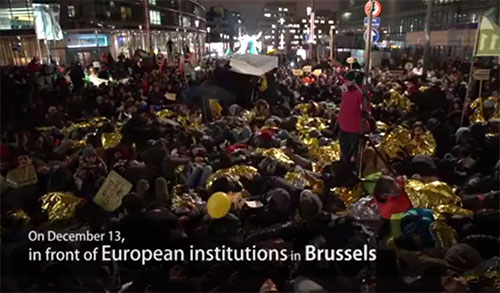
We are a welcoming Europe
Millions have stood up to help.
Europe’s citizens are its biggest strength and the key to change the current political impasse on migration. We are coming together to launch a European-wide campaign in order to put pressure on politicians, in particular as part of the 2019 European Parliament elections, and put forth our demands.
We want the European Commission to directly support local groups that are willing to welcome and integrate refugees because we should have the chance to sponsor refugees.
We want the European Commission to stop those governments that are punishing volunteers because no one should be prosecuted for offering humanitarian help and shelter.
We want the European Commission to guarantee more effective ways to defend victims of exploitation, crime and human rights abuses in our countries and at the borders because everyone in Europe – whatever their status – has the right to seek justice.
The initiative claims that citizens across Europe want to sponsor refugees to offer them a safe home and a new life.
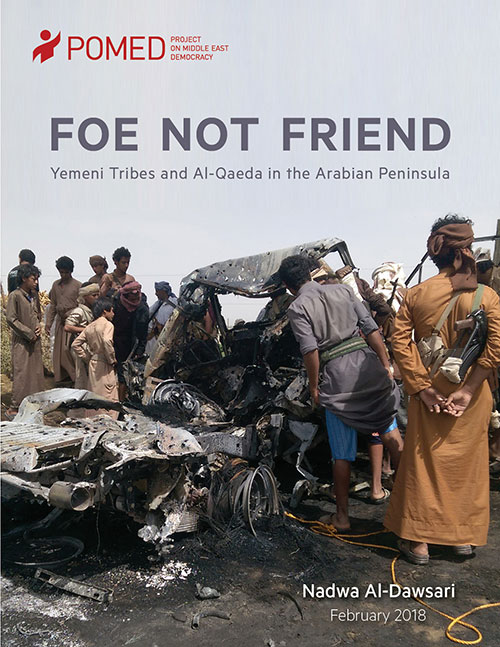
FOE NOT FRIEND Yemeni Tribes and Al-Qaeda in the Arabian Peninsula (AQAP)

Yemeni tribes as collective entities have not backed or allied with AQAP, agreed to give its fighters safe haven, or endorsed its radical ideology; to the contrary, tribes have tended to see the group as a potentially serious challenge to their authority
This timely report by Nadwa Al-Dawsari unpacks the dynamics between tribes and AQAP to explain that Yemeni tribes are not an inherent part of the problem, but instead could represent a key to countering the group effectively. The report describes the evolution of al-Qaeda in Yemen since the late 1980s; what tribes are, the government’s relations with tribes, and tribes’ governance and value systems; and AQAP-tribal interactions before and during the civil war, when some tribes have coordinated with AQAP against the Houthis, a common enemy.
The report goes on to discuss how the excessively militarised U.S. counterterrorism approach has worsened some of the conditions on the ground that fuelled al-Qaeda in Yemen in the first place.
Finally, the report offers four broad recommendations for U.S. policy including 1) Work to end the war as soon as possible; 2) Do not wait until the end of the war, however, to help Yemenis strengthen security and improve living conditions; 3) Limit the use of airstrikes and raids against AQAP, especially in areas where clashes between Houthis and tribes are ongoing; and 4) Explore the possibility of rehabilitation for some tribesmen who joined AQAP for economic, political, or social reasons, not out of ideological commitment.
AQAP exploited the security vacuum created when Yemen’s military and security forces split into pro-and anti-Saleh factions, or simply disintegrated.
UK government should withdraw its invitation to Abdel Fatah al-Sisi

We are concerned to hear that the government has invited the Egyptian dictator, Field Marshal Abdel Fatah al-Sisi, to visit the UK. We believe it violates the British values which the government claims to champion to welcome a ruler who has overthrown an elected government and instituted a regime of terror which has thrown back the cause of democracy in Egypt and the wider Middle East many years.
While not necessarily supporting deposed President Morsi or the policies of his Freedom and Justice party, we note that he was democratically elected, and that his removal from office was effected by means of a military coup led by Sisi.
Since then Sisi’s military-directed regime has massacred thousands of civilians. Hundreds of supporters of the Muslim Brotherhood, including President Morsi, have been sentenced to death in mass trials that were a travesty of justice. Almost all independent political activity has been suppressed, including that of liberal and leftwing organisations. Women’s rights have been violated across the country.
Sisi was “elected” president in 2014 in a vote that did not meet the most minimal democratic standards. The parliamentary elections currently taking place in the absence of any real opposition have been shunned by the vast majority of Egyptian voters with record low turnout, in the expectation that the new Egyptian parliament will be no more than a fig leaf for Sisi’s authoritarian regime.
Meanwhile, security and police forces have illegally arrested, detained and tortured Egyptian citizens, media freedoms have been suppressed and many journalists arrested and abused.
Such renunciation of democracy and human rights has surely contributed to the upsurge of terrorism in Egypt, which we repudiate but regard as a consequence of, rather than a justification for, Sisi’s barbarism.
Under these circumstances, we regard any visit to the UK by this despot as an affront to democratic values. No considerations of commerce or realpolitik can justify such an invitation. We urge the government to withdraw it.
Diane Abbott MP
Caroline Lucas MP
John McDonnell MP
Lindsey German Stop the War Coalition
John Pilger Journalist
Dr Anas Altikriti The Cordoba Foundation
Andrew Murray Chief of staff, Unite
Dr Daud Abdullah British Muslim Initiative
Ken Loach Film-maker
Dr Abdullah Faliq Islamic Forum of Europe
John Rees Counterfire
Dr Maha Azzam Egyptian Revolutionary Council
Harjinder Singh
Prof John L Esposito
Victoria Brittain Writer
Salma Yaqoob Former councillor
Peter Oborne Journalist
Bruce Kent CND peace campaigner
Aaron Kieley Student Broad Left
Kate Hudson CND
Chris Nineham Stop the War Coalition
Michael Rosen Author and political activist
Carl Arrindell Broadcaster
Dr Omar el-Hamdoon Muslim Association of Britain
Dr Farooq Bajwa Solicitor
Reverend Stephen Coles St Thomas the Apostle Church
Steve Bell Treasurer, Stop the War Coalition
Carol Turner Labour CND
Dr David Warren University of Manchester
Tanya Cariina Newbury Smith
Ibrahim Vawda Media Review Network
Nabeweya Malick Muslim Judicial Council
Hilary Aked University of Bath
Alastair Sloan Al-Jazeera columnist and investigative reporter
Dr MF ElShayyal Visiting professor, King’s College and SOAS
Asim Qureshi Author, Rules of the Game
Shaykh Abu Sayeed Da’watul Islam UK & Eire
Dr S Sayyid University of Leeds
Dr Muhammad Feyyaz University of Management and Technology, Pakistan
Dr Haider Bhuiyan University of North Georgia
Dr Osama Rushdi National Council for Human Rights, Egypt
Prof Mohammad Fadel University Toronto, Canada
Prof Scott Poynting University of Auckland, New Zealand
Maher Ansar Sri Lankan Islamic Forum-UK
Dr Alain Gabon USA
Na’eem Jennah
Dr Muhammad Abdul-Bari
Imam Ajmal Masroor
Dr Sarah Marusek
Yahya Birt
Shanon Shah
Robina Samuddin
Sameh Shafei Stop Sisi
Anne Alexander Co-Founder, MENA Solidarity Network and Egypt Solidarity Initiative
Medea Benjamin Code Pink
• Join the debate – email guardian.letters@theguardian.com
SOURCE: http://www.theguardian.com/world/2015/oct/27/uk-government-should-withdraw-its-invitation-to-abdel-fatah-al-sisi
Blog: Is the Arab Spring Over?
Is the Arab Spring dead? Certainly not according to Dr Anas Al Tikriti, the British-Arab founder of Cordoba Foundation, who was one of the panelists on 20 March 2014 at the Skeel Lecture Theatre (Queen Mary University of London). Dr Anas came to prominence in the UK when he participated in mobilisation for the historic “Don’t Attack Iraq” march in London ( March 03).
In a forceful presentation he argued that the Arab Spring was a process not an isolated event. As such it is bound to have ups and downs; but its line of movement is now irreversible. The people can’t be subdued by force. They no longer fear their rulers and know that change is possible. The struggle for democracy deserves Western democratic support and Solidarity. He mocked the myth that people in the Arab countries deserve and need only authoritarian rule. Poverty has nothing to do with the new awareness.
To read more, please click here