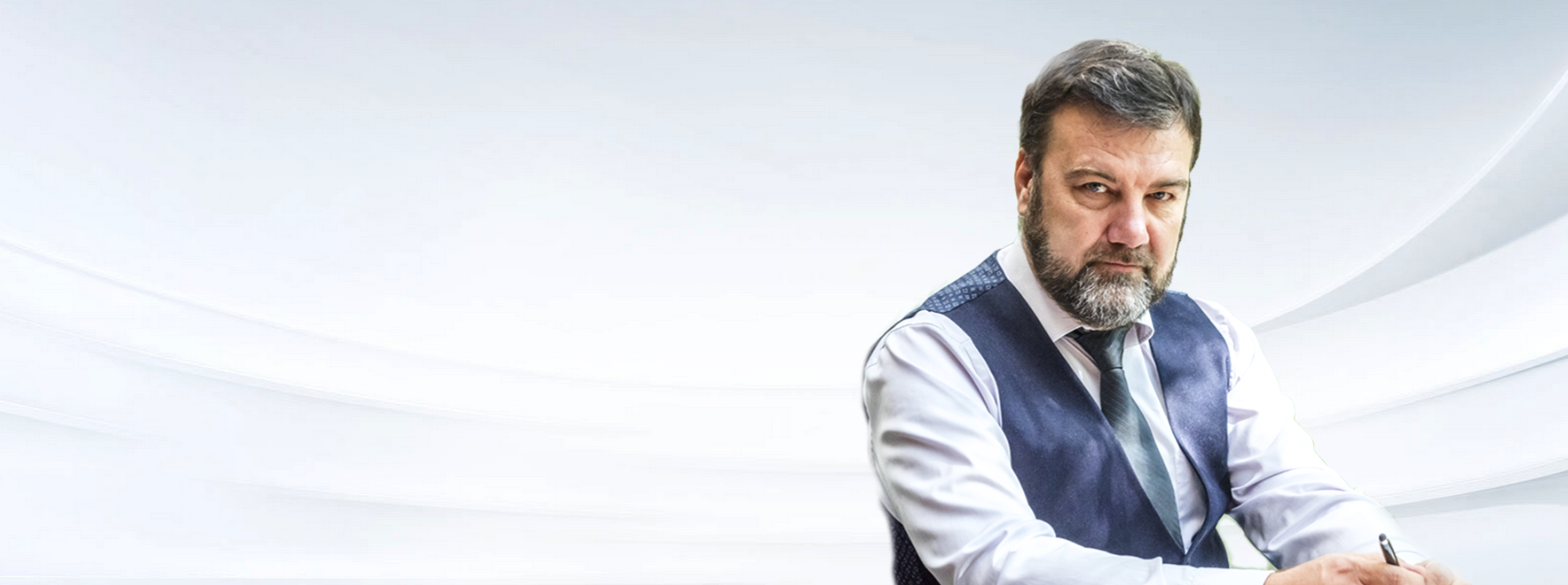
Prof Admir Mulaosmanovic
CEO, Aurora Foundation, Sarajevo, Bosnia-Herzegovina
Official book launch, Islam: Between East and West by Alija Izetbegovic
The Cordoba Foundation & Alija Izetbegovic Foundation
10 July 2026, London Muslim Centre
“The contemporary world is marked by a sharp ideological conflict that has been going on for years and whose end is not in sight. We are all involved in this conflict in one way or another, either as its participants or as its victims. What is the place of Islam in this gigantic confrontation? Does it have any role in shaping today’s world? This book attempts to answer that question, at least partially.”
I begin this short address with a sentence from the introduction to the book, Islam: Between East and West, which, both then and now, poses one of the key questions for Muslim thinkers and all those who take Islam as a guide in life. The thought expressed — the question that Alija Izetbegović posed—rings even more powerfully today than when it was first written down. The bipolar order that shaped his approach has ceased to exist, but the multipolar one is slowly becoming a reality that must be reckoned with, which emphasizes the need to define the role of Islam in it.
Due to this multifaceted confrontation, relations have become more complex and subtle, and the world taking shape before our eyes is both troublesome and worrying. The role of Islam in a bipolarly divided world and the Cold War environment was great, but in the most significant aspect, it remained unrealised. Today, as in the near future, this role is becoming — and will become — even more pronounced, but the possibility that it will be neglected, as it was during the twentieth century, remains a realistic scenario.
However, a repetition of the twentieth-century lethargy of Islamic thought would be worse than humiliating. The Islamic idea has become crucial not only for defining one’s own position, but also for the survival of a world in which humanity does not become a mere statistical entry or “quantified energy that produces guaranteed profit.” Instead, it offers a vision of a being imbued with meaning in the fullness of his action and existence — “a being of call and response” whose essence is fulfilled in the drama of existence. Therefore, within the dehumanising rush of the Anthropocene era that humanity has built against itself, Islam provides both a teaching and an order capable of restoring the lost meaning of anthropos by re-establishing humanity as a unique presence within theocentric discourse. Yet, in this immense new confrontation, this role must first be accepted, and then actively performed.
In this work, Izetbegović reveals the return of reality’s missing inner dimension of reality — a dimension linked to the drama of existence and the testimony of humanity’s arrival from the Unknown — by contrasting Michelangelo with Darwin. In doing so, he sharply contrasts art with science. He argues that, at its most authentic, art is the history of human alienation. This is precisely why science and art are in complete, irrevocable conflict regarding the origin and nature of humanity. Izetbegović claims that a science of humanity is possible only if man is viewed as a part or product of the external world, whereas art is possible only if man is distinct from nature — a stranger within it.
For Izetbegović, however, being a stranger means being a true individual — that is, achieving and realising the full capacity of a person. He emphasises this sense of foreignness, viewing this inner dimension of reality as the conscious meaning of existence.
For Izetbegović, therefore, this meaning is thoroughly reflected in the ultimate humanisation of the individual. Through countless examples — often defying worldly logic — he shows how this state is achieved. “Fighting for other people, or for truth, justice, and goodness, is always a negation of the narrowness and finitude of life. The sacrifices of those who lose their lives, freedom, and peace because they remain faithful to moral laws represent the most profound revelation of the infinity of life and its higher, secondary meaning. These are sparks of light that, like a flash of lightning in a dark night, instantly illuminate distant horizons for us.” This is one of the core convictions he expresses in his elaboration on what it means to become fully human.
Reading Islam: Between East and West leads to the conclusion that Izetbegović’s thought is provocative, yet primarily avant-garde. Unburdened by the traditional framework defined by the Ottoman and post-Ottoman systems of Islamic scholarship, his thought transcends these limits, ascending to higher levels of theoretical reflection on Islam and its position in a divided world. He engages in dialogue with intellectual giants, seamlessly incorporating their thoughts and ideas into an explanatory framework that establishes his own argument.
Izetbegović approached society, politics, culture, and all other topics from the position of an advocate building a system based on the Islamic worldview. This is why Islam: Between East and West is not a theological text. Izetbegović himself describes the book as “not theology, nor is its author a theologian; rather, it is an attempt to ‘translate’ Islam into a language spoken and understood by today’s generation.” This text is, therefore, a call for both individual intellectual sharpening and collective social action.
The thought of Alija Izetbegović in general, and this book in particular, should serve as a guide for Muslim intellectuals navigating “post-normal times,” precisely because it validates the necessity of establishing an Islamic worldview. Izetbegović brilliantly anchors his arguments by placing humanity at the center of the world’s drama. Across all the themes he explores—from the problem of justice and retribution to art as a spiritual flash within the human soul—the human being remains a unique phenomenon whose actions strive toward the pure meaning of existence.
Structurally, the book consists of two parts. It comprehensively analyses the problem of religion on the one hand, and the question of Islam from the perspective of bipolarity on the other. Yet, the human being remains the core, defining theme of the work. Izetbegović clearly demonstrates how materialists view man as a mere “biological machine,” arguing that the difference between humans and animals is only a matter of degree rather than quality, thereby denying the existence of a distinct human essence
To illustrate this point, he quotes György Lukács’s Existentialism or Marxism, claiming that there is only a “concrete, historical, and social concept of man” and that “economic and social history is the only one that is concrete and that really exists.” He similarly highlights Ivan Pavlov, who believed that man, like all other natural systems, is subject to the inevitable and general laws of nature. Though these positions may seem self-evident to some, Izetbegović views them as a total negation of humanity because they entirely dismiss the inner dimension of human reality.
Finally, by drawing on the philosophical insights of Jacques Derrida — who posited that there is no “view from nowhere” and, consequently, no entirely objective, unmediated knowledge — we can fully flesh out Izetbegović’s overarching thesis. Objectivity does not emerge from a vacuum of perspective, nor is it possible to remain neutral when evaluating contrasting discourses. For Izetbegović, the Islamic worldview is an ontological reality; a conviction in its truth cannot be fulfilled by theoretical formulation alone. It is an operational force meant to subdue and guide the world in the name of God and for the ultimate good of humanity. Achieving this requires immense perseverance and devotion. As Izetbegović powerfully concludes in the final sentence of his book: “O submission, your name is Islam!”
DOWNLOAD SPEECH HERE