Oct 9, 2010 | News & Press
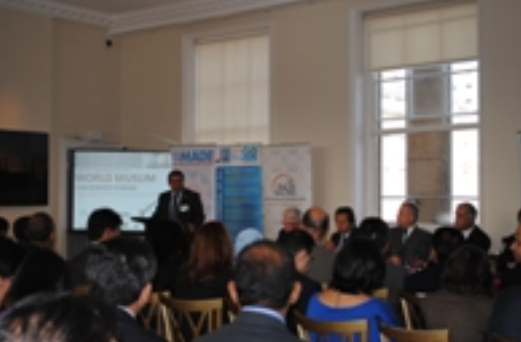
The Cordoba Foundation (TCF) sponsored and facilitated the World Muslim Leadership Forum co-hosted by Faith Regen Foundation and ASLI (Asian Strategy & Leadership Institute) and chaired by H.E Shaukat Aziz, Former Prime Minister of Pakistan.
The forum was designed to bring together key thinkers and practitioners around a table to share ideas on the following subject
1) Enhancing the relationship between the West and Muslims – Strengthening Ties and Promoting Dialogue
2) How to promote sustainable development in Muslim Societies
3) Islamic Finance
The CEO of TCF was also a panellist on the discussions regarding ‘Enhancing Relationships between the West and Muslims’
Giving the key note address, ‘Bridging the Muslim and Western World for Peace and Development’, HRH Raza Shah, Crown Prince of Perak said that ‘organised dialogue between the two sides will need to focus on what needs to be made right on both sides’.
The foreign minister of Malaysia also participated at the conference which was launched at the House of Lords.


Oct 1, 2010 | News & Press
Facilitated by The Cordoba Foundation, a roundtable discussion was held on the 1st of October exploring the role of religious institutions in peace building in conflict affected Sri Lanka.
Led by Dr S.H Hasbullah, a prominent academic from the University of Peradeniya in Sri Lanka, the discussion centred around the role of the Mosque Federation in Kathankudy, a town in Eastern Sri Lanka, which as a consequence of the conflict, had to take a leadership role at the local level to successfully address issues of survival of the community. In mapping the part played by the organisation, the discussion centered around the future relevance for roles played by such religious institutions in a post conflict Sri Lanka. The presentation by Dr Hasbullah built on a long period investigation on the aspect of religion and conflict in eastern Sri Lanka undertaken by the University of Edinbugh and SOAS which was presented at the Royal Geographic Society.
In attendance at the discussions were representatives from the Sri Lankan High Commission and the office of the President of Sri Lanka.



Aug 30, 2010 | News & Press
The Cordoba Foundation (TCF) rejects utterly libellous allegations made against it by co-director of the Quilliam Foundation Maajid Nawaz. On Sunday 8 August on the Sky News Sunday Live programme, Nawaz falsely claimed that “The Cordoba Foundation, they in Kensington and Chelsea Town Hall, hosted the Al Qaeda preacher Anwar al-Awlaki”.
This accusation is baseless, since TCF has at no time organised or hosted any event at the Kensington and Chelsea Town Hall. Nawaz is basing this accusation on a similar report issued by the Centre for Social Cohesion in 2009, which TCF refuted in a statement on 13 November 2009.
It is utterly absurd for Nawaz to state that TCF had hosted Al-Awlaki given that Al-Awlaki has attacked and declared un-Islamic (Haram or Kufr) a number of initiatives and projects which TCF either run or fully support that encourage wider engagement of young Muslims with British and European politics and the media.
This accusation by Nawaz is illustrative of the lack of professionalism, accuracy, sound academic research and even truth, demonstrated by him and the Quilliam Foundation.
Anas Altikriti, CEO of The Cordoba Foundation said “Nawaz’s baseless claim exposes the Quilliam Foundation’s amateurish and flawed working methods for what they are: cheap and simple, for the purposes of achieving mudslinging tabloid notoriety. It is surprising that any political party, organisation or individual should continue to accord such organisations credibility or respect.”
TCF demands Nawaz and the Quilliam Foundation retract the accusation forthwith. Failing to do so will compel TCF to seek legal council.
The Cordoba Foundation continues to pursue its aims and objectives through actual projects, real initiatives and true engagement with those who matter for the future of our country.

Aug 20, 2010 | News & Press
Michael Henderson is the first to admit that his work has no academic basis. Rather he prefers to ‘tell stories’. The difference though is that his stories are based on hands-on experience of real life men and women working to build bridges between people of differing colours, cultures and languages.
mh 5.jpgSo on the 17th of August as part of The Cordoba Seminar series in the impressive settings of St Ethelburgas Centre for Reconciliation and Peace, he shared his stories ‘as a privilege of highlighting the readiness of men and women to forgive and ask for forgiveness’.
mh 3.jpgFrom Nigeria, to Lebanon, to Israel, India and Northern Ireland, Michael criss crossed the countries sharing the stories of individuals taking responsibility to move beyond victimhood, to create safe spaces in the purposes of forging alliances. In his words, Michael says ‘ The building of relationships of trust is a priority and now more than ever, we need reconciliation and forgiveness’.
Michael highlights 6 key steps which he has found is essential in the process of reconciliation and forgiveness and which he has found are backed up by his stories:
The concept of ‘a Clash or an Alliance?’
The need to ‘Reach out to the “Other”’
The need to ‘Move beyond Victimhood’
The need to ‘take Responsibility’
The concept of ‘Creating a Safe Space’
The need to ‘Acknowledge the Past’
mh 1.jpgThese are not mutually exclusive according to Michael but are systematic milestones that need to be achieved if true reconciliation is the end goal.
During the Holy Month of Ramadan, where forgiveness and mercy from two key components, Michael’s speech was even more poignant, a factor reiterated by the chair of the event, Anas Altikriti, CEO of The Cordoba Foundation
As he concluded his speech Michael quotes Rajmohan Ghandi (the grandson of Mhatama Ghandi) who says that the ‘call for reconciliation is in the end a call for sanity’.

Jul 11, 2010 | External News
This is a copy of the Friday Sermon delivered on this occaision by Dr Mustafa Ceric.
1) Say :He is God alone! He has begotten no one, nor is He begotten; and there is no one comparable to Him! (Qur’an: 112).
2) There is a couple, a man and a woman, whom from families arise, as well as tribes and peoples that are supposed to meet and recognize one another on the path of common good!
3) There are three ethnic communities in our country, which respected differences of one another since ancient times and complemented each other with similarities in the spirit of Bosnian coexistence and tolerance!
4) There are four religions and traditions: Judaism, Catholicism, Orthodox Christianity and Islam, as gifts from Jerusalem and proof of God’s will to have several religions and traditions as a means to encourage people to compete against each other in making good deeds!
5) There are five rivers: the Drina in the east, the Una in the west, the Neretva in the south, the Sava in the north and the Bosna in the middle of our country, from which we all, irrespective of our faith and ethnic background, absorb the power of life!
6) There are six indefeasible human rights guaranteed to any person: right to life, right to faith, right to freedom, right to property, right to dignity and right to a family!
7) There are seven green wheat ears that should be preserved from drying out during the seven hungry years!
8) There are eight pillars of morality: sanctity, philanthropy, patriotism, nationalism, veracity, fairness, pacifism and tolerance!
9) There are nine reasons to live and to bear up: to be a witness of genocide; to be a fighter for truth and justice; to be in Potočari on July 11th; to preserve the memory of shahid (martyrs) – one’s own relatives and brothers; to disclose war crimes, wherever they happened; to fight for the rights of the vulnerable and disempowered, irrespective of who they are; to return to your home and your homeland; and to be a proud advocates of peace and reconciliation among the people, wherever you are!
10) There are the ten Commandments of God: worship only God, be kind, honorable and humble to one’s parents, look after your neighbors, love your homeland, care for orphaned children, do not kill, do not steal, do not lie, keep promises and stay on the path of righteousness.
11) Eleventh is the day contained in each of the twelve months, which reminds us all of the day of genocide that took place on July 11, 1995 in Srebrenica!
12) There were the twelve apostles of ‘Isa, the followers whom shall we learn from all over again, trusting that their path is the only right path for all of us – the path of faith, peace and reconciliation! There is no other path to success and salvation of human kind!
13) There are thirteen ways to look after the victims of genocide: by showing them respect; by giving them hope; by not giving up on them; by offering them love and friendship; by fining them a shelter; by ensuring them the right to work and employment; by recognizing them the right to compensation for emotional pain and suffering; by saving them from offenses and humiliations; by offering them solidarity; by ensuring that in their homeland, Bosnia and Herzegovina, at any place and at any time they enjoy fundamental human rights; by ensuring that in Srebrenica they do not encounter those police officers who have killed their children; by having all states of the world to sign the resolution that condemns genocide!
We want to say it now and here. If they are honest in what they are saying, and we do not know what is in their hearts, they should forgive us our faith, our culture and our desire to have home, to have a state to protect us from genocide.
If they are honest in what they are saying, they should open the doors of ghetto and allow us to travel around Europe and the world as free citizens, without visas.
I want you all to know that, on the earth and in the sky, civilization does not start from the moment when a Bosniak is buried. The civilization starts from the moment when a Bosniak is born without the fear from genocide in the future.
I also want to say that, as people who have memory of genocide in Europe, just like Jews, we are deeply hurt and humiliated by the fact that honorable men of ours, who defended the little freedom we have, are nowadays being arrested at the European airports.
We want freedom for all, as we want it for our selves. We want to live without fear in this Europe -without the fear for our children and grandchildren.
We pray to Allah to help us all in fighting for one another, for the rights of us and the others in Europe, so that we do not experience expulsion in this century as the Jews and Muslims have experienced it on two occasions.
This is for those here, who brought us all together to this place today.
14) Rijad Gabeljić, who shall we burry today, was only fourteen when he was killed in Srebrenica genocide on July 11, 1995!
15) For fifteen difficult, sad and painful years the families of genocide victims in Srebrenica have been searching for their beloved ones. For fifteen years perpetrators of the Srebrenica genocide have been denying their crime, outraging the victims and defying the International Court of Justice. We hope that on the 15th anniversary and day after this funeral in Potočari, on July 12, we will not look again at hordes of unknown people wearing well-known symbols of hatred and terror, mocking all of us who came here to pay respect to victims of the most hideous crime since holocaust! Victims of the Srebrenica genocide must be saved from the insults and humiliations, which had happened in the middle of town of Srebrenica right after this solemn gathering, because these people know how to bear their pain and distress in a dignified manner! This is a proud and honorable people who means no harm to anyone, but also the people determined not to be subject to any mocking and humiliation!
***
Thus, if we really want to prevent future genocides we must do much more than sympathize with the victims. We have to comprehend the psychological depth of the perpetrators of genocide and indifference of genocide observers.
We have to learn what makes some persons, who were once normal, to hate other persons and people to the extent that they want to systematically and methodically eliminate them all! But we also need to learn about those who support genocide against innocent people or observe it from the distance! We need to learn more about them too!
We also need to learn about the holocaust and genocide not only as of historical facts but also as a means to teach our children about the dangers of racism, anti-Semitism, Islamophobia and other examples of human intolerance.
We must teach younger generations to appreciate democracy and human rights and encourage them to reject hatred, intolerance and ethnic conflicts.
Jul 7, 2010 | External News
Britain’s fight against terrorism has been a disaster, because its “flawed, neo-conservative” direction alienated Muslims and increased the chances of terrorist attacks, a former leading counter-terrorism officer has told the Guardian.
Speaking to mark today’s fifth anniversary of the 7 July attacks in London, Dr Robert Lambert said the atrocity had led the Labour government to launch not just the publicly declared battle against al-Qaida, but a much wider counter-subversive campaign that targeted non-violent Muslims and branded them as supporters of violence.
For more information, please click here
Jun 5, 2010 | News & Press
The Cordoba Foundation (TCF) welcomes the launch of the Inspired by Muhammad Campaign, featuring ordinary Muslim professionals who contribute positively to Britain’s prosperity whilst being inspired by the role played by Islam and its final Messenger, Muhammad in their lives. This Campaign comes on the back of the findings of a YouGov poll published this week, highlighting misconceptions held by large sections of the British public linking Islam with terrorism, repressing women, among other things.
The Chief Executive of TCF Anas Altikriti said ‘the YouGov findings highlight a gap in perceptions about what people think about British Muslims and what they really are. Challenging this publicly in the media is a welcome-sign since as the poll suggested; most of the information obtained by the public on Islam was from the mainstream media. That is why we support the Campaign’
TCF welcomes adverts about the campaign placed across the city in tube stations, bus stops, bill boards, and on London taxis which highlight Prophet Muhammad’s universal teachings about caring for the environment, gender equality, and social justice.
For more information, please click here
[End]
Notes to editors
- For further information, please contact Amjad Saleem, Head of Communications on 020 89913372 or media@thecordobafoundation.com
May 4, 2010 | News & Press
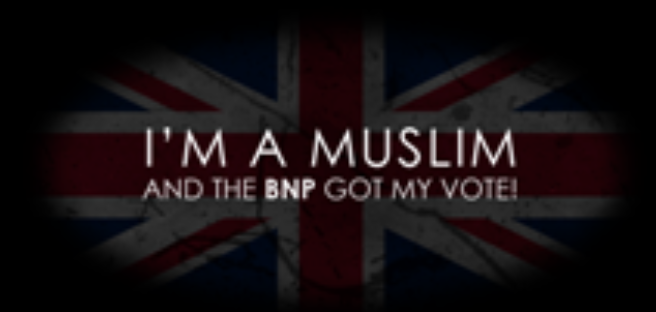
This documentary will reveal how and why public opinion and engagement with the political process in the United Kingdom has changed with more and more people becoming disengaged and apathethic.
The documentary will ask the question: ‘How much are Muslims and Ethnic Minorities in Britain contributing to the rise of the BNP?’
Designed to be launched on the night before the election, the documentary aims to inspire action and get people involved where they can have a voice and CAN tip the scales thereby ensuring that the sacrifices that our elders undertook to make a place for us in society is not undone.
Produced by: Tre Azam
‘We owe it to our elders, our children and ourselves to do what we can to have more of a say in the country we love and live in’
Directed by: Abid Mahi
‘People all over the world to this day are dying for the right to vote and the right to a fair and democratic society. Every year, hundreds and thousands of people including Muslim Brits choose not to vote in local and general elections, yet get angered and shocked with the rise of groups such as the BNP’
Executive Producers: The Cordoba Foundation
‘We can not be passive observers as policies and futures are shaped. Voting is one of the most important means of being at the heart of society’ (Anas Altikriti, CEO)
The documentary will be aired on 5th May 2010 at 8pm on Islam Channel (Sky 813)
For more information, please click here
Apr 30, 2010 | News & Press
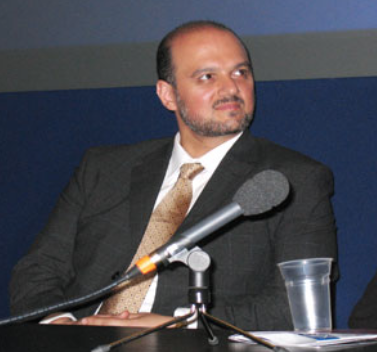
The Cordoba Foundation is pleased to announce that its CEO Anas Altikriti has been selected in the inaugural issue of the Muslim Power List 2010
Commenting on his selection, Anas said ‘It is humbling to be included in such a diverse list of unique and talented individuals that are a reflection of the best that the British Muslim Community can offer. To be nominated by members of the public is an honour’
The Muslim Power List for the United Kingdom has been launched this year to demonstrate the important contribution that Britain’s Muslim community makes to the social, financial and spiritual prosperity of the UK.
For further information, please contact the Muslim Power List