Apr 27, 2010 | Views
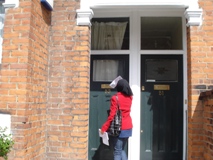
Whatever the outcome of the election on May 7th, as HA Hellyer recently wrote on Cif, Muslims around the country are likely to play a significant role in influencing the outcome of dozens of seats. The second largest faith community, which constitutes no more than 4% of the total population, has come of age and become quite astute in dealing with the elections according to interests, priorities and concerns, many of which are shared by a majority of the British people.
Apr 20, 2010 | News & Press
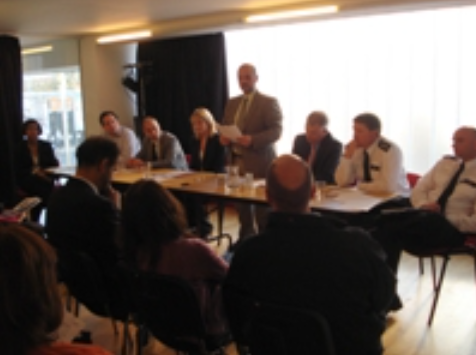
On the 20th of April, The Cordoba Foundation (TCF) facilitated a public meeting between the Hammersmith and Fulham Council (and related public service providers) and members of the Moroccan community, following the tragic murder of 17 year old Sofyen Belamouadden, a 3rd generation Moroccan who was stabbed to death in broad daylight in Victoria Station as part of a suspected gang ‘turf war’ battle.
TCF were invited by the community as independent facilitators to initiate a dialogue between the local authority and members of the Moroccan community who despite there being a large number living around North Kensington, feel that they are marginalised because of the ignorance about them, a fact that was further highlighted by one of the local authority officials who admitted he was unaware of the numbers.The meeting which was mainly attended by mothers (including the family of Sofyen) voiced concerns about the safety of the youths on the street.
Mothers repeatedly echoed the view that ‘they were not comfortable when their children left home because they were not sure whether their children would be stopped by the police or be attacked by gangs’.Members at the meeting highlighted the following as key concerns for them:
1) Children of Moroccan origin are over represented in the youth criminal justice system.
2) The current ‘Children & Young People Services’ were not adequate in meeting the needs of the young people.
3) The current extracurricular and youth activities were not accessible by the whole community thereby leaving youth with a lot of time on their hands and falling prey to bad elements.
4) A lack of communication between the authorities and parents due to miscommunications on both sides.
5) A lack of basic security systems (such as CCTV not working properly)
All this was leading to ‘a climate of fear in London’ according to one community outreach worker who urged ‘A government response to the problem even to the level of establishing an emergency response team to deal with the matter’.
Commenting on the meeting, the CEO of TCF Anas Altikriti said, ‘Meetings like this give you an insight into the issues faced on a daily basis by youth and their families. Understanding the failure to address concerns of services for the youth are important because these are often some of the catalysts for extremist and anti social behaviour’
The meeting came up with practical steps that would be taken by the local authority and the community (with support from organisations such as London Citizens, Street, Al Mannar Centre) to bridge the gap of miscommunication and identify ways of meeting the needs of the community including setting up mentoring programs and establishing more liaisons between the police and the community.
What was particularly striking was that though some of the concerns raised were directly related to the Moroccan community they were also generic to other parts of London.

Apr 12, 2010 | News & Press
 Sheikh Michael Mumisa has seen it all before. As the general elections draw closer, the same old debates in the Muslim community start to resurface.
The debates have nothing to do with which party or candidate to vote for but with the very premise of voting and getting involved in the elections. For some Muslims voting in a Western democracy is considered to be ‘an act of apostasy’. In 2005, things were so complicated that “some Mosque ‘elders’ and Imams had their beards and turbans pulled by small groups of angry young men who argued that voting in what they believed to be a ‘kufr system’ was a ‘violation of the Shari‘ah’.” Things got to such a difficult point according to Sheikh Mumisa that he was approached to clarify the issue, releasing an article which could hopefully clarify the matter. His article, “Muslims in Britain and the Elections: What does the Shari‘a say?” was then carried by the Muslim Council of Britain amongst other organisations.
 5 years on despite the debate still existing, Sheikh Mumisa is confident things are getting better. ‘At least people are less violent and moving beyond the basic arguments ’ he said as he once again addressed the issues of Muslims and elections on the 12th of April at the bi-monthly Cordoba Seminars organised by The Cordoba Foundation.
 Addressing a sizeable gathering at the London Muslim Centre, Sheikh Mumisa approached the issue in a different manner. “When it comes to the question of ‘Islam and Voting’, incontrovertible textual evidence should be produced to prove that it is not permissible for Muslims in Britain to vote. We do not need proof to argue that it is permissible for them to vote since that is the asl (original state of affairs)”. By saying this, Sheikh Mumisa is confident that the detractors will at least have to think twice before trying to engage in a debate on the subject, since “the burden of proof is thus upon those who argue that voting is not permissible”.
 The principle behind this is very simple. The Islamic legal maxim ‘al asl fi al-ashya’ al-ibaha’ [the doctrine that “all matters of human and social activity are considered a prioripermissible (mubah) under Islamic law unless clear and incontrovertible textual evidence from the primary sources of Islamic law (Qur’an and Sunnah) exists to prove otherwise] has historically been the basis of all acts of ijtihad (legal reasoning) within both the Sunni and Shi‘ah schools of law. Thus according to this principle, we need not look for proof from the sources of Islam to argue the case for Muslim participation in the British general elections, rather what is needed is incontrovertible proof that voting in such elections isharam (not permissible) since as a general principle “all matters of human and social activity (mu‘amalat and mu‘asharat) are originally permissible” as defined by the theory above.
 This has been the norm adopted by classical jurists who were very much aware that texts accommodated multiple meanings and possibilities. According to Sheikh Mumisa, it is not enough to say “God says so” or “the Prophet says so.” A number of factors have to be taken into consideration such as: the context of the revelation of the text; the language of the text; the special circumstances of the addressee of the text; other texts on the same topic; the local customs (‘adah and ‘urf) of the addressee and how they may differ from the contemporary reader.
The problem as Sheikh Mumisa explained is that contemporary Muslims, particularly those now living in non-Muslim societies, have not properly explored or understood the principle. Sheikh Mumisa impressively drew on the works of a number of classical scholars like Ibn Abidin and Ibn Taimiyyah to highlight the precedents that have been set in Islamic Jurisprudence. However it is al-Shatibi, in the Sheikh’s opinion, whose work (al-Muwafaqat), makes the case that the texts of law are considered open, dynamic and subject to re-interpretation. By employing other hermeneutical tools in the study of the texts, Sheikh Mumisa argued that scholars like al-Shatibi show that the Qur’an and Sunna are not closed texts, and that interpretation is contingent upon the historical context, the cultural situation and level of development, and the philosophical presuppositions of the period in which that interpretation is taking place.
 In other words, early and later Muslims jurists always treated the kulliyyat(universal principles) as the spirit and the intention of the Law-giver (qasd al-Shari‘) which could override the specific legal rulings (juz’iyyat) and other interpretations of law that were seen to be at odds with the spirit of the law. It is safe to say that according to this theory, as the Sheikh highlighted “the purpose of law in Islam is not necessarily to follow the letter of the law but to fulfil a higher goal and great purpose (maqasid):that of establishing a just society. Thus whatever moral and just method adopted to reach this goal is considered ‘Islamically’ correct”. Hence any political and legal system that fulfils the kulliyat is acceptable and considered as fulfilling the requirements of the Shari‘a. The question thus becomes, “Does the British and political systems fulfil the kulliyat as required under Islam?”. Sheikh Mumisa came to the conclusion that the British legal and political systems as they stand at the moment meet the goals of the Shari‘a.
 As he concluded his speech Sheikh Mumisa warned that “Muslims will have no advantage in isolating themselves from the mainstream of political life and becoming a marginalised community”. The Muslim community would thus have to commit themselves to a system of cultural and religious pluralism within which they are free to assert their religious freedom. While maintaining their specific religious identity in the Western democratic order, they must remain conscious of their British identity

Mar 31, 2010 | News & Press
Lessons Learned
The Cordoba Foundation (TCF) welcomes the publication yesterday of the Communities and Local Government (CLG) Select Committee report on its enquiry into the Government’s Prevent program, which concluded that Prevent “stigmatized and alienated those it is most important to engage with, and tainted many positive community cohesion projects”.
Anas Altikriti, TCF Chief Executive said “the report puts credibility to what a lot of community leaders have been saying all along about rising distrust and suspicion about the Prevent program, namely allegations of spying on Muslims and the specific targeting of the Muslim community”.
After the initial allegations emerged as a result of investigations carried out by the Institute of Race Relations, TCF convened a roundtable in October 2009 at the House of Lords where prominent academics, human rights groups, community leaders and experts discussed their concerns which were later forwarded to Dr Phyllis Starkey, chair of the select committee. “We are happy that we were able to contribute some of our concerns and suggestions to the CLG Select Committee” said Altikriti. Moreover, “the proposed independent review of Prevent operations is a welcome sign and will improve confidence in the community”, added Altikriti.
TCF supports some of the recommendations that were made by the committee to the Government which includes:
- Research on risk factors for radicalization;
- Investments to tackle socio-economic deprivation;
- Avoiding interference in theological matters;
- Need for the Government to engage with those who demonstrate a desire to promote greater understanding, cohesion and integration.
In the light of the upcoming elections, it is hoped that these recommendations will be taken forward by the new Government in a bid to repair damage done to community cohesion through the Prevent program.
[Ends]
For more information about TCF’s roundtable on the Prevent Program, please click here
For more articles on the Prevent program, please click here
Notes to editors
- For further information, please contact Amjad Saleem, Head of Communications on 020 89913372 or media@thecordobafoundation.com

Mar 5, 2010 | News & Press
The Muslim Council of Britain hosted a special closed-meeting to discuss the growing spate of attacks in all its forms against British Muslims on March 3rd at the Grand Committee Room of the House of Commons.
The event entitled ‘Tackling Islamophobia: Reducing Street Violence Against British Muslims’ brought together distinguished Parliamentarians, academics, journalists, police, public servants, and community representatives who all endorsed calls for the establishment of an All-Party Parliamentary Committee on Islamophobia with a view to holding a parliamentary inquiry on Islamophobia in the UK.
The meeting took contributions from experts and responses from parliamentarians and was concluded with a Q&A session with the audience who comprised of individuals from over 80 organisations.
Mohammad Sarwar MP who sponsored the event said ‘Islamophobia is a big challenge’ and offered his full support for an All-Party Parliamentary Group.
Internationally renowned journalist and political commentator Peter Oborne said ‘tolerance defines our constitution and the British people. If the UK is to live up to its tradition of tolerance, this needs to be taken seriously. Islamophobia needs to be abolished’. He added that the committee had a ‘big job to do’. Mr Oborne previously presented a Dispatches programme on Channel 4 in July 2008 called It Shouldn’t Happen to a Muslim where he argued that the demonisation of Muslims has become widespread in British media and politics.
Robin Richardson former director of the Runnymede Trust who was the Editor of the groundbreaking report Islamophobia: a challenge for us all (published in 1997), highlighted the various forms which encompass Islamophobia: ‘discourse, violent behaviour, discrimination and social exclusion.’
Dr Phyllis Starkey MP, Chair of the Communities and Local Government Select Committee fully endorsed the initiative and emphasised the importance of focusing on ‘respect’ as opposed to ‘tolerance’.
Shadow Minister for Justice, David Burrows MP urged people to contact their local MPs to motivate them to get more involved. ‘The community must show the extent of the problem and make politicians act’.
The Liberal Democrat Communities and Local Government Minister Dan Rogerson MP said that a parliamentary group is an ‘excellent way forward for these issues’ adding that ‘it would be a means of defending UK values of tolerance and respect for human rights’.
Other Parliamentarians who spoke in support of the initiative included Baron Ahmed of Rotherham who said ‘demonisation of Muslims and Islam has become fashionable’, Baron Sheikh of Cornhill who said the ‘media and politicians need to refrain from inflammatory reporting: freedom of expression must be exercised with responsibility’ and the cross-bencher Baron Hylton of Hylton who stressed the need to ‘promote good community cohesion and civic involvement’.
Other messages of support were received from Jeremy Corbyn MP and Diane Abbott MP.
A host of academics added to the discussion: Dr Jonathan Githens-Mazer from the European Muslim Research Centre who in January published the report ‘Islamophobia and Anti Muslim Hate Crimes: a London case study’ said discrimination is becoming ‘privately rationalised and understood’. Islamophobia and Anti Muslim Hate Crime have ‘tangible affects on the UK as a whole’ and that ‘anything done to tackle this will benefit the whole of the UK’. Co-director Dr Robert Lambert MBE added that ‘the Far Right’s position of making Muslims the enemy is being rationalised by what is portrayed by the media’. He said that recommendations from the community would provide a ‘clear driver’ on this issue.
Maleiha Malik, from Kings College London, emphasised that ‘British history teaches us that minorities should not be feared’, while Dr Chris Allen from Birmingham University academic mentioned that despite Islamophobia being a ‘real experience’ it is still not taken seriously enough. ‘For the past 15 years we have had a number of reports, from a number of sources of the ‘hardening of attitudes and perceptions’ and there is still a lack lustre response. Why?’ He welcomed the call for a parliamentary group, saying it was ‘long overdue’.
‘Practitioners who work in this area also added to the discussion. Abdurahman Jafar, Chair of the Muslim Safety Forum said there is a ‘lack of institutional recognition and understanding’ regarding these issues while the President of the National Association of Muslim Police Zaheer Ahmed reiterated the fact that ‘Islamophobia and Anti Muslim Hate Crime have been affecting the Muslim community for years’. ‘Today is the start of raising awareness of these issues at a national, strategic level’.
In his keynote address, Dr Muhammad Abdul Bari, Secretary General of the Muslim Council of Britain said ‘at a time when Muslim communities are being exhorted to do more to tackle violence by a handful of extremists who purport to be Muslims, it is vitally important that our government and police are equally pro-active in seeking to tackle extremist violence against British Muslims and the Islamophobic climate that gives rise to it.’
He added, ‘the need for fair and equal treatment for British Muslims is even more pressing because many Muslims do not have sufficient confidence to report attacks against them to the police. There is therefore an urgent need to restore Muslim community confidence to tackle the problem of under-reporting of violent crime in much the same way as has been achieved with other minorities in the recent past. Time has come for politicians to finally take this issue as seriously as racism, anti-Semitism and homophobia’.
He ended by saying ‘the formation of an All Party Parliamentary Group on Islamophobia and Anti-Muslim Hate Crimes would be a crucial step and one that would inspire confidence in Muslim communities’.
The event was co-ordinated by Kawsar Zaman from the Muslim Council of Britain and supported by the Muslim Safety Forum, the Cordoba Foundation and the European Muslim Research Centre.
For more information, please check the MCB website`
Feb 18, 2010 | External News
Amidst nervousness at the sharpening of rhetoric against Iran and a frustration of the stalemate in the issue of Israel and Palestine, the 7th US-Muslim world Forum took place in Doha between the 13th – 15th of February in Doha, Qatar.
Conceding that the Obama Administration had not yet delivered on some of its signature foreign policy goals, the US Secretary of State Hillary Clinton pleaded for patience saying that ‘Building a stronger relationship can not happen overnight or even in a year’. Addressing the conference via video link President Obama tried to focus on practical steps that the US had taken in trying to forge a new relationship with the Muslim World. He also mentioned the appointment of Rashad Hussein as his special envoy to the Organisation of Islamic Countries as a commitment to his seeking a new beginning with the Muslim World.
The 3 day forum which had a multitude of guests from all sorts of disciplines across the world included guests such as Anwar Ibrahim (Opposition Leader in Malaysia), Racep Tayyip Erdogan (Prime Minister of Turkey) and Sheikh Abdullah Bin Bayyah (Saudi Arabia) amongst others.
The forum explored issues in 5 different working groups designed to generate dialogue, ideas and policy recommendations to address challenges such as democracy, interfaith relations, diplomacy and civil society development. The working groups were:
- Role of Religious Leaders and Religious Communities in Diplomacy
- Democracy and Islamic Parties: Opportunities and Challenges
- Transformative Partnerships in US-Muslim World Relations: Empowering Networks for Community Development and Social Change
- Scientific, Intellectual and Governance Cooperation on Emerging Environmental Challenges
- New Media to further Global Engagement.
The event was not without its critics though. Some who expressed concerns over the sponsors of the forum itself , whilst others expressed disappointment at the lack of real sign for moving beyond rhetoric and at the failure of the US administration to address burning issues
For more information about the event, please click here
Feb 3, 2010 | News & Press
Major Leon ‘Bogo’ Cornwall, in his own words a ‘prodigal son’, was born as a Methodist. He would later become disillusioned with the church for ‘failing to be relevant to the issues of young people’, and in the early seventies, would be attracted to the Black Power Movement and later on to Marxist / Leninist ideals which offered him a new vision for the world and his country.
Speaking at the Cordoba Seminars organised by The Cordoba Foundation in East London on February the 1st, 2010, Major Cornwall explained how justice, peace and equality was what he was after, where the vulnerable would have a significant place in society. In 1979, Major Cornwall would leave his family and join the People’s Revolutionary Army, which overthrew the government and established what was essentially a socialist government and which would work towards ‘Grenada being a better, more prosperous and cultured nation’.
However the Revolution was short-lived as Cornwall admits, ‘the internal struggles between members and the failure to grasp the totality of the situation’, meant that disputes arose. By 1983, the leader of the Revolution (and president of Grenada) was himself overthrown and executed by his colleagues, prompting an invasion by the US army. Major Cornwall and sixteen other colleagues were caught and imprisoned. Though they were sentenced to death, the sentences were changed to life imprisonment and Major Cornwall spent some 27 years in prison before being released in September 2009.
Today, Leon Cornwall is a changed man. Having rediscovered God and religion in prison, he says that ‘my vision for a world has not changed, but my philosophy of how to go about it has’. He now professes non-violence and education as a movement of social change. So transformed is he, that everywhere he goes, he acknowledges his mistake for the Revolution and asks for forgiveness: ‘I am deeply sorry for the pain, the sorrow, the loss, the chaos, the confusion that was brought to Grenada through our impulsive, thoughtless actions’ he remarked at the seminar.
From his own life story, it is evident Major Cornwall believes that part of the problem associated with the demise of the Revolution was that the revolutionaries had turned away from God and therefore lacked a spiritual base. “The Revolution gave men and women power, with the gun as the source of that power. Many were accountable only unto themselves and few dared question the doings of the leaders. For many of the players, the Revolution was a god. This left us in deep trouble, unable to appreciate human weaknesses and unable to make sound spiritual decisions when they truly mattered”, reflected Major Cornwall.
Major Leon Cornwall’s story is incredibly moving and inspiring. It is not about social recognition or acceptance but it is about leadership taking responsibility for their actions on their people and for any catastrophe that may have been caused by their actions. In today’s climate, as world leaders are being challenged to take responsibility for their actions, they would do well to learn from Major Cornwall’s humility in acknowledging his mistakes.
The full speech by Major Leon Cornwall at the Cordoba Seminars is published here

Jan 28, 2010 | News & Press
The Cordoba Foundation welcomes the launch of the European Muslim Research Centre (EMRC), which published their first ground-breaking report on ‘Islamophobia and Anti-Muslim Hate Crime: A London Case Study’. Held at the London Muslim Centre on 28 January 2010, the report was co-authored by Dr Jonathan Githens-Mazer and Dr Robert Lambert MBE, of the University of Exeter. The report illuminates how the contexts of fear and prejudice against Muslims are providing a basis for violence against Muslim communities.
According to the report, Muslim Londoners face a threat of violence and intimidation from primarily three groups: a small violent extremist nationalist milieu that has broadly the same political analysis as the British National Party (BNP); street gangs with no allegiance with or affinity to the BNP and thirdly from a small group of the general London public. All groups as illustrated by the report appear to be acting on prejudices gained via negative media portrayals of Muslims as terrorists and posing a security threat.
The report explains, “The perils of Islamophobia and anti-Muslim hate crime threaten to undermine basic human rights, fundamental aspects of citizenship and co-existing partnerships for Muslims and non- Muslims alike in contemporary Europe.” Moreover, “routine portrayals of Islam as a religion of hatred, violence and inherent intolerance have become key planks for the emergence of extremist nationalist, anti-immigration politics in Europe – planks which seek to exploit populist fears and which have the potential to lead to Muslim disempowerment in Europe”, assert the authors of the report. In addition, some “sections of the media have created a situation where… unfounded claims and anxieties of the other – such that politicians from Austria to the Britain, and the Netherlands to Spain, feel comfortable in using terms like ‘Tsunamis of Muslim immigration’”.
The report is intended to introduce politicians, public servants, police, media and the general public to Muslim community perspectives and thus comes up with some preliminary recommendations for dfferent key stakeholders within the community. A detailed report with further recommendations is expected to be launched in July 2010.
The Cordoba Foundation will be working very closely with EMRC to ensure the research findings are publicised so as to empower marginalised and disadvantaged communities and promoting community cohesion.
The full report is available from here
Jan 10, 2010 | External News
The recent attacks in Egypt and Malaysia on churches have raised concerns about the erosion of rights for religious minorities in Muslim countries. Faith leaders and academics from both the Muslim and Christian communities have been united in their condemnation of the attacks and the calls for unity and greater religious pluralism, understanding and acceptance.
Two such statements are reproduced below:
PRESS STATEMENT FOR IMMEDIATE RELEASE
JANUARY 10, 2010
We are outraged by the tragic attacks on our Christian brothers and sisters and reiterate our unequivocal condemnation of the bombing of churches in Malaysia. Today’s attack on the oldest standing church in Malaysia, the All Saints Church in Taiping, is an attack on our nation’s heritage.
As a nation we struggle to uphold the spirit of unity that our founding fathers envisioned at independence. We must hold fast to Article 11 of the Federal Constitution which guarantees freedom of religion and the right of religious groups to manage their own affairs. In such times the spirit of engagement and dialogue must transcend those voices that would seek to sow discord and enmity across our land.
The people of Malaysia must unite against those who exploit race and religion to incite hatred for political gain. We must renew our commitment to religious understanding and religious freedom. This is a time that tests the resolve of all religions for peace and mutual respect. We must remember that the God who we worship is in fact the same God, the Creator and Sustainer of the Universe.
With respect to the use of the word Allah, for example, it cannot be disputed that Arabic speaking Muslims, Christians and Jews have collectively prayed to God as Allah throughout the last fourteen centuries. While sensitivities over its usage have arisen in Malaysia, the way to resolve these conflicts is not by burning churches and staging incendiary protests but by reasoned engagement and interreligious dialogue.
Muslims must recall the memory of our own tradition’s remarkable commitment to understanding and coexistence with the People of the Book. Islam clearly grants respect to Christians and Jews. In the Quran’s second chapter, God says: Say: O People of the Scripture! Come to a common word between us and you: that we shall worship none but God (Aal-Imran, 3:64) And in the 29th Chapter He says:
And dispute not with the People of the Book but say “We believe in the Revelation which has come down to us and that which came down to you…our God [Allah] and your God [Allah] is One, and it is to Him we bow (al-Ankabut, 29:46)
Jesus is himself revered as one of the greatest prophets whose noble example should be followed. The Caliph Umar, who visited the Church of the Holy Sepulchre in 638 AD, was careful to ensure that the Muslims respect the sanctity of Christian places of worship. What then of our own Police’s hesitation to offer an assurance of safety and security for Malaysian churches?
Much of the blame for the recent attacks can be placed at the doorstep of the UMNO-led BN ruling party. Its incessant racist propaganda over the Allah issue and the inflammatory rhetoric issued by government controlled mainstream media especially, Utusan Malaysia, are reprehensible. Such wanton acts of provocation are indeed criminal and demonstrate the duplicity of the 1Malaysia campaign.
I am encouraged by the swift condemnation of the attacks issued by Muslim organizations and leaders. I likewise applaud our Christian leaders for their strong statements calling for calm and forgiveness and resisting revenge and retaliation.
The need for interfaith dialogue in Malaysia is an idea whose time is long overdue. We must now advance the spirit of sisterhood and brotherhood which is inherent in our religions and enshrined in our Constitution. Pakatan Rakyat will collectively take steps to ensure that the necessary dialogue and discussion take place throughout the country. Our fellow Christians must feel safe and secure in this country knowing that their freedom to worship is protected.
Anwar Ibrahim, the former Deputy Prime Minister of Malaysia and the Opposition leader in the parliament, and former holder of the Malaysia Chair of Islam in S.E. Asia at the Prince Alwaleed Bin Talal Center for Muslim-Christian Understanding
———-
Muslim Puralism Problems
Recent attacks against Coptic Christians in Egypt and firebomb attacks on churches in Malaysia have raised major concerns about deteriorating rights and security for religious minorities in Muslim countries. In the town of Nag Hamadi, near Luxor in southern Egypt, seven people were killed when gunmen sprayed automatic fire into a crowd of churchgoers after a Coptic Christmas midnight mass on January 7. Egyptian officials believe the attack was in retaliation for the November rape of a Muslim girl by a Christian man. Clashes between Muslims and Christians are not uncommon in southern Egypt or, in recent years, in Cairo.In Malaysia, where Muslims make up 60 percent of the population, eight churches have been attacked with firebombs as bands of militants threatened further actions. Malaysia has long been cited as an example and model of a progressive multiracial Muslim country.
However, its peaceful coexistence has been strained by interreligious tensions and conflicts in recent years between the Malay majority and the ethnic Chinese and Indian minorities who are mostly Christians, Buddhists and Hindus.In recent years, Malay militants have insisted that Christians stop using “Allah,” the Malay term for God, despite the fact that this has been an accepted practice in Malaysia as it is in Indonesia and the Middle East. Malaysia’s Home Ministry prohibited Catholics from using the word in their Malay-language publications since 2007. Customs officials seized 15,000 Bibles from Indonesia because they used the word “Allah” as a translation for God. However, Malaysia’s High Court overturned the government ban, ruling that the word Allah is not exclusive to Muslims and that others, including Catholics, who had been prohibited by the Home Ministry from using the word in the Malay-language edition of the Catholic monthly the Herald, could use the term. Incensed by the decision, militants attacked several churches and pledged to prevent Christians from using the word “Allah.” The High Court in response to the government’s appeal to the higher Court of Appeal to overturn the ruling, granted a stay of its order on Jan. 7; the government appealed.
This is not an isolated instance. Religious minorities in the Muslim world today, constitutionally entitled in many countries to equality of citizenship and religious freedom, increasingly fear the erosion of those rights — and with good reason. Interreligious and inter-communal tensions and conflicts have flared up not only in Egypt and Malaysia but also in Sudan, Nigeria, Turkey, Iran, Iraq, Afghanistan, Bangladesh, Indonesia and Pakistan. Conflicts have varied, from acts of discrimination, to forms of violence escalating to murder, and the destruction of villages, churches and mosques.In the 21st century Muslims are strongly challenged to move beyond older notions of “tolerance” or “co-existence” to a higher level of religious pluralism based on mutual understanding and respect. Regrettably, a significant number of Muslims, like very conservative and fundamentalist Christians and Jews, are not pluralistic but rather strongly exclusivist in their attitudes towards other faiths and even co-believers with whom they disagree.
A key Islamic issue and debate today regarding pluralism and tolerance is the relationship of past doctrine to current realities. Many call for a reinstatement of the “protected” (dhimmi) status in the past in which Christians and Jews could practice their faith and be guided by their religious leaders in exchange for payment of a tax. Although in the past this was progressive as compared to Christian practice, in today’s modern nation state, it would amount to second class citizenship. Other Muslims insist that non-Muslims be afforded full citizenship rights because pluralism is the essence of Islam, revealed in the Qur’an and practiced by Muhammad and the early caliphs, and not a purely Western invention or ideology. They emphasize that the Qur’an envisions a pluralistic world, mutual understanding and religious tolerance. Jews and Christians are regarded as “People of the Book,” who have also received a revelation and a scripture from God (the Torah for Jews and the Gospels for Christians), a recognition that in later centuries was extended to other faiths.
Today Muslim reformers represent a vanguard that is facing resistance from many conservative religious leaders and movements, fundamentalist and extremist factions. Most reformers both build on and also transform notions of religious pluralism already present in the Islamic tradition. They turn to Qur’anic texts that reveal a pluralistic vision such as: “O humankind, We have created you male and female and made you nations and tribes, so that you might come to know one another.” (49:13) or “To everyone we have appointed a way and a course to follow” (5.48), and ”For each there is a direction toward which he turns; vie therefore with one another in the performance of good works. Wherever you may be, God shall bring you all together [on the Day of Judgment]. Surely God has power over all things.” (2.148) These verses support religious diversity in the human community and reflect support for pluralism, not exclusivism.Religious tolerance and equality of citizenship remain fragile whether in more secular Muslim countries like Egypt and Turkey or self-styled Islamic states and republics in Saudi Arabia, Sudan, and Iran states that too often limit the rights of non-Muslims, tolerate or foster religious intolerance of other faiths or of those Muslims with alternative interpretations of Islam.
The more pluralistic visions of Islamic reformers will need to be adopted and implemented in society. Substantive change can only come with strong leadership from government and religious leaders and government legislation; seminary and university curriculum in religious, particularly comparative religion courses, to counter religious exclusivism and intolerance by instilling a more inclusive, pluralistic and tolerant vision and values in the next generation of imams, priests, scholars and the general public.
We have come a long way in inter-religious dialogue and relations both nationally and globally. Major religious leaders and scholars meet at gatherings, hosted by the Archbishop of Canterbury, Al-Azhar University, the Vatican, Organization of the Islamic Conference, the World Economic Forum, UN Alliance of Civilizations, to discuss and address and issue statements of concern. In a major global initiative, Muslim leaders sent an open latter, “A Common Word Between Us and You,” to the heads of major Christian churches. They emphasized the importance of the two largest global faiths on the basis of the foundational principles of both faiths, the two great commandments: love of the One God, and love of the neighbor, to join together to contribute “meaningful peace around the world.”Finally, religious discrimination, conflict and violence cut across all the world’s religions affecting Muslim minorities in the Philippines, Thailand, Greece, Croatia, Serbia, India, and Jews and Muslims in Europe and America where Islamophobia and ant-Semitism are on the increase.
To more effectively address critical issues of religious freedom, a more ad hoc, a rapid response mechanism must be initiated. Modern technology and communications can be used as a more powerful tool for major religious leaders and organizations of all faiths. They need more initiatives to join together, condemning all forms of discrimination, intolerance and oppression against ethnic and religious minorities. Together they can speak out whenever and wherever abused occur, whether it be their own religion or government or someone else’s that is the oppressor or the victim.
By John L. Esposito, University Professor and Founding Director of the Prince Alwaleed Bin Talal Center for Muslim-Christian Understanding, Georgetown University
Originally Printed in the at the Washington Post-On Faith: