This is the third consecutive year we have witnessed an escalation of racist violence, intimidation and hatred. We’ve seen racialised people being attacked on the street, homes burned to the ground, children forced to flee in the middle of the night, mosques, synagogues and other places of worship vandalised, violent gatherings outside of residences believed to house people seeking asylum and much more. Levels of racist violence and intimidation that were once considered extreme are now becoming weekly occurrences across the UK – and the response of successive UK governments has been woefully inadequate.
The racist intimidation and hostility seen this weekend all over the UK – primarily targeting those seeking asylum – is where the UK government must draw a line. It is clear that those organising and spearheading these attacks, riots and gatherings are deliberately seeking to create a threatening and intimidating atmosphere for racialised and minoritised communities. We are now at a point where people are fearful to take public transport, send their children to school, pray or just generally go about their daily lives. It should never have been allowed to get to this point.
These events – as with those we’ve seen previously – are not isolated incidents. As the Runnymede Trust highlighted in their recent open letter to the Prime Minister, they reflect the consequences of years of growing inequality, underinvestment in communities and public services, and political and media narratives that have normalised racism, anti-migrant sentiment and Islamophobia, including the weaponisation of violence against women and girls to stigmatise entire communities rather than address the root causes of gender-based violence. Too many people now feel less safe and less confident in our shared future.
It is time for the UK government to listen to the concerns of racialised and minoritised communities. It is time for the UK government and national authorities to do more to hold individuals and companies who play a role in spreading misinformation, inciting hatred and promoting violence to account.
We call on the UK government to act with the urgency that is required and take concrete steps to put a stop to escalating racist violence and intimidation. The UK government must tackle the dangerous cycle of political narratives that are repeated through megaphones by those emboldened to enact violence on our streets. Our political leaders must work with impacted people and communities to ensure their rights are protected and no one is forced to live in fear due to their religion, ethnicity, immigration status or skin colour.
It is time for the UK government to draw a line and take action.
Signed by organisations including:
ActionAid UK
Aegis the Union
African Rainbow Family
Alliance for Police Accountability
Amos Trust
Artists’ Union England
ASAP
Ashaadibi Centre
ASLEF Waterloo Nine Elms Branch
Association of Filipino Domestic Workers
Aziziye Mosque
Bakers Food and Allied Workers Union
BARAC UK
Bengali East End Heritage Society
Better Story
Beyond Skin
Black Equity Organisation
Body & Soul
Bridging Change
Bridport Refugee Support Campaign
Business Declares
Campaign against Climate Change
Campaign for Nuclear Disarmament
CARAS
Care4Calais
Caribbean Solidarity
CCIE
Centre for Media Monitoring
Cheadle Masjid
Choose Love
Chorley TUC
City of Sanctuary UK
Connections Network Eastbourne
Day-Mer
Debt Justice
Doctors of the World UK
Dorset Red Choir
Eastbourne Solidarity
Education 4 All
Engels in Eastbourne
Equality Trust
European Network on Religion and Belief
Everyday Racism
Find a Protest
Finsbury Park Mosque
Fire Brigades Union
Forth Valley Welcome
Forum of Muslim Organisations (Greater Manchester)
Friends of the Earth
General Federation of Trade Unions
George Lansbury Memorial Trust
Global Justice Now
Glossop Labour Club
Glossopdale Together Alliance
Greener Jobs Alliance
Haringey Welcome
Hay, Brecon and Talgarth Sanctuary for Refugees
Health Poverty Action (HPA)
Helen Bamber Foundation group
Herts for Refugees
Hindus for Human Rights UK (HfHR UK)
Hoylake4All
Humans for Rights Network
Imkaan
Independent Workers’ Union of Great Britain (IWGB)
Indivisible London
Islamic Society of Britain
Jewish Socialists’ Group
Joint Council for the Welfare of Immigrants (JCWI)
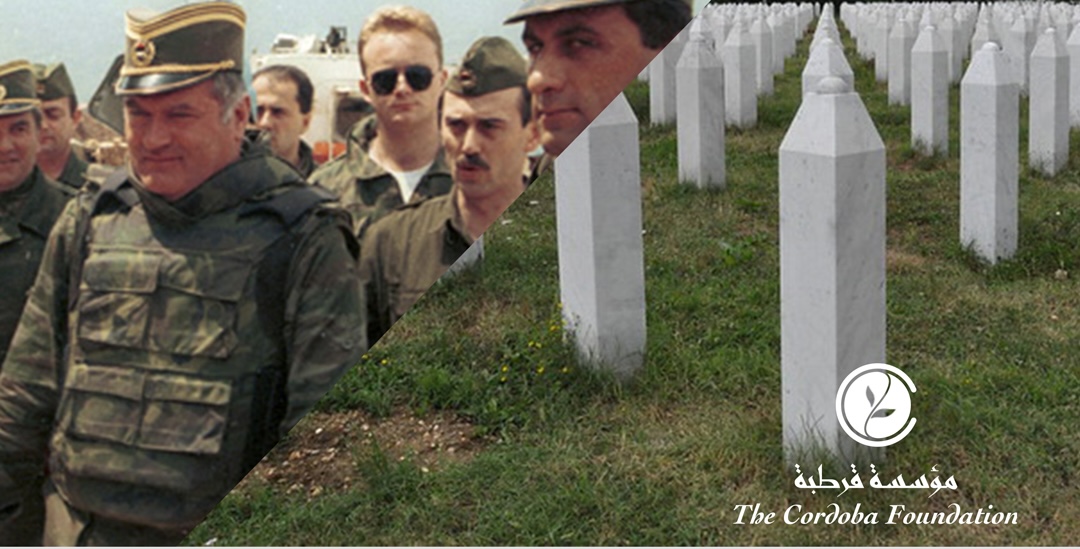
The Cordoba Foundation has issued a stark reminder that the legacy of convicted war criminal Ratko Mladić must be defined solely by his atrocities, following recent news of his death.
The Foundation firmly rejects any attempts to glorify or politically rehabilitate the chief military architect of the Balkan ethnic-cleansing campaign. True reconciliation and lasting peace can only be built upon an unwavering commitment to historical truth and justice.
“Elevating a convicted genocidaire to the status of a hero is an affront to human dignity and a direct assault on historical truth,” stated a representative of The Cordoba Foundation. “The death of Ratko Mladić must not obscure the horrific scale of the atrocities he orchestrated against Bosnian Muslims.”
Mladić was justly convicted of genocide, crimes against humanity, and severe war crimes. His brutal legacy includes:
The 1995 Srebrenica genocide, killing over 8,000 Bosniak men and boys
The merciless 43-month-long siege of Sarajevo
Widespread, wanton destruction across Bosnia and Herzegovina
In July, The Cordoba Foundation hosted Sabina Berberović, daughter of the founding president of Bosnia and Herzegovina, Alija Izetbegović. Speaking in London on the eve of the Srebrenica Genocide anniversary, she stated: “Thirty-one years on, we remember the victims of the genocide, and we stand with their families: thousands of women and children who lost their fathers, their brothers, their husbands. It takes immense courage to continue living after such a terrible experience,” she said.
At this pivotal moment, global focus must remain on the victims, survivors, and families whose lives were permanently shattered. The historical and judicial facts of Mladić’s atrocities remain immutable.
The Cordoba Foundation calls upon civil society, governments, and the international community to forcefully challenge genocide denial, reject revisionist narratives, and stand in solidarity with the survivors.
[End]
Image Source: Wikipedia – I, Evstafiev, CC BY-SA 3.0
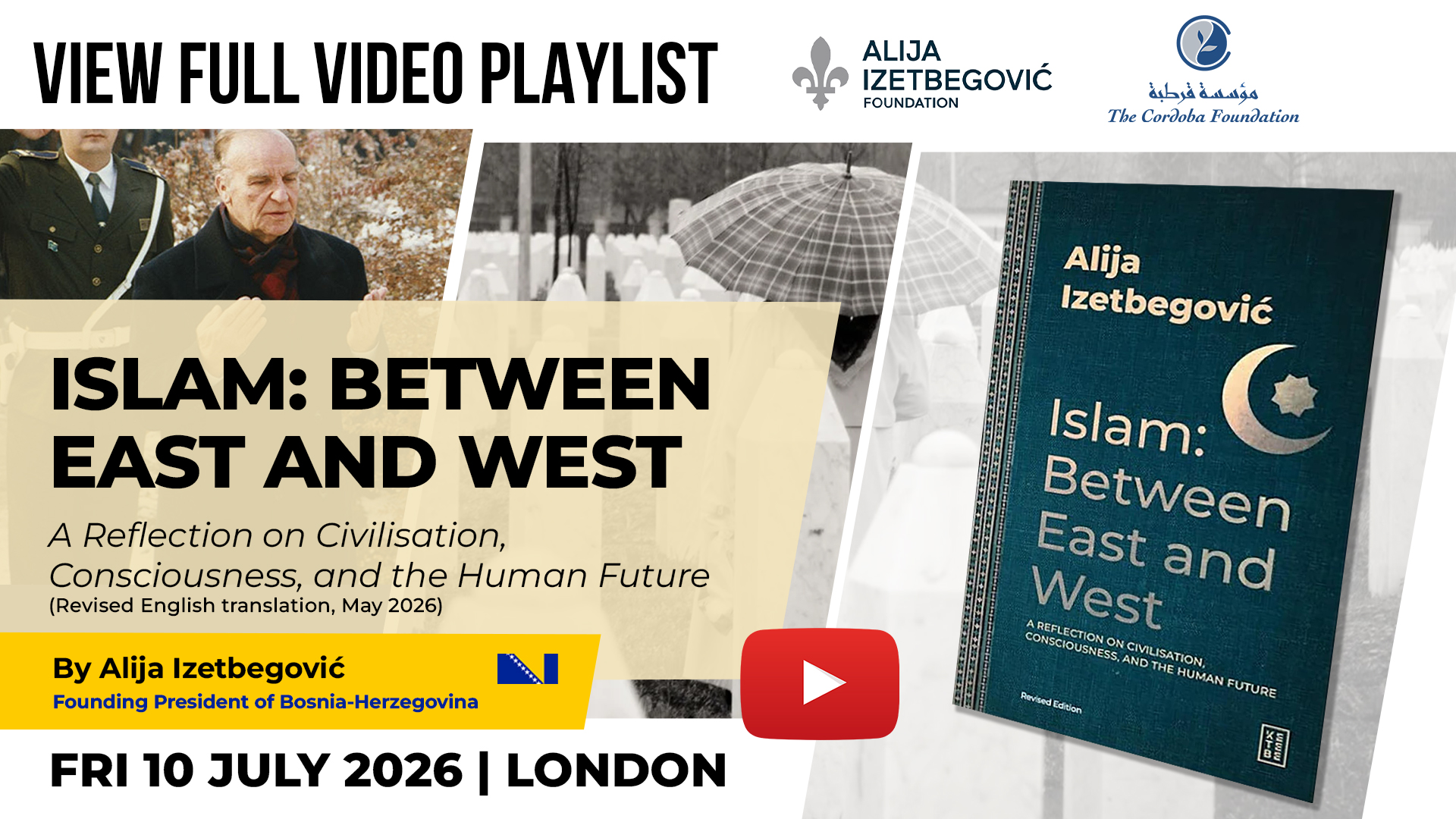
Hundreds mark 31 years since Srebrenica at London launch of Alija Izetbegović’s Islam: Between East and West
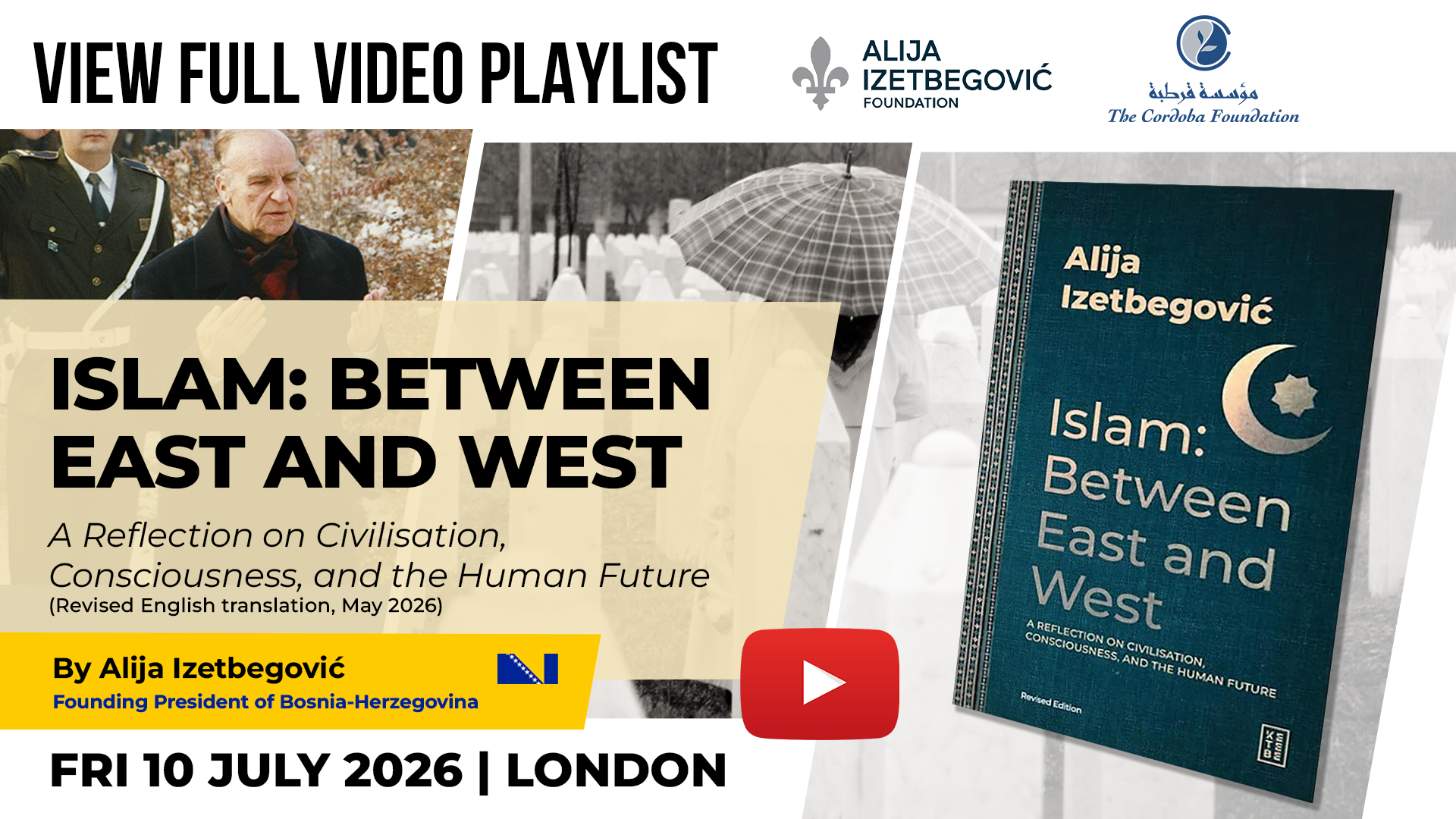
The newly revised English translation of Islam: Between East and West — the philosophical work of Alija Izetbegović, the philosopher, statesman, and Founding President of Bosnia-Herzegovina — was launched on Friday, 10 July 2026, at the London Muslim Centre, during an evening that also commemorated the 31st anniversary of the Srebrenica Genocide.
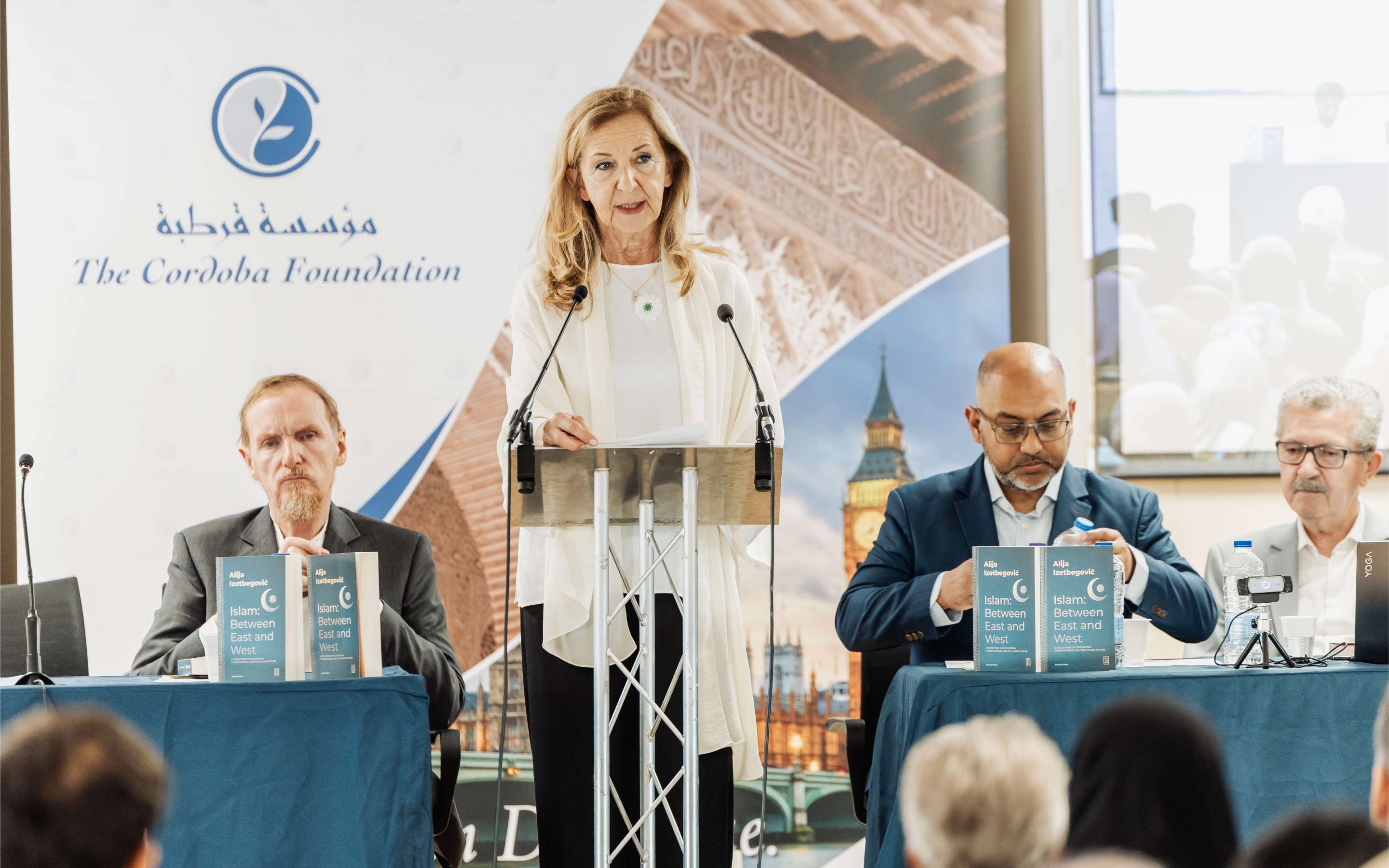
Hosted by The Cordoba Foundation and the Alija Izetbegović Foundation, alongside several supporting organisations (including the book’s publisher, Ketebe), the launch drew over 400 guests from across the country. Attendees included many youth as well as a Turkish delegation. Streamed live on The Cordoba Foundation’s YouTube and Facebook channels, the event proved highly successful, with nearly 300 copies of the book sold at the beginning of the evening.
Moderated by Dr Abdullah Faliq, Managing Director at The Cordoba Foundation —who brings 25 years of advocacy for the victims of Srebrenica — the event commenced as he welcomed the panel of speakers and guests. He described Izetbegović’s magnum opus as “a major contribution to understanding the human condition, consciousness, and the metaphysical foundations of ethics.”
Elaborating further, he said: “Many of us grew up reading this text, which positions Islam not just as a religion, but as an integrative worldview capable of harmonising humanity’s spiritual and material needs. The book has striking relevance for us today as we try to navigate conflicts, tensions, and the rise of right-wing populism across the globe.”
Imam Sedin Sahman, Chief Imam of the Islamic Bosnian community in Britain and a survivor of the Bosnian War, recited verses from the Qur’an. This was followed by opening remarks from H.E. Osman Topčagić, Bosnian Ambassador to the UK, who recalled working alongside President Izetbegović throughout the war years and the Dayton peace negotiations. “In all those situations, I had in front of me a statesman, but also a man who cared deeply for human beings: care for the people, care for others, and not just for one ethnic or religious group, trying to find a formula to enable life together,” he said. “Bosnia and Herzegovina remembers the work and life of Mr Izetbegović. What we have today is very much because of his actions and his deeds.”
The highlight of the evening was a keynote address by Sabina Berberović, daughter of President Izetbegović and a founding member of the Alija Izetbegović Foundation. Speaking on the eve of the Srebrenica Genocide anniversary, she stated: “Thirty-one years on, we remember the victims of the genocide, and we stand with their families: thousands of women and children who lost their fathers, their brothers, their husbands. It takes immense courage to continue living after such a terrible experience,” she said. “They are enduring the unendurable and accepting the unacceptable. The women of Srebrenica rose from being victims to become our heroes, and they raised their children with pride and dignity.”
She shared the story behind her father’s book, which Izetbegović began writing as a high school student during the Second World War. The manuscript was hidden by his sister under a flower chest in the family kitchen when police searched their home in 1946, and it was completed three decades later. By the time State Security agents targeted him again in the 1980s, the finished manuscript was safely in the possession of a friend in Canada. “As they were leaving, I asked my father what we were to do, and he just replied: ‘Have the book published,’” she recalled.
The book was published in 1984 while Izetbegović served a prison sentence. Sabina’s brother and husband later drove the first copies from Belgrade to Sarajevo in the boot of a car, taking rural backroads to avoid being stopped and searched. “I hope that the book Islam: Between East and West will only bring good wherever and whenever it is read,” she said.
Ömer Faruk Yeni, an arts and cultural heritage consultant and the London and Istanbul-based director of Ketebe publishing, provided an overview of the book. “This is not a book about East or West, nor is it a defence of one civilisation against another. It is a profound reflection on what it means to be human. More than forty years have passed since the book first appeared, yet its questions have only become more relevant. Increasingly, Izetbegović is recognised not only as the founding President of Bosnia and Herzegovina, but as one of the most original Muslim thinkers of the twentieth century.”
In a recorded address, Dr Admir Mulaosmanović, CEO of the Aurora Foundation in Sarajevo and a wounded veteran of the Bosnian War, framed the book within the context of the present day. “The question Izetbegović posed rings even more powerfully today than when it was first written down,” he said. “This is not a theological text. It is an attempt to translate Islam into a language spoken and understood by today’s generation, and a call for both individual intellectual sharpening and collective social action.” (Note: Mulaosmanović’s full written speech is available here)
Shaykh Prof Abdal Hakim Murad, Dean of the Cambridge Muslim College, recounted travelling to Sarajevo in the 1980s to write a report for Amnesty International on the trial of Izetbegović and his co-defendants. Europe’s response to Bosnia, he argued, exposed a lasting blind spot. “The Bosnian struggle was not just a military struggle. It was against a European determination to defend a cultural truth rather than a factual truth,” he said. “We see this today in Gaza: so many hand-wringing politicians who have read the reports and know what is going on, but it is not their cultural truth, and so they are paralysed.”
Murad warned that “Muslim communities across Europe are witnessing the storm clouds gathering on the horizon”, adding that Bosnia holds a vital lesson: “Bosnians can teach us what that is like, and how to avert it. We need to challenge cultural truths with factual truths. We need to go to Bosnia, we need to read this great literature, and we need to make that history part of our history.”
Shaykh Dr Yasir Qadhi, a prominent American theologian who sent a video message while travelling, described first reading the book as a teenager in 1990. “This book is one of the few genuinely unique philosophical contributions of the Muslim Ummah in this century, in a similar vein to Iqbal’s Reconstruction of Religious Thought. What makes it especially important is not just the message, but that it comes from somebody who paid a personal price for what he wrote. Izetbegović was not a mere armchair critic. He lived the life of a bona fide leader who had to navigate his nation through a war,” he said.
“This book should be mandatory reading for all who want to traverse the path of intellectual scholarship, especially in the Western world, because it answers the question: what vision of the human person makes Islam intelligible?”
Sarah Joseph OBE, a writer, broadcaster, and founding editor of Emel magazine, focused on the book’s chapter on progress. “Izetbegović asks whether life will be five times fuller, happier, or more humane, and his answer is decidedly negative. Another forty years on, have we quintupled in our happiness? Again, the answer is decidedly no,” she said.
Addressing the rise of the far-right in Europe, she rejected fear: “This book is calling us towards civilisation. It is calling us to say: we are not victims. We are people inspired by ideas, and we have a vision for the future. The Prophet Muhammad did not come for the Muslims; he came as a mercy to mankind. That is a civilisational message, and that is what this book tells us.”
Dr Mohammed Wajid Akhter, Secretary-General of the Muslim Council of Britain, remembered discovering the book as a child in Saudi Arabia during the genocide, noting it was one of only two English titles in his mosque. “The imam came to me one day and said: ‘This is why the Bosnians will win. You can kill a people, but you cannot kill an idea,’” he shared. Izetbegović, Akhter argued, possessed the rare vision, courage, and pragmatism that eventually guided his nation to survival and left a timeless intellectual blueprint for future generations.
Izetbegović, Akhter argued, possessed the vision, courage, and pragmatism every leader needs, alongside something far rarer. “He did something very few Muslim leaders do: he voluntarily stepped down,” Akhter noted. “Throughout 1,400 years of Muslim history, leaders have traditionally left office only for the graveyard. Izetbegović chose to leave before then, showing the true measure of the man.”
Former BBC war reporter Martin Bell, who was wounded during the siege of Sarajevo, sent his apologies as ill health prevented his attendance.
Dr Abdullah Faliq asked for prayers and reflection for ten genocide victims whose remains were identified this year, ahead of their burial at Srebrenica on 11 July. He also highlighted the Bosnian Grand Mufti’s Friday Sermon delivered earlier that day in Sarajevo, noting its timely messages of steadfastness and enduring faith.
Faliq urged the youth to study the history of Srebrenica, recommending a special publication, Srebrenica Genocide: 30 Years Later: Understanding, Remembering, Acting by Dr Emir Hadžikadunić. The publication features insights from Bosnia’s Grand Mufti, the Bosnian Ambassador, and ICMP Director Kathryne Bomberger.
Sarah Joseph urged the audience to visit the country: “Go, support the economy, support the people, and know that their stories will never die.”
Closing the evening, Faliq reflected on the ongoing pain of families still recovering the remains of loved ones 31 years later. “Let us not do this once a year only,” he pleaded. “We must keep the flame of Srebrenica alive and tell these stories all year round.”
[Ends]
Notes to editors:
Event Recording: Streaming on The Cordoba Foundation’s YouTube and Facebook channels.
The Book:Islam: Between East and West (Revised English translation, May 2026) is published by Ketebe and available online.
The Alija Izetbegović Foundation: A Sarajevo-based non-profit established in 2020 to preserve the legacy of the first President of Bosnia and Herzegovina. www.alijaizetbegovic.org
The Cordoba Foundation hosted a major event in London on 11 June 2024, to launch Lobbying for Zionism on Both Sides of the Atlantic, the latest work by acclaimed Israeli historian Prof Ilan Pappe.
The event was organised in partnership with the Middle East Monitor (MEMO) and One World Publications.
Attended by hundreds of people in a packed central London venue, the book launch began with a poignant moment as Dr Anas Altikriti, founder and CEO of The Cordoba Foundation, led a moment of silence in remembrance and prayers for the lives lost in Israel’s military operation in Gaza and across Palestine.
Published by One World Publications, Lobbying for Zionism on Both Sides of the Atlantic delves into the intricate and powerful networks that advocate for Zionist interests in both the US and Europe. Pappe, a professor of History at the University of Exeter and author of the bestselling The Ethnic Cleansing of Palestine, provided insightful commentary on his latest work.
The event featured a distinguished panel of speakers who offered their perspectives on the book and its themes. Palestinian academic, physician, and author Dr Ghada Karmi praised the book as “impressive,” noting its exploration of the origins of Christian Zionism.
Dr Daud Abdullah, director of Middle East Monitor and co-organiser of the event, emphasised the significance of Pappe’s work, stating that it goes beyond previous attempts to examine the Israeli lobby by investigating its operations in Europe and Britain.
Prof Nur Masalha, a Palestinian historian and associate member of SOAS, University of London, provided historical context, discussing the role of “millennial Christianity” and “restoration Christianity” in advancing the interests of the British Empire and the Zionist movement.
Altikriti moderated the conversation, allowing the panel to share their insights and engage with the audience in a question-and-answer session. His moderation throughout the evening facilitated a meaningful dialogue, highlighting the significance of Pappe’s work leaving no doubt about the book’s power to transform our understanding of Zionism.
Reflecting on the event, Altikriti said, “the launch of Professor Pappe’s new book marks a significant historical moment on multiple levels. The timing of this critical publication, coupled with the exceptional turnout that filled the venue to capacity, is particularly noteworthy. We are witnessing a paradigm shift in public discourse, undoubtedly influenced by the remarkable resilience and determination displayed by the people of Gaza in the face of unprecedented adversity. This shift unfolds amid a global order that urgently needs reform, one that can effectively hold rogue states accountable and ensure that no entity, regardless of power or influence, operates above the law.”
Dr Abdullah Faliq, Managing Director at The Cordoba Foundation and the lead organiser of the event, commended Prof Pappe on his new book and thanked him for making time to engage with the attendees, some of whom had travelled from across the UK and even abroad. “The relevance of this book launch is especially critical today as we see Zionism increasingly aligning with Far-Right elements and other extremist ideologies. This unholy alliance, built on shared xenophobic and nationalist sentiments, poses a significant threat to minority communities and democratic values.”
Faliq further added “Pappe’s book sheds light on recent efforts on both sides of the Atlantic to conflate anti-Zionism with anti-Semitism and this discussion is particularly important as people in the US, UK and around the globe go to the polls. It serves as a timely warning about the potential impact of these lobbying efforts on electoral processes and policy-making.”
The event by The Cordoba Foundation with MEMO and OneWorld Publications not only launched an important scholarly work but also initiated a crucial dialogue about the far-reaching implications of Zionist lobbying in the West. As global attention remains focused on the ongoing situation in Palestine, Lobbying for Zionism and the discussions it has sparked provide valuable tools for understanding and addressing the complex dynamics that shape international responses to the conflict.
Prof Andrew March – USA
A professor of Political Science at the University of Massachusetts, Amherst, he specialises in political philosophy, Islamic law and political thought, religion and comparative and non-Western political theory. Author of several books including, The Caliphate of Man: The Invention of Popular Sovereignty in Modern Islamic Thought (2019), and with Rachid Ghannouchi, On Muslim Democracy: Essays and Dialogues (Nov 2023)
Dr Ahmed Gaaloul
Former Tunisian minister; lecturer and writer in Islamic Studies, and an advisor to Rachid Ghannouchi.
Dr Daud Abdullah (Moderator)
Director of the Middle East Monitor; lecturer and author of several books, including, Engaging the World: The Making of Hamas’s Foreign Policy (2021).
Moadh Ghannouchi
Son of Rachid Ghannouchi and former Chief-of-Staff Nahda Party, Tunisia.
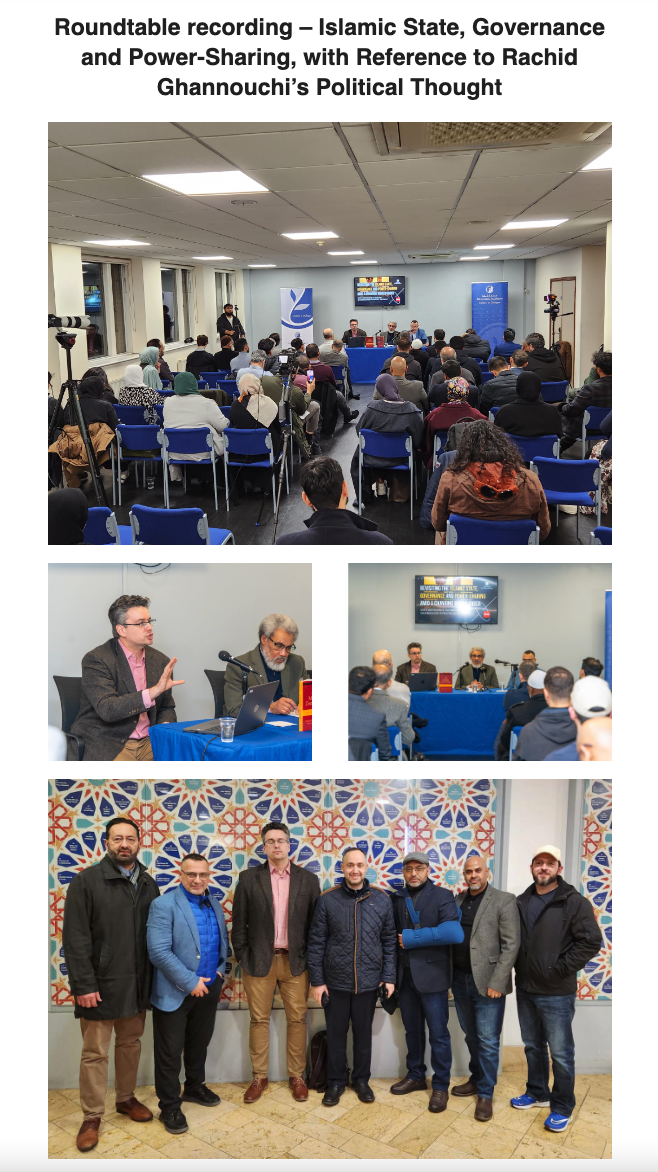
Watch Event Videos Below:
Special message by Shaykh Rachid Ghannouchi from prison to The Cordoba Foundation roundtable
Friday, February 16, 2024
I am in prison today because I called for the values of national democracy, which is part of universal democracy, and because the conflict in Tunisia is a conflict between democracy and non-democracy.
Some of the enemies of democracy rely on modernity as a basis to exclude Islamic opponents. We in Tunisia were founded on the values of Islam, and we do not find any justification to exclude those who disagree with us or those who believe in Islam with a different vision, because we do not see that there is an official spokesman for Islam.
I am in prison because a significant portion of the so-called Tunisian modernists are non-democratic. They call for a democracy that is just for them, an exclusionary democracy. Whereas We are in a struggle for a Tunisia for all and for a democracy that includes everyone inside Tunisia and outside Tunisia.
The country today is governed by the dualism of good and evil, right and wrong, patriotism and treason. This is the essence of the coup of July 25, 2021: the monopoly of patriotism, the monopoly of Islam, and the monopoly of righteousness. Therefore, the existing regime is in a relentless war against democracy in all its meanings. This approach cannot bring Tunisians together because God created people different.
The current system sees difference as a curse, but we see it as a mercy.
Palestine exposed the shortcomings of democracy within the framework of the nation state.
Democracy, as a mechanism, is one of the best mechanisms that the human political mind has produced for consensus and reaching settlements between differences and a way to resolve disputes away from violence.
But when democracy is confined to a particular group and is imprisoned within the trenches of nationalism, race, and colour, its mechanisms break down in more than one case – especially in the face of major challenges such as the Palestinian question.
The flaw, then, is not in the idea of democracy, but in the idea of the nation-state outside the framework of ethics and the values of equality for all human beings. There is no framework for ethics outside the framework of man as God’s khalifa / vicegerent on earth, the one who is entrusted to look after this world. Therefore, we demand democracy and add it to our understanding of Islam so that it emerges from the confines and the narrowness of the individual and the group to the vastness of humanity.
Honourable Faiez Jacobs – South Africa
A South African Member of Parliament of Greater Athlone for the ruling African National Congress (ANC). Born and bred Capetonian serving communities on the Cape Flats, he previously served as the Secretary of the ANC in the Western Cape until 2019. He has been a long-standing advocate for the freedom of Palestine and is currently involved in passing a bill in Parliament in support of Palestine.
Shaykh Dr Yasir Qadhi – USA
A resident Scholar of the East Plano Islamic Center in Dallas, the Dean of The Islamic Seminary of America, and the Chair of the Fiqh Council of North Africa. Shaykh Al-Qadhi is one of the few people who has combined a traditional Eastern Islamic seminary education with a Western academic training of the study of Islam.
Tayab Ali
Director of the International Centre for Justice for Palestinians and an internationally recognised Solicitor Advocate. His practice encompasses criminal and civil/public law in both the UK and international jurisdictions. He is a Partner at leading London Law firm Bindmans LLP.
Antony Lerman
An Honorary Fellow at the Parkes Institute for the Study of Jewish-Non-Jewish Relations at Southampton University, he is the former director of the Institute for Jewish Policy Research; and author of Whatever Happened to Antisemitism?: Redefinition and the Myth of the ‘Collective Jew’. Lerman specialises in the study of antisemitism, the Israeli–Palestinian conflict, multiculturalism, and the place of religion in society.
Dr Daud Abdullah
Director of the Middle East Monitor and author of several books, including, Engaging the World: The Making of Hamas’s Foreign Policy (2021). From 2003-2011, he was a part-time lecturer at Birkbeck College, University of London and from 1990-1993, he lectured at the University of Maiduguri, Nigeria. He has been a guest lecturer on Islamic and Palestinian affairs at many universities in the UK including Queen’s University in Belfast.
Baroness Jenny Tonge
Former Lord’s health spokesperson; was a Member of Parliament for Richmond Park in 1997. She was the Liberal Democrat spokesman for international development for 7 years, and has been a member of the All-Party Parliamentary Group for Population, Development and Reproductive Health since 1997. In 2008, she took part in the Gaza Flotilla which broke through the blockage to deliver humanitarian aid. She has received several awards for her support for the Palestinians.
Dr Ghada Karmi
A Palestinian academic, physician and author. Currently, she is a Research Fellow at the Institute of Arab and Islamic Studies, University of Exeter. Born in Jerusalem, Karmi was forced to leave her home with her family as a result of Israel’s creation in 1948.
Mysara Ibrahim
A British Palestinian, originally from Gaza City whose family members have been killed recently in the barbaric Israeli bombardment. He is a specialist in education diplomacy.
Dr Anas Altikriti (moderator)
Founder and CEO of The Cordoba Foundation. He is the former President of the Muslim Association of Britain and a leading figure in the international Anti-War movement and an Anti-Racism campaigner. He currently hosts a podcast, The London Circle, on Al Hiwar TV addressing issues relating to British takes on local, continental and global affairs.
In the shadow of the Holocaust (1933-1945) and the solemn promise of ‘Never Again,’ Raphael Lemkin, a Jewish Polish legal scholar, introduced a haunting term to encapsulate the horrors of mass murder: genocide. Lemkin described it as a deliberate scheme to obliterate the very essence of national groups, causing them to wither away like plants afflicted by an unremitting blight.
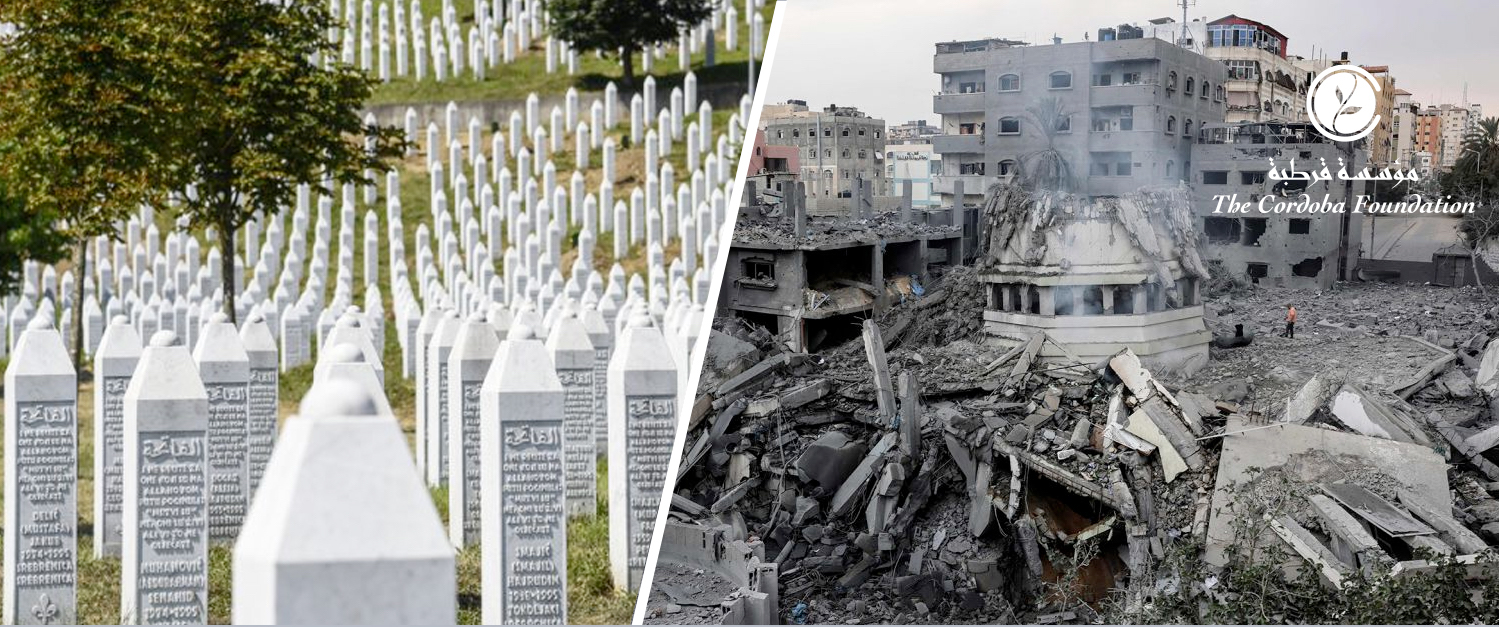
Since the coining of this term, the world has regrettably borne witness to genocide on multiple occasions over the past seven decades. In our recent history, during the Bosnian War (1992-1995), the Srebrenica massacre in July 1995 left a scar on humanity’s conscience, with the systematic brutality and organized annihilation of 8,000 Bosniak Muslim men and boys by Bosnian Serbs and the Bosnian Serb Army of Republika (VRS).
The civilian death toll in Gaza has reached a staggering 8,100, surpassing even the horrors of Srebrenica. Yet despite the mounting casualties, Israel continues its relentless bombardment, rejecting even a UN call for a ceasefire. This merciless assault against the Palestinian people shows a callous disregard for human life and international law. It echoes the very definition of genocide coined by Raphael Lemkin: the destruction of a people. We cannot remain silent witnesses to this unfolding tragedy. The time is now to speak out against these atrocities and demand an end to the violence.
It is painfully evident that the world has failed to internalize the lessons of the Holocaust. ‘Never Again’ remains trapped in the annals of history, forgotten and neglected, while the Palestinian genocide rages on, a grim testament to the world’s inaction.
The promise of “never again” rings hollow as the Palestinian genocide continues unabated. The lessons of the Holocaust remain trapped in history books, reduced to platitudes rather than calls to action. While the world stood idly by, “never again” became “again and again.” Gaza burns, the civilian death toll climbs, and Israel rejects ceasefires. If “never again” still means anything, the time for action is now.