May 29, 2012 | Views
I am a self-confessed history geek who loves nothing better than to get into a story from the past — especially one that is as relevant to today’s policy discussions and societal concerns as it was when it first occurred.
 Few stories, however, have managed to tick all the boxes for me as well as the story of Victoria and Abdul. When I first came across the book Victoria & Abdul: The True Story of the Queen’s Closest Confidant, written by Shrabani Basu, it was an innocent interest in a historical story that made me venture in, but by the time I was finished, I was convinced that this was something greater. It is what prompted me to convince our organisation to feature it in the launch of our new Cordoba Heritage Series, which kicked off on the 10th of May 2012.
Even for those of us who have at one stage or another studied Victorian history, this is a relatively unknown story.
In June 1887 two Indian servants were sent to Queen Victoria as a present for her Golden Jubilee. One was the 24-year-old Abdul Karim. Young Karim immediately caught the Queen’s eye and was rapidly promoted to become her Indian Secretary in 1894. He cooked her curries, became her Hindustani tutor and delighted the elderly Queen with his stories about India, especially as she had not visited the sub-continent despite having the grand title of ‘Empress of India’, and soon became the lonely monarch’s closest companion.
Please click here to read more

Apr 19, 2012 | Views
It might be a cliche and often an elaborate exaggeration to term a particular event “historic”. However, few can doubt that along with the Civil Rights movements, the collapse of the Soviet Union and the fall of the Berlin Wall, the revolutions that have swept through the Arab world are no less momentous or historic.
While the first decade of the millennium got off to a bad start with the attacks on the Twin Towers in New York and the ramifications which resulted in death, destruction, war, conflict, fear, and division across the world, the second decade seems to have started off with an entirely different theme.
The “Arab Spring” fully deserves to be labelled “historic” for two main reasons.
The first is that the sweeping changes and transformations taking place were totally and completely unexpected, and almost without any introductions or preliminary phases.
Speaking to a political analyst from Tunisia, where the tidal wave commenced in January this year, he assured me that despite his expert knowledge and close following of Tunisian politics and society, he could never have predicted what then happened. The same is true for Egypt, Libya, Yemen, Syria and other locations throughout the Arab world.
To read more, please click here

Mar 12, 2012 | News & Press
 On Thursday 1st of March at the Islamic Cultural Centre, the Cordoba Foundation (TCF) Launched their second in a trilogy of toolkits for community groups titled ‘ Effective Guide to Lobbying and Campaigning’.
 The toolkit is designed to build confidence amongst BME community groups to help political engagement. It will serve as a go-to guide for practitioners whereby they can gain benefit from the balance of theory, practical advice and case studies that the guide offers. The toolkit can be the main resource for future training and workshops given by TCF to help cement the points in the guide. Speakers at the launch included Neil Jameson, Moazzam Begg, Aisha Alvi and Jeremy Corbyn, MP. Each spoke from their own experience about the need for people and civil society to be continuously involved in applying pressure collectively.
 TCF hopes that the toolkit on ‘Effective Lobbying and Campaigning’ and the one on ‘Engaging with the Media’ will serve as key reference points in the future for practitioners on the ground.
For more information, please click here
Mar 7, 2012 | News & Press
A former bishop to HM Prisons told a forum held in London that custodial sentences and bail provisions for some of the rioters of last August have been too harsh. Dr Peter Selby, formerly Bishop of Worcester and Bishop to HM Prisons, criticised a ‘system of disregard’ for the wellbeing of disenfranchised young people, which had led to the riots. ‘I am seriously worried that you blight somebody’s whole life for one night of foolishness’ by handing down prison sentences for minor crimes, said Bishop Selby. With 1,400 people in the system still awaiting prosecution and sentencing, ‘there are real grounds for concern. The punitive response to individual rioters, resort to constraint and control and the use of prison disproportionately for the poorest add to up a system of disregard’ for their and society’s welfare, he said.
He was speaking at a conference on ‘After the riots: from blame to positive action’, held at the Initiatives of Change centre in London on 1 February. The forum was organised jointly by Burning2Learn leadership training programme for young people, the Civil Society Forum, The Cordoba Foundation, and Initiatives of Change. It brought together some 100 community and faith leaders and representatives of non-governmental organisations from London, Nottingham, Manchester, Wolverhampton, Glasgow, Ipswich and Norwich.
Welcoming participants on behalf of the organising committee, Don de Silva, Head of Programmes at IofC UK, said the event would be a listening forum. He continued: ‘Many of the individuals here have hands on experience in dealing with critical issues, such as social exclusion, family life, youth offending and community cohesion. The forum aims to bring the values dimension into the riots debate. It will provide a space for dialogue. We will avoid any points scoring. We hope that the forum will encourage everyone to start with themselves, look at their own responsibilities, not just that of the others. We need both personal and systemic change to make a lasting difference.’
The event was kick-started with a short presentation by a group of young people from Croydon, Wolverhampton and Kent. Seventeen-year old Maria said: ‘It is fairly obvious that what has happened has had some really damaging and lasting effects on the persons involved; those who took upon themselves to vandalise and steal and shouldn’t be allowed to get away with it. Do we really have the time to be processing each and every case? Surely, our time would be more productively used ensuring that it doesn’t happen again.’
Clasford Stirling, a community leader from the Broadwater Farm estate in Tottenham, told the conference that ‘the system doesn’t provide for young people. We have four youth groups to deal with 100,000 people. It can’t happen. We need 20 youth clubs.’
The rioters had come together in protest against the police following the shooting of 29-year-old Mark Duggan in Tottenham on 4 August. At first the rioters found it ‘a sense of fun. The looting came afterwards. When you are having fun you don’t care.’ That fun had criminalised them. Politicians hadn’t always obeyed the law either and ‘the rich get richer because they steal’. Describing himself as a disciplinarian and ‘a serious dude’ loved by his children, Stirling admitted that some parents didn’t impose enough discipline.
Dr Selby criticised ‘a system of punitive attitudes’ that disregarded what effect this would have on the welfare of young people and the future of society. He contrasted this with ‘individual acts of over-indulgence at the top’ by some bankers and politicians who ‘bent the rules to their own interests’ and were resistant to regulation and control, and which ultimately led to ‘attacks on the lives of the poor’.
Emphasising that he was never in favour of rioting, Dr Selby said the riots were ‘the result of the economics of disregard that we have all created’. There was a need for systemic changes. ‘I don’t believe that the world will become a better place only by people becoming better people,’ even though this was essential from a Christian perspective. ‘I incline to a systemic view of things.’
‘Individual acts of looting and robbery, resistance to authority and, ultimately, violence against persons add up to a system of disregard,’ which had marginalised too many young people, he said. It was important that we attune our consciences to ‘a moral universe’. ‘If you propagate a system of disregard you are acting outside the guarantees of a moral universe. Last August was a call to live for a system of regard.’ Charlie Ryder, a musician, actor and former prisoner, told how he had served eight months in jail for taking part in a violent demonstration outside a BNP bookshop in 1993. His father’s drinking had had a bad effect on his upbringing, he said. He told the forum that young people needed a sense of forgiveness and healing to retain their sense of self-worth. He now works with the chaplaincy at Wormwood Scrubs Community Chaplaincy, and has collaborated with the Forgiveness Project.
Maxine Cockett, a community leader from the St Ann’s district of inner-city Nottingham, told how she had been part of earlier riots in the 1980s. When the riots of last August reached Nottingham, she urged the rioters to go home before the police found them. ‘We can do something positively,’ said Cockett, one of the organisers of an annual ‘Holding Hands Around St Ann’s’ demonstration of community unity. Every generation needed opportunities. Too many young people leave school at 14 ‘with no stake in their communities’. Greg Davies: ‘The problem with youth clubs is that they are She wanted to work together with others in the community to ‘find solutions’ so that young people are not marginalised and don’t riot. ‘I hope there won’t be any more riots. But I wouldn’t be surprised if we have riots again,’ she said.
Greg Davis, founder of the United Estates in Wythenshawe, Manchester, spoke about the inner-city cultural community centre, which helps to ‘foster a sense of belonging, education and training’. The problem with youth clubs is that they are ‘nice places’ for ‘nice kids’, he said. ‘The kids who most need the support of a youth club are the ones least likely to go. There are issues of class, ethnicity and gender. They need youth clubs for kids who don’t go to youth clubs.’ In the previous generation, traditional figures of respect were teachers, parents, police and faith leaders. Now they faced abuse from kids. ‘Those who can relate and garner respect are now more likely to be sports coaches and dance teachers.’
Ian Montague from the grassroots Glasgow charity FARE (Family Action in Rotherfield and Easterhouse) told how he had grown up in the Gorbals slum area of Glasgow. It had ‘the worst housing project with razor gangs’ and there was a lack of hope and vision, he said. As a teenager he had thought, ‘I can’t change them but I have to do something. Am I my brother’s keeper? Yes!’ Going into education, he launched a community newspaper ‘to irritate those who should be doing something’. Twenty years ago, the Council gave six flats to use for a youth project. The young people took responsibility for this space.
Eighteen months ago the entrepreneur Duncan Bannatyne, of the Dragon’s Den TV series, contributed. They now had assets of £2 million. ‘There is money and there is room!’ commented Montague. ‘We have to find who has got it!’
Mason West, from Alabama, Tennessee, represented EYES (Engage Youth Empowerment Services) in Wolverhampton at the forum. Colour, caste and religion were used as reasons to divide, he said. ‘We need resources to pull together’ and invest in youth, ‘raising their expectations, empowering them, giving them confidence, helping them to find their voice and engage. Once they are plugged into the system they can change it. Then there’s no need to worry about them being radicalised or rebelling.’
Ann Edwards, from the Suffolk village of Wenhaston, said that Suffolk has many of the most deprived areas of the country. ‘Regardless of whether you live in the town or the countryside, how can you engage to make a difference?’ she posed. The villagers had safety concerns about children skateboarding on the main road through the village. Residents located an unused area where they created a skateboard park for the children. This gradually developed to accommodate the needs of the community. £144,000 was raised for a new sports complex, which has tennis and skateboarding facilities integrated for all ages and backgrounds. They also revived a youth club. There has been almost no vandalism as it was very much a community generated project in which everyone took pride. ‘Small, simple ideas can have a big impact on the community,’ she said. Her personal inspiration had come from ‘taking time for quiet reflection every morning, listening for direction and seeking inner peace’.
Closing the forum, Anas Altikriti, Chief Executive of The Cordoba Foundation remarked: ‘What we have learnt today is that the greatest resource and asset we have is people. Society leads us to believe that it is money – stuff – that matters but what really succeeds is a project that places its worth on people and their work. This is the message that we give to the young people today. All of us can make a change. All over the world, we see the resurgence of the youth as a force to transform society. In the Middle East, we were told that young people were lazy and indolent, yet they have been at the forefront of the Arab Spring. Likewise, we tell people here that it is the spirit, endeavours and courage of the youth, that can shift paradigms, and they need to be supported’.
A young rioter commented afterwards: ‘I did not know that there were many people who cared and listened to people like us. This event is a rebirth for me.’
———
(Photos courtesy of: John Leggat)
For more information, please click here
For The Cordoba Foundation thoughts on this issue, please click here
To read the conference report and recommendations, please click here
Jan 20, 2012 | News & Press
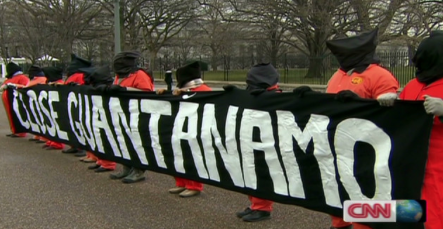
On 11 January 2002, the first of nearly 800 prisoners was sent to the US military prison camp at Guantanamo Bay. Images of these men kneeling and shackled, wearing orange boiler suits, goggled and masked, shocked the world. Ten years on, 171 prisoners still remain in captivity – all without due process and without a feasible end to their suffering in sight.
The Cordoba Foundation (TCF) strongly believes that ten years on, the presence of such a prison is a shameful blot on the annals of international justice and human rights.History will read that we stripped innocent men and women of their dignity, imprisoned children and practiced torture.
Remarking on this, the CEO of TCF, Anas Altikriti stated: “At a time when the world is witnessing a sea of uplifting change throughout some of the darkest spots in living memory in what has come to be known as the Arab Spring, it is disgraceful that Guantanamo and all that it symbolises continues to exist under our very noses and with our consent.”
The Cordoba Foundation calls on the United States Government to bring an immediate, unequivocal and unconditional end to this shameful episode, and calls on all peoples and nations of the world to assume a solid stand against such practices, wherever they occur, for whatever reason and by whomsoever.
[End]
The Cordoba Foundation is supporting a conference to commemorate this issue. Please click here for more details
Nov 28, 2011 | External News
Much of the British public’s awareness of madrassas – out-of-hours schools which teach Muslim children about Islam – has been shaped by the media, with high profile programmes such
as BBC Panorama and Channel 4 Dispatches focusing on instances of violence against children and allegations that extremist views are inculcated in these institutions. Moreover, IPPR analysis of media coverage since 9/11 has shown that national outlets have generally been negative and sometimes hostile. For this reason it is of ever-greater importance that the Muslim community overcomes its hands-off approach, and faces these criticisms by acknowledging it is time for reform of Islamic supplementary schooling. We have witnessed some outrageous incidents that have happened in a small number of madrassas – and these need to stop. But more fundamental changes are needed across madrassas in general.
Madrassas can be doing much more to show young Muslims how being a good Muslim and integrating into mainstream British life are not incompatible. I strongly believe that madrassas can be a force for good in UK society and I have personally benefitted from attending a madrassa. I believe that madrassas in the UK would greatly benefit from a partnership system which includes both the mainstream school and the involvement of parents. This strategy will help reduce some of the limitations that madrassas have.
First, there is a lack of flexibility in adapting to current times; second, there is a lack of engagement with wider society; and third, there is a lack of transparency about how madrassas operate. To tackle these problems we need first to recruit and train more teachers who are British-born, educated to a high level and with a greater insight into the mainstream culture and the challenges facing British youth today. Such people would be in a much better position to implement a structured curriculum that is faithful to Islamic teachings but takes account of day-to-day issues in the UK. In particular, we must be educating and training far more women to be teachers of Islamic scholarship.
Gender equality in madrassas is no straightforward matter. It is the belief of Muslims that segregation between the sexes should be embedded within Islamic schools and in other situations in life. However, curtailing the entry of Muslim female teachers based on this precept is, in my opinion, illegitimate. There is a long tradition of Muslim female scholarship which stretches back to the beginning of Islamic civilization – the best example being that of the Prophet Muhammad’s wife, Aisha, who herself taught the Muslim intellectuals of her time. The gender equality I subscribe to then is very much aligned with the framework as laid down in the Quran and is also supported by the works of Asma Barlas, Jamal Badawi and Anouar Majid, among others.
Contrary to the views of Cassandra Balchin, it is my view that gender equality in Islam is not to be achieved so much by radically reinterpreting texts to meet people’s ends but to understand how we define the term ‘equality’ of both sexes in Islam. The western definition of ‘equality’ is not the only legitimate one. There are certain functions that men and women perform that are different, but can overlap. This should not be manipulated to fit a patriarchal order but rather we need to understand that this is God’s decree: we don’t submit to man, but to God.
A further issue for madrassas is that they are marginalised from mainstream society, and often almost invisible to the public eye. This can fuel accusations that madrassas are secretive and shadowy, creating an unwarranted fear of what ‘goes on’ in them. As part of its ‘Madrassas in the UK’ project, IPPR filmed at a madrassa in London earlier in the year and anybody who watches the film will see that the best of these schools are generally happy, positive places, where children can learn and have fun. There is nothing to hide and certainly nothing to worry about in these well-run institutions. Madrassas need to have the courage to be more open, raising awareness of the positive contributions they make to society. For this to occur, madrassas must begin to shift towards a partnership and networking model to gain the confidence of the wider community. This way madrassas can also secure more funding from community sources.
Madrassas are distinctive institutions. Many of them follow different creeds and subscribe to various interpretations of the Quran. Islam and Muslims respect this diversity, so long as it does not lead to abuses. Rather than seeing diversity within the community as an obstacle, Muslims should begin to embrace this difference by uniting behind the cause of bettering the standard of Islamic education. For difference of opinion has been part of Islam’s historical tradition, dating back to the time of the Prophet Muhammad (peace be upon him) and his companions. I believe this strategy of unity will minimise the neo-orientalist gaze that is cast upon the community by the media, which also locates them in the backwards ‘other’ category.
Some madrassas are still being reported in the media for failing to carry out Criminal Records Bureau (CRB) checks. CRB checks are important not only for the safety of the child but also that of the teacher and institution. Madrassas need to begin to see the importance of conducting these checks. One way of supporting madrassas to do this is to network with schools that can lend support in this area as well as train madrassa teachers on child protection policies. This way madrassas would be ensuring a more open approach to their educational service and create a safety net, protecting both child and teacher.
To sum up, madrassa education is and can be a valuable asset to British society. At the same time, the Muslim community needs to act fast and respond to the challenges thrown down by media investigations. Issues such as madrassa inflexibility, disengagement and lack of transparency can be turned around.. Most Muslims I believe would agree that the suggestions made here of encouraging better quality teaching, including more female teachers, implementing a partnership system and carrying out security checks are a step in the right direction. This approach will help to tackle the reductive representations of madrassas, and produce a generation of forward-thinking young British Muslims.
This article originally appeared here
For more information about the project, please click here

Nov 10, 2011 | News & Press
On the joyous occasion of the completion of the Holy Month of Ramadan and the advent of Eid-ul-Fitr, The Cordoba Foundation takes this opportunity to wish you Eid Mubarak. May you enjoy peace, happiness and tranquility with your loved ones, friends and family during these blessed days.
Oct 27, 2011 | Views
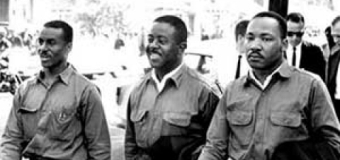
Reverend Fred Shuttlesworth died as he had lived, fighting strongly yet always in the shadows. His death on October 5, 2011 was not only overshadowed by the passing of another transformational American icon, Apple founder Steve Jobs, but was also later overshadowed by the celebration of the unveiling of the Martin Luther King Memorial in Washington on October 16, a scene that is reminiscent of his confrontations with the charismatic civil rights leader.But those who knew Reverend Shuttlesworth say he was not out for recognition, and preferred to play the part of courageous warrior for the civil rights movement.
Yet, it was this blunt-talking preacher who braved beatings, bombings, and fire-hosings to propel the town of Birmingham, Ala., to become a beacon of the civil rights movement. In a magazine article in 1988, he famously declared his desire to shatter the walls of segregation in Birmingham and throughout the South, even if it cost him his life: “I tried to widow my wife and my children for God`s sake, because I literally believed that scripture that says `…whosoever will lose his life for my sake shall find it.` I had no fear, you understand.”
To read more, please click here

Oct 24, 2011 | Views
The year 2011 has proven to be quite unique as evidenced by the tumultuous social, political and economic events that have taken place all around the world.
Lenin once said that “There are decades where nothing happens; and there are weeks where decades happen”. This has seldom been more true than in this year.
The Arab Spring saw various Arab nations rise against regimes that had been in power for many decades. They followed in the footsteps of the January uprising of the Tunisian people who succeeded in removing Zein Al-Abideen Ben Ali in under three weeks of sustained and intense demonstrations and protests which spread throughout the country like wild fire.
To read more, please click here