Oct 14, 2011 | External News
Muslims and Political Participation in Britain
Call for papers
John McIntyre Conference Centre, Edinburgh
20th and 21st April 2012
This conference focuses on the involvement of Muslims in all aspects of
political life in Britain with a particular emphasis on contemporary
developments.
Muslims have played prominent roles at all levels of British politics and
have been represented in various elected positions since Bashir Maan became
a member for Glasgow City Council in 1970. Subsequent milestones have
included Muslims first holding posts such as that of Lord Mayor in 1985, MP
in 1997, life peer in 1998, Minister in 2007 and the first female Muslim MPs
were elected in 2010. For many years the Labour party dominated politics in
British Muslim communities and this relationship is still strong. Yet all
the major parties now actively seek to court a Muslim electorate as
evidenced by the establishment of groups such as the Conservative Muslim
Forum.
Despite the impact that Muslims have had on election campaigns and their
roles in various political institutions, research on this topic remains
scant. Indeed, much of the existing work was couched within the broader
areas of the participation of ethnic minorities or the impact of race on
electoral politics. The conference hopes to address this lacuna and thereby
highlight current research that deals with Muslims and political
participation in Britain, whether at local, regional or national levels. It
seeks to pay particular attention to how this participation has changed over
recent years and identify new trends for the future, although historical
reflections are also welcome.
In addition to electoral politics and representation, the conference also
seeks the submission of papers on other aspects of civil society such as
social movements, trade unions and NGOs as well as papers which give
insights into developments in other European countries. Cross-country
comparisons which include Britain would be especially welcome.
Contributions could focus on (but are not limited to) the following issues:
– Selection of Muslim candidates by political parties and attempts by
parties to reach out to Muslim voters.
– Election campaigns by Muslim candidates including the role of community
organisations, mosques and social networking
– Voting patterns amongst Muslim communities. Is there a ‘Muslim vote’?
– Muslim elected representatives in office.
– Community politics, bloc voting and biraderi networks
– Participation in policymaking and implementation as well as in local and
national processes of governing
– Contentious politics and campaigning groups e.g. environmentalism,
anti-war, global justice movements
– Attitudes to political participation and the political process
– British foreign policy and international conflicts e.g. Kashmir,
Israel/Palestine
– Muslim political organisations and umbrella groups both past and present
e.g. the Muslim Council of Britain, the Muslim Parliament, British Muslim
Forum, British Muslims for Secular Democracy, Sufi Muslim Council,
Progressive British Muslims etc.
Please send proposed abstracts of between 200 – 400 words to Dr Timothy
Peace t.peace@ed.ac.uk before 22nd December 2011. Proposals must include a
title, your name and affiliation and an e-mail address. After the conference
and following peer review, selected papers will be published in either an edited volume or a special issue of a journal.
On the evening of Friday 20th April there will be a public debate on the future of Muslim political participation, featuring a number of elected
representatives including Anas Sarwar MP and Humza Yousaf MSP.
Further information about the conference may be found at
http://www.alwaleed.ed.ac.uk/
The conference is organised by the Alwaleed Centre at the University of Edinburgh in partnership with the Alwaleed Centre of Islamic Studies at the University of Cambridge and the Muslims in Britain Research Network (MBRN).
Oct 14, 2011 | External News
CALL FOR PAPERS
The Association for Studies in Ethnicity and Nationalism (ASEN) is please to announce the call for papers for the 22nd ASEN Annual Conference:
Nationalism, Ethnicity and Boundaries
The conference will take place from the 27-29th March, 2012 at the London School of Economics.
Confirmed keynote speakers include: Rogers Brubaker, Miguel Centeno, Mary Fulbrook, Richard Jenkins, Michele Lamont and Wendy Pullan. There will also be workshops with Jon Fox and Michael Banton.
Proposals are invited for papers focusing on the following themes:
Partition, succession and irredentism
The legality of boundaries and citizenship rules
Boundary surveillance and enforcement
Border controls, passports and identity documents
Territorial and non-territorial sub-national claims
Social and symbolic boundaries and everyday practices
Symbolic boundaries and identity formation
The mechanisms of boundary formation, transgression and change
Interactions between physical and symbolic boundaries
Abstracts should be submitted online no later than November 6, 2011. To submit your abstract, please follow this link
http://www2.lse.ac.uk/researchAndExpertise/units/ASEN/Conference/Abstract.aspx <https://exchange.lse.ac.uk/exchweb/bin/redir.asp?URL=http://www2.lse.ac.uk/researchAndExpertise/units/ASEN/Conference/Abstract.aspx>
Successful submissions will be announced in December, 2011.
ASEN: The Association for the Study of Ethnicity and Nationalism
London School of Economics
Houghton Street,
London, WC2A 2AE
United Kingdom
T: +44 (0)20 7955 6801
F: +44 (0)20 7955 6218
E: asen@lse.ac.uk asen@lse.ac.uk>
W: www.lse.ac.uk/ASEN/ <http://www.lse.ac.uk/ASEN/>
Please access the attached hyperlink for an important electronic communications disclaimer: http://lse.ac.uk/emailDisclaimer
Oct 14, 2011 | External News
SEN Journal: Online Exclusives is currently calling for contributions on the theme of nationalism, ethnicity and art as part of a new themed initiative for our website. The aim of this initiative is to stimulate discussion, ideas and research on a particular theme every few months. We are keen to broaden the remit of the website and therefore encourage submissions in a variety of mediums from a diversity of disciplines. In particular, we warmly welcome:
Academic writing on the theme of nationalism, ethnicity and art (1,000 words max.);
artwork, films and photography to be hosted on our website;
news about relevant exhibitions and performances;
exhibition, film and performance reviews; and
responses to articles published in Studies in Ethnicity and Nationalism (SEN) volume 9 issue 2 in the themed section on “The Art of Nationalism” (http://onlinelibrary.wiley.com/doi/10.1111/sena.2009.9.issue-2/issuetoc).
In keeping with SEN’s editorial policy, SEN Journal: Online Exclusives encourages submissions from a broad range of disciplines with particular attention to up-and-coming scholars, postdoctoral fellows and graduate students working in the field. All submissions and enquiries should be sent to sen@lse.ac.uk .
Please note that we will post submissions on a rolling basis and there is no official deadline for submissions on this theme. We will however have a new theme at the beginning of Novermber. SEN Journal: Online Exclusives also continues to welcome submissions relevant to the study of ethnicity and nationalism that fall outside of this theme. For guidelines on submissions, please visit our website.
Please access the attached hyperlink for an important electronic communications disclaimer: http://lse.ac.uk/emailDisclaimer
Oct 14, 2011 | External News
Call for Proposals: Ethnopolitics Special Issues
Ethnopolitics has a long tradition of publishing Special Issues on specific topics of interest to the field, both covering particular themes or conflicts. Past special issues that have been highly successful include Moral Hazard and Intervention (guest-edited by Timothy W. Crawford & Alan J. Kuperman), Governance in Ethnically Mixed Cities (guest-edited by Sherrill Stroschein), Northern Ireland ten years after the Agreement (guest-edited by Chris Gilligan), Federalism, Regional Autonomy and Conflict (guest-edited by Graham Brown), and EU Conflict Management (guest-edited by James Hughes).
The Editors of Ethnopolitics wish to continue with this tradition of publishing high-quality special issues (subsequently also included in the prestigious ASN book series) and are therefore introducing an annual competition for proposals for Special Issues.
Interested scholars in any relevant field are invited to submit a short proposal of no more than 1,000 words outlining:
- The theme of the proposed Special Issue
- The articles and authors that it would contain
- The approximate length of individual contributions and the Special Issue as a whole
Apart from analytical and theoretical coherence, proposals should demonstrate how the proposed Special Issue will contribute to the theoretical and/or empirical advancement of the field of ethnopolitics. Please also include information about the genesis of the proposal (e.g., workshops seminars, conference panels past or planned).
A short bio of the Guest Editor/s and the names of potential peer reviewer should also be included in the proposal. Guest Editor/s will be expected to liaise closely with the Editors of Ethnopolitics.
This is an annual competition with a deadline of 1 December and envisaged publication date of the Special Issue approximately 15-18 months after acceptance of the proposal.
Informal inquiries and proposals should be sent electronically to the Editors of Ethnopolitics:
Karl Cordell: K.Cordell@plymouth.ac.uk
Stefan Wolff: stefan@stefanwolff.com
This call for proposals is also available on: http://www.ethnopolitics.org/ethnopolitics/special-issues-cfp.htm.
Oct 14, 2011 | External News
Call for Papers
Title: Studies of Transition States and Societies (STSS)
Publisher: Institute of Political Science and Governance and Institute of International and Social Studies, Tallinn University
Frequency: 2 issues per year
Print ISSN: 1736-874X, online ISSN: 1736-8758
Access: open access journal, available at the website www.tlu.ee/stss, also in DOAJ, Proquest, Ebsco.
Published: since 2009
Editor in Chief: Raivo Vetik, Tallinn University
Correspondence: stss@tlu.ee
Articles to the Spring issue should be submitted by December 19, 2011. See the webpage www.tlu.ee/stss for information on the submission. Articles arriving later than that will be considered for the 2012 Fall issue.
Aims and Scope:
Studies of Transition States and Societies (STSS) aims to promote interdisciplinary exchange between scholars in all major subfields of sociology and political science. The substantive focus of the journal is on the transitional societies, particularly on the societal and political changes in postcommunist countries. Conceptually speaking, this journal seeks to challenge the teleological understanding of transition processes that is based on dichotomous classifications (traditions vs.
modernism, democracy vs. totalitarianism, nation-states vs.
multiculturalism etc.), placing emphasis instead on holistic approaches and gradational units of analysis. STSS contains peer reviewed articles that articulate both theoretical and comparative, as well as quantitative and qualitative approaches. Besides articles, STSS also publishes short research notes about ongoing studies, as well as review articles and book reviews. In addition, collections of articles about a common theme or debate are published as short symposia.
Editorial Board:
Karl Ulrich Mayer, Yale University; Michael D. Kennedy, Brown University; Hans-Peter Blossfeld, Bamberg University; Hans-Dieter Klingemann, Freie University Berlin; Catherin Hakim, London School of Economics; Irena Kogan, Mannheim University; David Ost, Hobart and William Smith Colleges; Risto Alapuro, Helsinki University; Pirkko Pitkänen, Tampere University; Attila Agh, Corvinus University Budapest; Hilary Pilkington, Warwick University; Paul Lewis, British Open University; Ilkka Alanen, Jyväskylä University; Peter Robert, TARKI; Carlo Barone, University of Trento; Colin Copus, University of Birmingham; Noemi Lendvai, Bristol University; Christian Toft, Universität Kassel; Jochen Franzke, University of Potsdam Leif Kalev, Tallinn University; Airi-Alina Allaste, Tallinn University; Ellu Saar, Tallinn University; Anu Toots, Tallinn University; Rein Ruutsoo, Tallinn University; Georg Sootla, Tallinn University; Rein Vöörmann, Tallinn University.
Subscription info
Institutional Subscription, Print € 50
Individual Subscription, Print € 30
To acquire subscription please send the following information to stss@tlu.ee:
name of the institution; postal address; full name, email and phone number of the contact person.
Oct 12, 2011 | News & Press
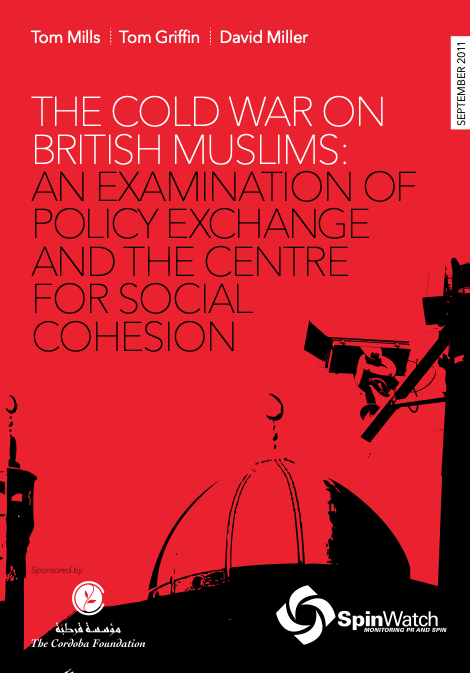
On Tuesday 11th October, the Middle East Monitor (MEMO) and the Cordoba Foundation (TCF) co-hosted the authors of the recent SpinWatch report on the spread of Islamophobia in the UK. The event took place in the House of Parliament and was sponsored by Simon Danczuk, MP for Rochdale, and chaired by the former foreign affairs editor for the Guardian, Victoria Brittain.
 The report entitled ‘Cold War on British Muslims: An Examination of Policy Exchange and Centre of Social Cohesion‘ was presented by the co-authors Professor David Miller, Tom Griffin and Tom Mills, who briefly described their findings and their analyses. They were joined on the panel by Dr Robert Lambert, former head of the Muslim Contact Unit and co-director of the European Muslim Research Centre (EMRC) at the University of Exeter and a part time lecturer at the Centre for the Study of Terrorism and Political Violence (CSTPV) at the University of St Andrews.
Dr Daud Abdullah, Director of MEMO, opened the event and discussed the importance of the report highlighting the part played by the two institutions in vilifying the Muslim community over the last decade. ‘Being a Muslim in Britain and Europe today has a price – Islamophobia’. Dr Abdullah criticised the government and right wing organisations’ ‘double speak’; ‘on one hand we are told to participate and when we do, we are told we are infiltrators!’ He suggested that both the domestic and foreign policies of the incumbent coalition government bear the trademarks of the dominant neo-con elements led by Michael Gove, a former chair of Policy Exchange and now Secretary of State for Education. Throughout the period under review they have played a ‘very divisive’, he asserted.
 Dr Robert Lambert suggested that both the Centre for Social Cohesion (CSC) and Policy Exchange (PE) were at the forefront of criticising Muslims. The CSC which has been subsumed into the Henry Jackson Society (HJS) is, according to Lambert, of lesser interest as it is less influential. On the other hand, he said the PE is more influential in shaping policy at government level. (Prof David Miller disagreed later, citing the latest Prevent strategy had cited the CSC as one of its main sources of information). Lambert concluded by raising concerns about the counter-subversive tactics fuelling government policy and policing in the UK; “Increasingly I see some of these most loyal and effective Muslims reclassified as extremists – the advice comes from Policy Exchange and the evidence for it is extremely thin.”
The SpinWatch authors where then given the platform to discuss their research findings. Prof David Miller set the scene by describing the role of think tanks and suggested they were really lobbyists pushing their own agendas and thus should be susceptible to the same scrutiny as other organisations and governmental bodies. CSC has implied that Islamist terrorism was only part of a broader ideological challenge facing the West. Douglas Murray, the neo-con director of CSC and now associate director of HJS, said in 2006 “conditions for Muslims in Europe must be made harder across the board”. According to Miller “he wasn’t talking about Islamists or extremists…he was talking about Muslims.”
Tom Griffin – explained that the use of the term ‘cold war’ was a reference to the tactics used in the 1980s against communist organizations. He argued evidence showed that the same tactics were now being used to monitor Islamic societies with their ‘counter subversion’ policies. For example, the Centre for Social Cohesion published a report entitled ‘The A-Z of British Muslim organisations’, in which Interpal (a British charity working in Palestine) was targeted using Israeli counter subversion evidence. The biased and Islamophobic agenda is apparent when looking at their work on the BNP, and although they acknowledge the anti-Muslim rhetoric seeping through the BNP, it ignores the ideologies that influence the BNP. Griffin finished off by challenging the CSC to research the English Defence League (EDL), who have cited the same sources as those that Douglas Murray bases his speeches on.
 The final author of the research, Tom Mills analysed Policy Exchange in more detail. He explained that the neo con suggestion that “in some ways since the 1960s a confidence in Western civilisation has been undermined and that is what gave rise to anti-Western feeling and how Islamism came about” is what is used by the likes of Michael Gove and his right wing colleagues to push forward their counter subversion policies. However, a more interesting feature of his presentation that caused a stir was the funding of these think tanks.
The report, sponsored by The Cordoba Foundation, details the funders of both the CSC and the Policy Exchange, with Mills highlighting groups such as the Peter Cruddas Foundation and The Charles Wolfson Charitable Trust. The latter in turn also funds for a variety of pro-Israel and right wing think tanks, including Civitas, Israel-Diaspora Trust and the Anglo-Israel Association.
Anas Altikriti, the CEO and founder of the Cordoba Foundation closed the event by reiterating that the overriding narrative in today’s climate was being guided by the above mentioned groups, who were clearly influencing official policy. He reiterated his support for SpinWatch and the EMRC, whom TCF are proud donors of, and suggested that more work was needed to highlight the inconsistencies and double standards in policy and decision making.
 Suffice to say that ‘The Cold War on British Muslims’ report will be used as a key reference point in months and years to come; the anti-Islam and pro-Israel propagators will certainly not be given free rein to continue to influence policy without challenge, and organisations such as the Middle East Monitor, The Cordoba Foundation, European Muslim Research Centre and SpinWatch will maintain a watchful eye.



Oct 10, 2011 | News & Press
The Cordoba Foundation (TCF) condemns the recent attack on a church in Egypt, which has led to sectarian clashes leaving 24 people dead. This attack, though a work of a mischievous minority, is threatening to overshadow the collaborative efforts of all communities in setting a new path towards democracy in Egypt.
Commenting on this, Anas Altikriti, CEO of TCF said ‘People should not be drawn into the trap of sectarian division which will threaten to derail the process of Egypt’s new journey and which will be used by the ruling military council to stifle freedom of expression’.
Egypt and Egyptians are renowned for their indelible and organic sense of tolerance, compassion and social solidarity, and it is incumbent upon religious leaders in Egypt and beyond to exemplify and echo these characteristics through their respective endeavours for mutual understanding and religious tolerance.
Thus there is a need for responsibility to be taken towards initiatives that emphasise that breeding such violence, hatred or disdain is illegitimate. Collectively we need to ensure that our youth are given accurate information about other traditions, religions and cultures. We need to encourage a positive appreciation of cultural and religious diversity ~ to cultivate an informed empathy with the suffering of all human beings—
To more effectively address critical issues of religious freedom in Egypt, TCF calls for an organised grass roots response mechanism to be initiated that can address real social concerns whilst condemning all forms of discrimination, intolerance and oppression against ethnic and religious minorities. There is a need to speak out whenever and wherever abuse occurs, whether it be against one’s own religion or government or someone else’s, that is the oppressor or the victim. It is only with this type of attitude that the creation of a just economy and a peaceful global community is possible.
There is no question that crimes committed against Copts in Egypt must be condemned as strongly by all Muslims, as much as are crimes committed against Muslims. Failure to do so will demonstrate intolerable hypocrisy, which Egypt and the new Arab world can ill-afford.
Oct 10, 2011 | News & Press
The Speaker of the Iraqi Council of Representatives, Osama Al Nujaifi, is set to visit Britain next week as part of an official visit. During his visit, Al Nujaifi will be meeting with Secretary of State for Foreign and Commonwealth Affairs, William Hague and other officials to discuss the latest developments in Iraq and challenges facing the region.
Al Nujaifi will be focussing on Iraq’s political reconstruction which will highlight the ‘Al Nujaifi Initiative’, which aims to bridge gaps between the different political voices in the Iraqi Parliament. The initiative aims to explore ways to strengthening a reconciled national partnership, and addressing Iraq’s relationship with its neighbours. Mr Al Nujaifi stresses the importance of such initiatives especially in the light of recent internal geopolitical conflicts in Iraq.
He will also be speaking at Chatham House about the future of Iraq and meeting with members of the British press.
In addition to official engagements, Mr Al Nujaifi will be visiting Oxford University, and speaking at the International Institute for Strategic Studies (IISS) about Iraq’s role in the recent changes that are sweeping the region. During his trip, he will be meeting numerous members of the Media and members of the Iraqi community in London.
The Cordoba Foundation will be handling his media and public relations service during his visit.
[End]
- To arrange interviews or for media coverage regarding the speaker’s visit, please contact Maryam Wissam, Media Officer on 07583 830080 or maryam@thecordobafoundation.com
- For further information about the speaker’s visit, please contact Amjad Saleem, Head of Communications on 020 8991 3370 or media@thecordobafoundation.com
Sep 6, 2011 | News & Press
The Cordoba Foundation (TCF) expresses its sadness at the untimely death of Shaykh Maymun Zarzur, the Imam at the Muslim Welfare House in North London after morning prayers on Friday 2nd September. Although the case is still being investigated by the police, it is believed that the Imam was killed in his office by a member of the community who was seeking Shaykh Zarzur’s counsel.
Commenting, CEO Anas Altikriti said: “Shaykh Zarzur was a much loved community leader and will be sorely missed. His tremendous efforts throughout the community despite his physical disability were renowoned and recognised by all those who came in touch with him. Faith leaders like the Shaykh are often the unsung heroes (and victims) who are at the front line on a daily basis dealing with complex issues”.
The Cordoba Foundation welcomes the calm and collected response to this tragic incident on the part of all concerned; the Muslim Welfare House administration and the local Muslim community. Their response in working together from the very first moment with the police investigation and the local authorities, and the manner in which the local council and MP Jeremy Corbyn responded and reacted to this incident is truly exemplary.
Our heartfelt condolences and prayers go out to the family, friends, and community of Shaykh Maymun Zarzur