Aug 1, 2012 | Views
I am a sports fan and love watching the Olympics. It symbolises all the best in the human sporting excellence and dedication and somehow also represents an opportunity to hit a pause button (rightly or wrongly) on world affairs, as for about two weeks much of the world’s focus is on the athletes.
I see the Olympics as a great opportunity to learn and understand from each other, as athletes engage with people from countries they probably would never engage with, and a time for reflection as the Olympic Truce is observed for about 100 days. Finally, it is a time for learning, as you actually discover countries that you have not even heard of. Politics, corporate sponsorship, tickets aside, the Olympics is probably one of the more unifying events around the world.
When the Olympics was awarded to London, I remember the excitement that greeted it, followed by the sudden realisation of reality as the next day, the 7/7 terrorist attacks took place. In the seven years since, the Olympics’ engagement with communities took a back seat in some respects as security took a higher priority.
For the Muslim community in particular, the scrutiny of radicalisation and constant obsession with identity and affiliation has meant that they have been justifying themselves to the British public. This is a shame as many Muslims in London reside close to the main Olympic parks and thus perhaps have not been able to fully participate in the pre-program as they should have with the hope that they can enjoy the social regeneration that is anticipated afterwards.
Please click here to read more
Jul 19, 2012 | News & Press
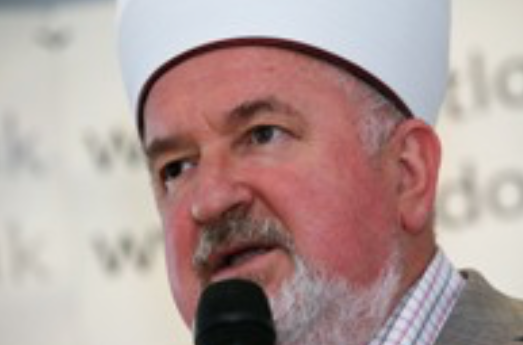
As the Srebrenica Memorial Day anniversary on the 11th of July approaches its 17th year, we are once again reminded of the lengths that man could potentially go to when immersed in a state of fear, hatred and division.
The Memorial Day puts to rest any naivety that the lessons of the past have not only been learned, but well and truly headed. Not only are human beings chronically capable of committing the most repugnant of acts against fellow human beings, regardless of the advancement of time, the catalysts for these crimes are invariably similar whatever the different and unique circumstances of each.
The Cordoba Foundation has been working tirelessly to raise awareness of the threat man poses against his fellow man, should particular conditions become established on the ground. Whether Srebrenica, Auswitz, Rwanda, Gaza, Kashmir or Somalia, and whether in the last century, this or the one coming, injustice establishes fear which breads suspicion and ultimately hatred. From there, the move on to violence is neither a difficult nor inconceivable step to undertake. Our objective is to work in common collaboration to remove the very initial elements on that tragic path, and to counter the root causes for clashes based on false and misguided understanding and implementation of the concepts of ‘self’ and ‘the other’.
The Srebrenica Memorial Day provides a timely reminder to us all of the challenges that can only be met in a sense of togetherness and community.
The Cordoba Foundation is issuing the special Friday sermon from the Mufti of Bosnia Herzegovinia on this occasion
Jun 27, 2012 | External News
On June 28th while reading my newspaper at breakfast in Cairo, I was stunned to discover that an Egyptian leader I was scheduled to see that evening had been suddenly imprisoned. I was stunned but, as anyone familiar with the Mubarak government, not surprised.
The arrest and detention of Abdel Moneim Aboul Fattouh arrest is but the latest reminder/evidence of the lack of democracy and human rights in Egypt and many parts of the Arab and Muslim worlds. For decades, the common charge is that Islam and Arab culture are incompatible with democracy and human rights. The easy and common culprit we identify today is religious extremist and terrorists. But beyond this superficial response are the deeper causes, too often including the policies of Arab/Muslim and Western leaders. Western principles are often subordinated to perceived “national interests” and thus our support for authoritarian regimes. For many Arab rulers whose positions are due more to heredity, coups, and rigged elections; most rely rely on military and security forces, repression and corruption as their preferred sources for “legitimacy.” But what does the continued detention of Abdel Moneim tell us? Post the Obama-mania, engendered by his address in Cairo on June 4, what can Egyptians expect?
Dr. Abdel Moneim Aboul Fattouh, a physician, and member of the Muslim Brotherhood, served as the head of the Doctor’s Syndicate from 1988-1992 and has been the General Secretary of the Arab Doctor’s Union since 2004. A pragmatist and reformist, he is an influential leader of a younger generation of moderate reform-minded Islamists in Egypt. Amr Musa, the General Secretary of the Arab League, recently called for his release. A member of the Guidance Council of the Muslim Brotherhood since 1987, Abdel Moneim recently participated in the funeral of President Mubarak’s grandson. Not surprisingly, he has long been seen both within Egypt and outside as a moderate, admired and respected professional. Yet, he was arrested on charges of belonging to a group called the Global Muslim Brotherhood Organization and was part of a wider crackdown on Muslim Brotherhood leaders and bloggers. After several days, Aboul Fattouh, who suffers from sleep apnea and requires a respirator, was allowed to have one but as his health deteriorated, he was transferred to Qasr al-Aini hospital. A solidarity conference for Aboul Fattou at the Journalists’ Syndicate; not surprisingly, as has been common in Egyptian elections and many meetings organized to publicly speak out or protest government repression or injustice, the meeting was quickly broken up by riot police. As with many Egyptians, like the internationally prominent secular academic and civil society leader, Prof. Saad Eddin Ibrahim, this is not the first but the third imprisonment of Abdel Moneim. In a country where both US State Department and major international human rights organizations have documented the imprisonment (and often torture) of thousands of Egyptian citizens — not simply terrorists but any major reformist voice that earns the government’s displeasure. The arbitrariness of this tactic has often been proven by the number of times the more independent minded Egyptian judiciary has eventually found many of those detained like Saad Eddin and members of the Muslim Brotherhood innocent and ordered their release, only to be reasserted again and again. So, where do we go from here?
Barack Obama inherits an American legacy, described by Amb. Richard Haas in a surprising speech when he was a senior State Department official in the George W, Bush administration as “democratic exceptionalism,” which Condoleeza Rice’s at the American University in Cairo on June 20, 2005 described as America’s record of supporting regional tyrants for six decades; it was wrong, she said, and would be reversed. Regrettably, this policy initiative died quickly as the Bush administration remained restrained in responding the violence that occurred during the 2005 presidential elections and moved aggressively to blunt and undermine the internationally monitored and supervised elections that brought Hamas to power in 2006.
Barack Obama clearly stated his inaugural address his desire to distance himself from the Bush legacy and return America to its principles and values. And most importantly, Obama, like Rice before him recognizing Egypt as a center of gravity for the region, went to Cairo where, he affirmed his commitment to democratic freedoms and human rights. While acknowledging that “no system of government can or should be imposed upon one nation by any other,” he also stressed, “That does not lessen my commitment, however, to governments that reflect the will of the people…. I do have an unyielding belief that all people yearn for certain things: the ability to speak your mind and have a say in how you are governed; confidence in the rule of law and the equal administration of justice; government that is transparent and doesn’t steal from the people; the freedom to live as you choose. Those are not just American ideas, they are human rights, and that is why we will support them everywhere.”
As the Gallup World Poll, the largest and most systematic poll of the Muslim world, which represents the voices of a Billion Muslims, has demonstrated, majorities in most countries, including Egypt, want democratic freedoms. The arrest and continued detention of Dr. Abdel Moneim Aboul Fattouh symbolizes a long standing problem for which governments in the region and the West bear primary responsibility. It also underscores the need to engage moderate (non-violent) political Islam– to engage the world as it is, especially the cry for justice in response to Arab authoritarianism which, if ignored, legitimizes extremists groups. It is time for the Obama administration and the global community to work together to hear the voices of Muslim citizens and live up to their principles.
Please click here to read the original piece
Jun 27, 2012 | Views
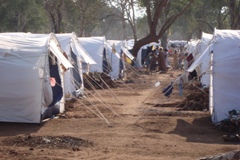
After 26 years of war that cost thousands of innocent lives, the defeat of the Liberation Tigers of Tamil Eelam (LTTE) has brought Sri Lanka to a crossroads.
Reconstruction, resettlement and rehabilitation will be the immediate postwar challenges and will have to be expertly handled. Reconstruction of infrastructure will be the easiest and most attractive option for donors, but creating an environment of equity and social justice could be relegated to the bottom of the list. There must be a separate effort to ensure reconciliation between people. Many barriers have been erected between Sri Lanka’s communities and special programmes to build bridges, facilitate interfaith interaction and regain intercommunity trust are urgently required.
This is the role that the Sri Lankan diaspora as a whole will need to play to bring about a reconciliation that combines human values with an understanding of the need to move away from apportioning blame
To read the full article, please click here
Jun 27, 2012 | Views
The recently telecast Channel 4 documentary on ‘Killing Fields of Sri Lanka’ sheds no new light (despite claims to the contrary), in terms of groundbreaking evidence, regarding the incidents related to the end of the war in Sri Lanka. If anything, it will seek to entrench already hardened attitudes and decrease the ever reducing space for dialogue and reconciliation.
From the government’s perspective, it will seek to discredit the documentary as fake as it feeds into the insecurity that it surrounds itself with, of a perception that the west has been influenced by a highly successful pro LTTE lobby. The end result will be the securing of its ‘credibility’ especially as a ‘victim of an external conspiracy’ consequently rallying the people’s sympathy, thereby making any genuine attempt to hold the government accountable for anything fruitless.
On the other side, for the pro LTTE lobby (largely represented by their supporters in the UK, US and Canada) this will be a ‘vindication’ of their claims regarding the Government and its conduct of the war, thereby serving to boost their movement and support whilst ignoring the part that they have played in fund raising and supporting the LTTE (despite the proscription of the LTTE as a terrorist group).
Jun 27, 2012 | Views
This year marks the 10th anniversary of the invasion of Iraq by the United States, Britain and their allies. According to former leaders, U.S. President George W. Bush and British Prime Minister Tony Blair, the coalition mission was, “to disarm Iraq of weapons of mass destruction, to end Saddam Hussein’s support for terrorism, and to free the Iraqi people”. However, the UN Security Council did not agree with the American and British justifications to go to war with Iraq. France, China, Russia and a major part of the International Community didn’t believe that an Iraq reeling from 13 years of sanctions posed an imminent threat to its people or to neighbouring countries.
After the invasion the US and its allies committed a number of catastrophic policy blunders, rendering the promise of democracy, human rights and social and economic development into nothing more than empty rhetoric. Firstly, the policy of “winning hearts and minds” was supplanted by the military strategy of ‘shock and awe’. Second, there was direct military rule instead of handing full sovereignty to the new Iraqi leadership. Furthermore, instead of a prudent policy of restructuring the already viable and effective security and military institutions, the standing network of establishments were destroyed, leaving 140 thousand American troops to do the job of policing 30 million people, with catastrophic results.
To read more, please click here
Jun 23, 2012 | Views
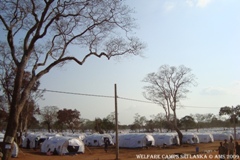
World Refugee Day took place on June 20. For many it was about remembering the plight of many people worldwide, who today are without rights, a state and an identity. One may picture the plight of Palestinians or Kurds or perhaps the Rohingyas of Myanmar. However, it is often very easy to forget those whose plights do not make the headlines. Cambodia, South Sudan and so on offer us reminders that the plight of people who are without a state and rights are important and need to be at the top of the agenda, which is effectively what World Refugee Day chooses to highlight.
Sri Lanka is no stranger to the issues of refugees. After enduring almost 30 years of war, it has seen its fair share of internal displacements and humanitarian crises. Currently under international scrutiny for not only how the war ended in 2009 but its treatment of nearly 300,000 refugees mainly of Tamil origin, it is easy to forget that there are other communities within Sri Lanka (mainly from the majority Sinhala and minority Muslim community) that have also been victims of the conflict. In light of the current international scrutiny about internally displaced people (IDP) and refugees in Sri Lanka, very little has been said in particular about the Muslim refugees who for the past 22 years, have been consigned to staying in welfare camps in the north west of the country.
To read more please click here
Jun 20, 2012 | Views
Last month saw the official marking of three years after the end of the 28 year old war that plagued Sri Lanka, killing thousands and setting the country back in terms of development and prosperity. Yet three years on, it seems that not much has changed.
Whilst Sri Lanka has tried to portray that there has been progress made on the ground largely in infrastructural development, critics have been quick to highlight the lack of tangible progress on reconciliation, in effect the inertia on implementing internal recommendations for reconciliation, coupled with an ever weakening space for human rights, media expression and democratic freedom. The recent resolutions at the UN Human Rights Commission in Geneva on Sri Lanka have been testimony to this type of thinking where analysts have not only been critical that progress has been slow on the ground amidst a decline in general rights that are deemed to be core to a functioning democracy, but they have also pointed to the need to keep this on the international agenda.
This is a debatable fact and the Government is not really willing to engage on any real discussion on the issue despite the occurrences as reported in the media of kidnappings and killings. A recent interview between the defence secretary and the BBC is testimony to the extremely sensitive nature of such discussions and criticisms.
Please click here to read more

Jun 20, 2012 | News & Press
Considered to have witnessed the dawn of western civilisation, the medieval city of Cordoba has for centuries been revered for its significant contribution to scholarship and learning. A cultural, economic and political metropolis, Cordoba is world-renowned for providing a haven for persecuted communities, an attribute which travelled far during Cordoba’s golden years.
In the spirit of the significance of the city of Cordoba in medieval times, The Cordoba Foundation in partnership with Muslim Writers Awards is proud to present ‘The Spirit of Cordoba’ prize, awarded to an individual who embodies the essence of Cordoba.
To award this prize, the organisers are inviting members of the public to nominate individuals/groups who have uniquely contributed in analysing the relationship between the east and west in an attempt to open the channels of communication and dialogue between the two. These individuals/groups will strive towards redirecting narratives to correct the presentation of the ‘other’ in an attempt to embody the essence of Cordoba’s peaceful co-existence, today.
Assessed by an esteemed panel of judges headed by The Cordoba Foundation CEO, Anas Altikriti, the prize will be awarded to the individual/group whose work in expressive arts (photography, writing, theatre, art) is proved to have made an impact on the wider society, building a strong following and changing public opinion, creating a media stir and even perhaps helping to change legislation.
Closing date: 20th July
——
The 2012 Muslim Writers Awards welcomes submissions from Muslim writers across the world. We have a broad range of categories from screen play to novel writing to journalism. Our awards ceremony is an opportunity to showcase talent from both published and unpublished writers. We also work with a number of literary agents and publishers who are eager to read and review writing submitted to us.